Drum Sander vs Thickness Planer: Do You Need Both?

Photo via Unsplash
Woodworkers often debate whether to buy a drum sander, a thickness planer, or both. The honest answer is that these machines do fundamentally different jobs, and understanding that difference changes how you build your shop. This guide compares drum sanders and thickness planers across every dimension that matters, so you know exactly which machine (or machines) your workflow actually needs.
Featured Products
SuperMax 19-38 Drum Sander
19" single pass / 38" double pass capacity, open-end design, variable conveyor speed. under $2,500.
Check PriceDeWalt DW735X Thickness Planer
13" width, 3-knife head, two-speed feed, extra knives and infeed/outfeed extensions included. under $1,000.
Check Price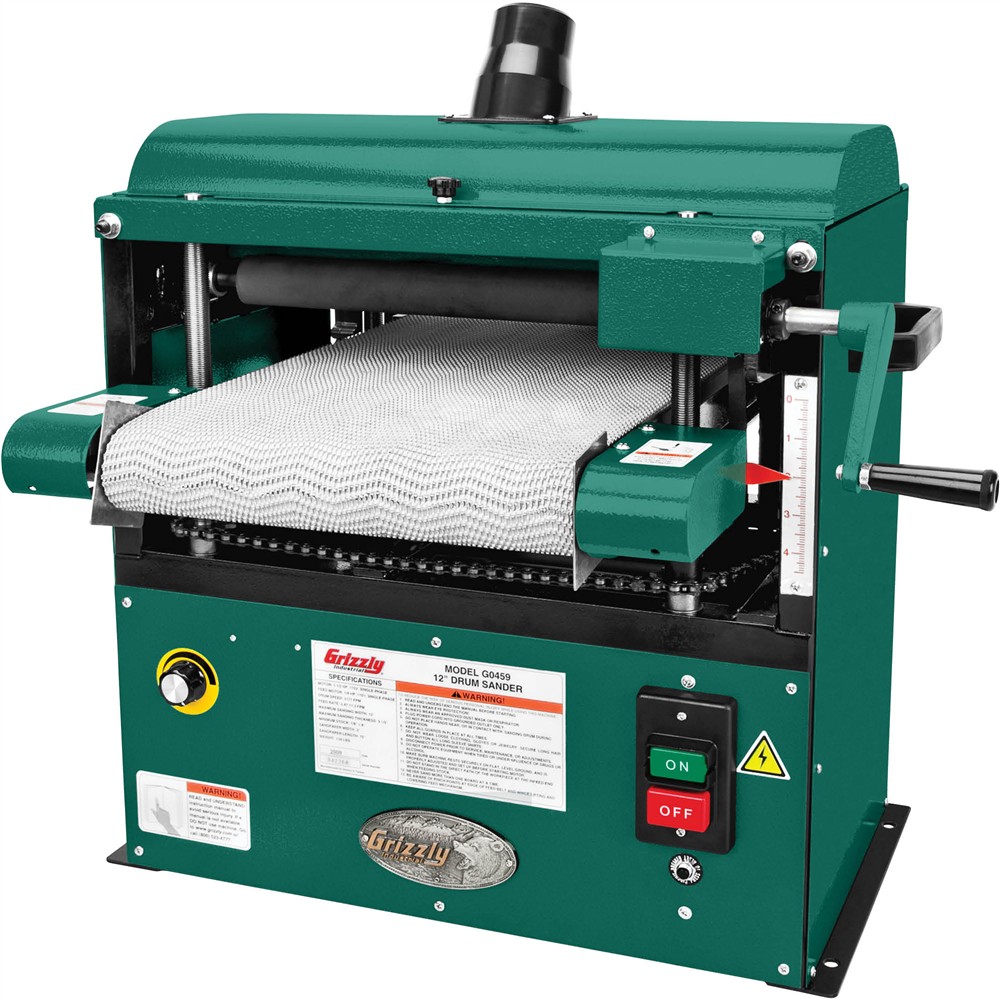
Prefer to buy direct? Both machines are available factory-direct from Grizzly Industrial, often priced lower than through a reseller and backed by full parts availability and U.S. support.
Quick Comparison Table
Before getting into the details, here is a direct comparison of drum sanders and thickness planers across the factors that determine which machine fits your woodworking workflow:
| Factor | Thickness Planer | Drum Sander |
|---|---|---|
| Primary Purpose | Dimension lumber to consistent thickness | Final surface prep and wide panel flattening |
| Material Removal Rate | Fast, up to 1/8" per pass | Slow, 1/64" or less per pass |
| Surface Quality | Good (knife marks, some tearout) | Excellent (scratch-free, near finish-ready) |
| Snipe | Moderate to significant (1/16"-1/8") | Minimal to none |
| Max Width | 12-13" (portable), 15-20" (stationary) | 19-38" (open-end design) |
| Figured Wood | Tearout risk on reversing grain | Excellent, no tearout |
| Glued-Up Panels | Limited by width capacity | Excellent, primary use case |
| Veneer / Thin Stock | Risky below 3/16" | Excellent down to 1/16" or less |
| Dust Type | Large chips (easy to collect) | Fine dust (requires quality filtration) |
| Typical Cost | $400 - $700 (portable) | $1,500 - $2,500 (open-end) |
| Speed | Very fast for dimensioning | Slow, patience required |
| First Tool Priority | Yes, foundational shop tool | Secondary, adds after planer |
What is a Thickness Planer?
A thickness planer uses one or more rotating knives mounted in a cutterhead to slice material off the face of a board, producing a flat surface parallel to the bed and dimensioned to a precise thickness. You set the cut depth, feed the board in, and the machine produces consistent, dimensioned lumber.
Thickness planers work by:
- Cutterhead rotation: A cylindrical head with 2-4 straight knives (or helical carbide inserts on premium models) rotates at high speed. The knives take thin slices as the board feeds through.
- Feed rollers: Powered infeed and outfeed rollers grip and advance the board at a controlled rate, maintaining consistent thickness regardless of the operator's hand pressure.
- Depth of cut: The table height adjusts the distance between the bed and the cutterhead, setting how much material is removed.
- Chip ejection: Planers produce large chips and shavings that can be collected in a dust bag or extracted with a shop vacuum or dust collector.
The DeWalt DW735X is the benchmark portable planer, widely regarded as the best value in the category, with a three-knife head, two-speed feed (96 or 179 cuts per inch), and a reputation for reliability that has made it the default recommendation for hobbyist shops for over a decade.
What is a Drum Sander?
A drum sander uses a rotating drum wrapped in abrasive sandpaper to sand the surface of a board. The workpiece rides on a conveyor belt that passes it under the drum at a controlled speed. By adjusting drum height and conveyor speed, you progressively remove material and improve surface quality through sequential grits.
Drum sander characteristics include:
- Open-end design: Most workshop drum sanders have a drum on one side of the machine with an open end. This allows boards up to twice the drum width to pass through from each direction, a 19-inch drum gives 38-inch panel capacity.
- Conveyor feed: The conveyor belt feeds material at adjustable speed. Slower feed rates improve surface quality; faster speeds increase throughput.
- Sandpaper wrap: Hook-and-loop or adhesive-backed abrasive paper wraps the drum. Paper changes are relatively quick, important in a production setting.
- Fine material removal: Maximum cut depth is approximately 1/64 inch per pass. This is a surface refinement tool, not a dimensioning tool.
- Fine dust production: Unlike planer chips, drum sander dust is very fine and airborne. Quality dust collection with fine filtration is essential.
The SuperMax 19-38 represents the sweet spot for serious hobby and small professional shops, substantial capacity, reliable performance, and a strong reputation among furniture makers and woodworking schools.
Thickness Planer: Pros and Cons
Advantages of Thickness Planers
- Fast material removal: A planer removes 1/8 inch or more per pass, quickly dimensioning rough lumber to working thickness. What would take hours by hand takes seconds.
- Consistent thickness: Feed rollers maintain consistent material thickness regardless of hand pressure variation. Every board exits at the same dimension.
- Low cost of entry: Portable planers like the DeWalt DW735X deliver serious capability for under $1,000. No other tool provides comparable wood dimensioning value at that price.
- Easy chip collection: Planer chips are large and fall quickly. A basic dust bag handles collection adequately for most shops.
- Essential workflow tool: You cannot efficiently use rough-sawn lumber without a planer (or a jointer). It is a foundational piece of shop equipment, not an optional upgrade.
- Helical head option: Shelix and similar aftermarket helical heads (or factory helical options) dramatically reduce tearout on figured wood and extend cutterhead service intervals.
Disadvantages of Thickness Planers
- Snipe: The characteristic dip at board ends caused by roller grip changes is the planer's most significant practical limitation. Requires extra board length or careful technique to manage.
- Width limitation: Most portable planers max out at 12-13 inches. Wide panels, tabletops, and large glue-ups exceed their capacity.
- Tearout on figured grain: Straight knife heads can tear out reversing or interlocked grain. Helical heads mitigate this significantly but add cost.
- Surface quality limitation: Planers leave knife marks visible in raking light. Additional sanding is always required before finishing.
- Cannot flatten a cupped board: A planer follows the contours of the reference face. To flatten a cupped or twisted board, you must first flatten one face on a jointer before planing the opposite face parallel.
Drum Sander: Pros and Cons
Advantages of Drum Sanders
- Wide panel capacity: The open-end design handles panels up to 38 inches wide, well beyond any portable planer. This is the drum sander's single most important advantage for furniture makers.
- Zero tearout: Sanding removes material by abrasion rather than cutting, making grain direction irrelevant. Figured maple, crotch walnut, and other challenging woods sand perfectly regardless of grain orientation.
- Near finish-ready surface: Progressing through 80, 100, 120, and 150-grit leaves a surface that needs minimal hand sanding before finishing, a major time savings on flat surfaces.
- Veneer and thin stock: Drum sanders safely process material down to 1/16 inch or thinner. Planing veneer is impractical; drum sanding is the correct process.
- No snipe: The conveyor feed and drum geometry eliminate the snipe problem that planer users constantly manage.
- Consistent grit sequence: Automated, consistent sanding through grits produces more uniform results than hand sanding, especially on large flat surfaces.
Disadvantages of Drum Sanders
- Slow material removal: Maximum 1/64 inch per pass means dimensioning from rough thickness is completely impractical. This is not a replacement for a planer.
- Higher cost: Quality open-end drum sanders start around $1,500-$1,800. This is 2-3x the cost of a good portable planer.
- Fine dust hazard: Drum sander dust is extremely fine and airborne. High-quality dust collection and shop air filtration are not optional, they are health requirements.
- Abrasive consumable cost: Sandpaper rolls are a recurring cost. Budget approximately $20-$50 per roll depending on grit and drum size.
- Slow operation pace: The conveyor feed speed must be slow enough to avoid burning or loading the paper. Large panels take time to complete all grit passes.
- Snaking / drum loading: Running too deep or too fast loads the sandpaper with fine dust, reducing abrasion and potentially burning the wood surface.

Photo via Unsplash
When to Choose a Thickness Planer
First Shop Machine
If you can only afford one of these tools, buy the planer. A thickness planer enables you to buy rough-sawn lumber, which costs 30-60% less than S4S (surfaced four sides) lumber from the home center, and dimension it yourself. The planer pays for itself quickly in lumber savings alone.
More importantly, a planer is the foundational machine for any serious woodworking. You cannot produce furniture from rough-sawn lumber without either a planer, a hand plane set, or very expensive pre-surfaced stock. The planer is the tool that makes the rest of your woodworking possible.
Working With Standard Widths
If most of your work involves boards under 10-12 inches wide (typical furniture parts, case components, drawer fronts, and rails) a planer handles everything within its capacity. The drum sander's width advantage only matters when you regularly glue up panels wider than the planer can handle.
Volume Production
Speed matters in production. Dimensioning 50 board feet of lumber through a planer takes an hour. Doing the same thickness reduction on a drum sander would take an entire day of multi-pass, slow-feed work. For any volume material preparation, the planer is the only practical tool.
When to Choose a Drum Sander
Wide Panel Work
If you regularly produce tabletops, cabinet doors, wide drawer fronts, or wide glue-ups, the drum sander's capacity advantage is decisive. A 36-inch dining tabletop glue-up cannot be flattened on a 13-inch planer. Your options are: router sled, hand planes, or a drum sander. The drum sander is by far the fastest and most consistent of those options.
Figured and Exotic Hardwoods
Figured maple, quilted maple, crotch walnut, burl slabs, and other premium woods are nearly impossible to plane cleanly with straight knives. Even helical heads can produce some tearout in extreme figure. A drum sander eliminates this problem entirely, abrasion is indifferent to grain direction. If you work with premium figured stock, a drum sander protects your expensive material investment.
Production Finishing Prep
In a production cabinet or furniture shop, drum sanding flat panels through 120-150 grit before finishing is dramatically faster than hand sanding an equivalent surface. If you're finishing 20+ panels per week, the drum sander's time savings on finishing prep alone justifies the machine cost within months.
Do You Need Both?
For many serious woodworkers, the answer is yes, but in sequence. The ideal workflow uses both tools for their respective strengths:
- Flatten one face on the jointer (or by hand)
- Plane to rough thickness on the thickness planer
- Cut to final dimension at the table saw
- Glue up panels as needed
- Drum sand panels to final surface quality through progressive grits
These machines do not compete with each other, they work in series. The planer does the heavy lifting of material removal and dimensioning. The drum sander refines the surface to near-finish quality, especially on glued panels and figured wood.
The decision is about timing: buy the planer first as an essential shop tool, then add the drum sander as your work evolves and the specific needs it addresses become limiting factors in your workflow.
Budget Priority Tip
If budget is tight, an under-$1,000 DeWalt DW735X planer outperforms an under-$2,500 drum sander for everyday woodworking. Own the planer first. Add the drum sander when you find yourself regularly working with wide panels or figured wood that tests the planer's limits.
Featured Machine Picks
DeWalt DW735X: Best Portable Planer
13" width, three-knife head producing 96 or 179 cuts per inch (two-speed feed), fan-assisted chip ejection, includes extra knives and infeed/outfeed extension tables. The definitive portable planer recommendation, excellent build quality, outstanding cut quality at low speed, and unmatched value at under $1,000.
SuperMax 19-38: Best Open-End Drum Sander
19" single pass / 38" double pass capacity, open-end design, variable speed conveyor, quick sandpaper change. Handles glued panels, figured wood, and thin veneer with equal facility. Used in woodworking schools and professional shops across the country. under $2,500.
WEN PL1252 15-Amp 12.5" Planer: Best Budget Option
13" width, 15-amp motor, 2-blade cutterhead, includes infeed/outfeed tables and dust port. Solid budget planer that handles everything a beginner woodworker needs. Best value entry planer at under $500.
Frequently Asked Questions
Can a drum sander replace a thickness planer?
Not practically. A drum sander removes material very slowly, typically 1/64 inch per pass maximum. Thicknessing rough lumber from 1 inch down to 3/4 inch would require dozens of passes and hours of drum sanding time. A planer removes 1/8 inch or more per pass and completes the same job in seconds. Use a planer to thickness lumber, then a drum sander to achieve final surface quality.
What is snipe and how do I prevent it?
Snipe is a deeper cut at the leading or trailing end of a board caused by the board tipping into the cutterhead as it enters or exits the planer's feed rollers. To minimize snipe: use a longer infeed and outfeed table, support the board ends level with the planer table, take lighter cuts, use a sacrificial board before and after your workpiece, and plane boards a few inches longer than needed so snipe occurs in waste material.
Can a drum sander handle glued-up panels wider than a planer?
Yes, this is one of the primary reasons to own a drum sander. A 19-38 open-end drum sander like the SuperMax handles panels up to 38 inches wide by passing the board through twice (once from each side). Most thickness planers max out at 12-13 inches wide, making them unable to flatten wide panels, tabletops, or door blanks. For wide glue-ups, a drum sander is the most practical shop machine for final surface preparation.
What grit should I use in a drum sander?
Start with 80-grit for initial surfacing passes and material removal. Move to 100-grit for intermediate work, 120-grit for pre-finish preparation, and 150-180 grit for final sanding before finishing. Do not skip grits, each grit removes the scratch pattern of the previous grit. For figured or sensitive woods, start with 100-grit to reduce the risk of heat buildup and sanding marks. See our Sandpaper Grit Chart for complete sequence recommendations.
Does a drum sander or planer produce more fine dust?
A drum sander produces significantly finer dust than a thickness planer. Planer chips are large and heavy, dropping quickly and collected easily. Drum sander dust is fine and airborne, much like belt sander dust. A drum sander requires a high-quality dust collector with fine filtration (1 micron or better) and ideally a shop air filtration unit running during and after sanding. The fine dust is a serious respiratory hazard and must be taken seriously.
Sandpaper Grit Selection Made Easy
Use our Sandpaper Grit Chart to plan the full sanding sequence from rough dimensioning through final finish prep for any wood species.
Affiliate Disclosure: WorkshopCalc participates in the Amazon Associates Program. We earn a commission on qualifying purchases at no additional cost to you. Product prices and availability are accurate as of the date published and are subject to change.