Track Saw vs Table Saw: Which Is Better for Sheet Goods?
Choose a track saw if you mostly cut plywood and other sheet goods, work in a small shop or on jobsites; choose a table saw for repeated rip cuts, dados and joinery. A track saw (about $150 to $700 with a rail) breaks down full 4 x 8 sheets on the floor, while a table saw ($300 to $5,000+) makes identical cuts faster once the fence is set. Many shops end up with both.

Photo via Unsplash
Deciding between a track saw and a table saw is one of the most common dilemmas facing woodworkers setting up or expanding their shops. Both tools make straight cuts in wood, but they approach the task from fundamentally different angles. This guide breaks down when each tool shines, helping you understand whether you need a track saw, a table saw, or both.
Track Saw vs Table Saw at a Glance
| Track saw | Table saw | |
|---|---|---|
| Budget | $150 to $700 (saw + track) | $300 to $5,000+ |
| Sheet goods | Excellent: cut full sheets on the floor | Good, with outfeed support and a helper |
| Rip cuts | Good (set the rail each cut) | Excellent (set the fence once) |
| Dados | Not possible | Yes, with a dado set |
| Space | Stores flat | Permanent footprint |
Featured Products
Festool TS 55 REQ Track Saw
Professional standard - unmatched precision and dust extraction.
Check PriceMakita SP6000J Track Saw Kit
Best value professional - includes 55" guide rail, excellent quality.
Check PriceSawStop CNS175-PFA30 Contractor Saw
Patented flesh-sensing safety system. 1.75 HP, 30" Premium fence.
Check Price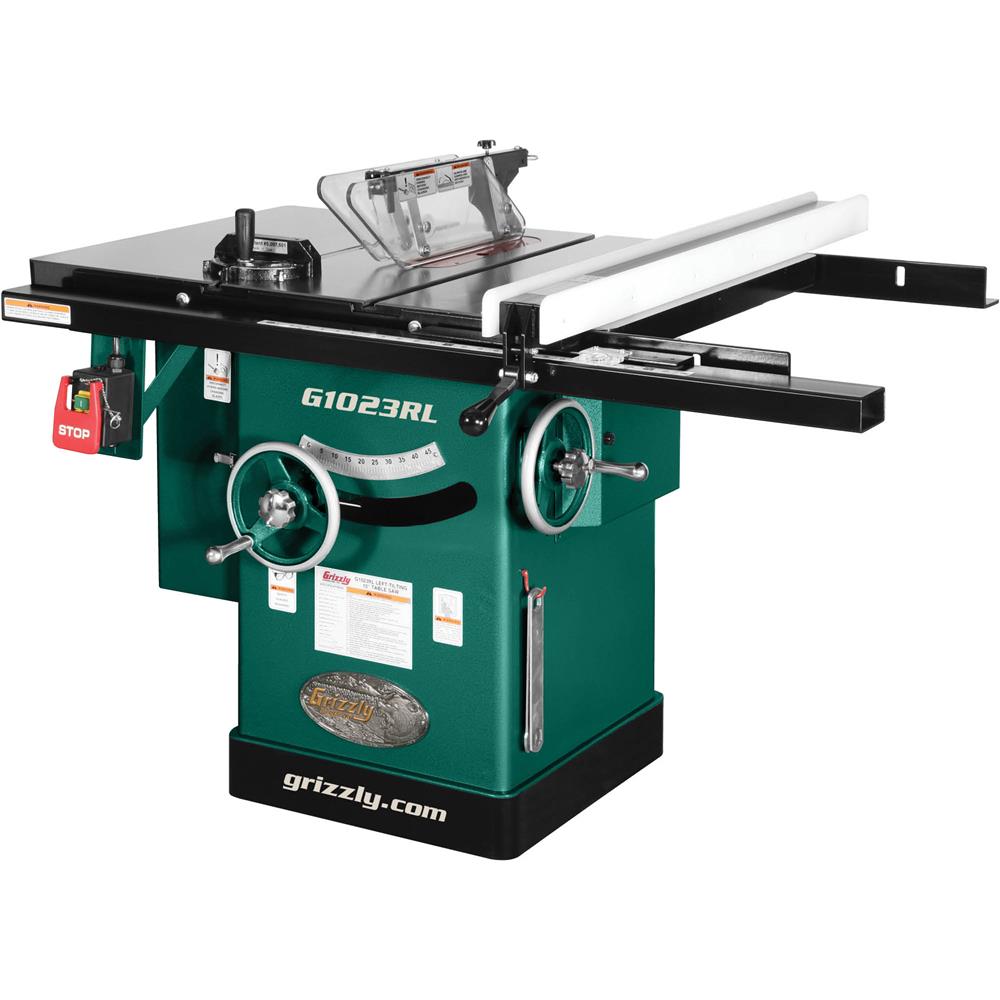
If a cabinet table saw wins for your shop, the Grizzly G1023RL is a strong pick from Grizzly Industrial, often priced lower factory-direct than through a reseller and backed by full parts availability and U.S. support:
Quick Verdict
The Short Answer
Choose a track saw if you primarily work with sheet goods, need portability, have limited shop space, or do jobsite work. Choose a table saw if you need to make repetitive rip cuts, use dado blades, work with jigs, or already have a dedicated shop. Many serious woodworkers own both because they solve different problems.
The track saw vs table saw question does not have a single right answer. These tools overlap in capability but each has distinct advantages. A track saw brings the saw to the material, while a table saw brings the material to the saw. This fundamental difference determines which tool works better for specific situations.
Quick Comparison Table
Before diving into the details, here is a side-by-side comparison of the key differences between track saws and table saws:
| Feature | Track Saw | Table Saw |
|---|---|---|
| Price Range | $150 - $700 (saw + track) | $300 - $5,000+ |
| Portability | Excellent (10-15 lbs) | Poor to moderate (50-800 lbs) |
| Sheet Goods | Excellent | Good (needs outfeed support) |
| Rip Cuts | Good (requires setup each time) | Excellent (set fence once) |
| Crosscuts | Excellent | Good (with sled or miter gauge) |
| Cut Accuracy | Excellent (the rail's splinter strip marks the exact cut line) | Excellent (depends on fence) |
| Safety | High (riving knife and anti-kickback clutch on most models) | Moderate (kickback possible) |
| Dado Cuts | Not possible | Yes (with dado blade set) |
| Space Required | Minimal (stores flat) | Significant (permanent footprint) |
| Best For | Sheet breakdown, jobsite, small shops | Repetitive cuts, joinery, dedicated shops |
When a Track Saw Excels
Sheet Goods Breakdown
Track saws were designed specifically for cutting large sheet materials like plywood, MDF, and melamine. A 4x8 foot sheet of plywood is awkward and potentially dangerous to push through a table saw alone. With a track saw, you place the track on the material, make your cut, and move on.
The track saw approach offers several advantages for sheet goods:
- Work on the material where it lies: No need to lift heavy sheets onto a table saw or wrestle them through the blade.
- Clean, splinter-free cuts: The anti-splinter strip on quality track systems produces cleaner edges than most table saw setups.
- Full support throughout the cut: The sheet stays fully supported on sawhorses or the floor, eliminating the need for outfeed tables.
- Easy to cut oversized material: Panels larger than standard sheets present no additional challenge.
Jobsite Work
If you do any work outside your shop, track saws offer unmatched portability. A track saw and two 55-inch tracks fit in a car trunk. Try that with a table saw.
Carpenters, installers, and remodelers find track saws invaluable for:
- Cutting countertops to length on-site
- Breaking down sheet goods where they will be installed
- Making precise cuts in rooms too small for a table saw setup
- Working in multi-story buildings where hauling heavy equipment is impractical
Space-Constrained Shops
A track saw and tracks can hang on a wall or slide under a workbench when not in use. A table saw, even a small contractor model, demands permanent floor space plus clearance for infeed and outfeed.
For garage shops that share space with vehicles, apartment workshops, or any situation where space is at a premium, a track saw makes previously impossible work possible.
Precise Crosscuts
Making accurate crosscuts on a table saw requires either a well-tuned miter gauge or a crosscut sled. Both have limitations: miter gauges lack rigidity for wide boards, and sleds are limited to boards narrower than the sled.
A track saw crosscuts boards of any width with the same setup. Place the track perpendicular to the grain, make your cut. The track ensures straight, accurate cuts regardless of board width.
When a Table Saw Excels
Repetitive Rip Cuts
When you need to rip 20 identical strips for a cutting board or produce consistent width boards for a furniture project, nothing beats a table saw with a quality fence. Set the fence once, make your cuts. The table saw excels at this kind of production work.
With a track saw, each rip cut requires positioning the track at the correct distance from the edge, clamping it, making the cut, and repeating. For one or two cuts, this is fine. For 20 cuts, it becomes tedious and introduces more opportunities for error.
Dado and Rabbet Joints
Table saws accept dado blade sets that cut grooves and rabbets in a single pass. These joints are fundamental to cabinet making, bookshelf construction, and many furniture designs. Track saws cannot make these cuts at all.
While you can make dado cuts with other tools (router, multiple track saw passes), none match the speed and consistency of a table saw with a dado stack.
Jig-Based Operations
The table saw's flat surface and fence system enable countless jig-based operations:
- Taper jigs: Cut consistent tapered legs for tables and chairs
- Box joint jigs: Create finger joints for decorative boxes
- Tenoning jigs: Cut accurate tenons for mortise-and-tenon joinery
- Cove cutting: Shape concave moldings by passing stock over the blade at an angle
These operations rely on the table saw's fixed blade position and adjustable fence. They simply are not possible with a track saw.
Narrow Rip Cuts
Ripping narrow strips (under 2 inches) is straightforward on a table saw with appropriate push sticks. With a track saw, narrow rips become problematic because there is insufficient material to support the track and the narrow offcut may not fully clear the blade.
Resawing Thick Stock
While neither tool is ideal for resawing (a bandsaw excels here), table saws can resaw stock thicker than track saw maximum cutting depth. A cabinet saw can resaw up to about 3 inches; most track saws max out at 2-1/4 inches.
Track Saw: Pros and Cons
Advantages of Track Saws
- Portability: A complete track saw system weighs under 30 pounds and fits in a car. Take precision cutting capability anywhere.
- Safety: No kickback risk because the workpiece stays stationary. The blade is fully enclosed during operation. Hands naturally stay far from the blade path.
- Space efficiency: Stores flat against a wall or in a closet. No permanent shop footprint required.
- Clean cuts: Anti-splinter strips produce cleaner edges than most table saw setups, often eliminating need for edge cleanup.
- Sheet goods mastery: Breaking down large panels is faster, easier, and safer than on a table saw.
- Precise bevel cuts: Many track saws offer micro-adjustable bevel settings superior to most table saws.
- Lower entry cost: A quality track saw system costs less than a quality table saw.
Disadvantages of Track Saws
- Setup for each cut: Every cut requires positioning and clamping the track. This adds time compared to table saw fence adjustments.
- No dado capability: Cannot cut grooves, rabbets, or other joinery cuts that require specialized blades.
- Limited jig compatibility: Most woodworking jigs are designed for table saws.
- Depth limitations: Most track saws cut about 2-1/4 inches maximum depth, limiting thick stock work.
- Track storage: 55-inch or longer tracks require storage space even if the saw itself is compact.
- Less efficient for repetitive cuts: Multiple identical rip cuts take longer than with a table saw.
- Blade selection: Fewer blade options compared to table saws, and blades are more expensive per-inch of diameter.
Table Saw: Pros and Cons
Advantages of Table Saws
- Repetitive cut efficiency: Set the fence once, make dozens of identical cuts quickly.
- Dado capability: Cut grooves, rabbets, and other joinery cuts essential for cabinet and furniture work.
- Jig ecosystem: Countless jigs extend table saw capability for specialized operations.
- Power: Cabinet saws offer 3-5 HP for cutting thick hardwoods without slowing.
- Larger cut capacity: Cut thicker stock than track saws allow.
- Established workflow: Most woodworking plans and techniques assume table saw availability.
- Blade variety: Wide selection of blades for different materials and cut types.
Disadvantages of Table Saws
- Kickback risk: Improper technique or bound material can eject workpieces at dangerous speeds.
- Space requirements: Even small table saws need 8-10 feet of clearance for infeed and outfeed.
- Sheet goods challenges: Full sheets require helpers or extensive support setups.
- Weight and portability: Even portable models weigh 50+ pounds. Cabinet saws exceed 500 pounds.
- Higher cost for quality: A quality table saw with a reliable fence costs more than a track saw system.
- Electrical requirements: Larger table saws require 240V circuits.
- Dust generation: Table saws produce significant dust requiring robust collection.
Can You Have Both? Complementary Tools
The track saw vs table saw question often has a third answer: get both. Many serious woodworkers find these tools complement rather than compete with each other.
The Case for Both Tools
Consider how a typical furniture project might use both tools:
- Track saw: Break down plywood sheets into rough-sized panels in the driveway or wherever you have space.
- Table saw: Rip solid wood components to final width with consistent, repeatable cuts.
- Track saw: Crosscut panels to final length with clean, splinter-free edges.
- Table saw: Cut dados for shelf pins, rabbets for back panels, and grooves for drawer bottoms.
- Track saw: Make final fitting cuts during assembly when pieces cannot easily reach the table saw.
Neither tool alone handles this workflow as efficiently as both together.
Budget Strategy
If budget limits you to one tool initially, consider your primary work:
- Mostly sheet goods (cabinets, built-ins): Start with a track saw. Add a table saw later for joinery.
- Mostly solid wood furniture: Start with a table saw. Add a track saw when sheet breakdown becomes frustrating.
- Mixed work or uncertain: A mid-range contractor table saw offers more versatility as a first saw. Add a track saw as budget allows.
Space Considerations
Having both tools does not require double the space. The track saw stores compactly when not in use, adding essentially zero footprint to a shop that already has a table saw.
Top Track Saw Picks
Premium Track Saws
Festool TS 55 REQ-F-Plus
The industry benchmark. 1200W motor, micro-adjustable depth, exceptional dust collection, FastFix blade changes. Unmatched fit and finish. Premium price but holds value.
Festool TS 55 FEQ-F-Plus-FS with Guide Rail
Latest generation Festool track saw with 55-inch guide rail included. Brushless motor, improved dust extraction, spring-loaded plunge. Complete system ready to work.
Mid-Range Track Saws
Makita SP6000J with 55" Guide Rail
12A motor, 2-9/16" cut capacity, variable speed (2000-5200 RPM), electronic speed control. Excellent value with Makita reliability. Includes carrying case.
DeWalt DWS520K TrackSaw Kit
12A/1300W motor, variable speed (1750-4000 RPM), 2-1/8" cut depth at 90 degrees. Excellent dust collection, durable construction. Track sold separately.
Kreg ACS Adaptive Cutting System
12A motor, innovative track system with built-in measuring, self-squaring capability. Unique approach that simplifies setup. Complete system with saw, track, and project table available.
Budget Track Saws
WEN CT1065 Plunge Cut Track Saw
10A motor, 5500 RPM, 2-1/3" cut depth. Remarkable value for occasional use. Compatible with WEN track system. Good entry point to experience track saw benefits.
Track Investment Matters
Budget for quality tracks regardless of saw choice. A premium track improves any saw's performance, while a cheap track limits even the best saw. Consider starting with one 55-inch track and adding a second with connectors when you need full-sheet ripping capability.
Sources
- Makita, Festool, DeWalt and SawStop product specifications
- OSHA woodworking machinery guidance on table saw kickback and guarding
- Consumer Product Safety Commission data on table saw injuries
Researched from published specifications and standards, not hands-on testing. Not professional advice.
Frequently Asked Questions
Is a track saw or table saw better for sheet goods?
A track saw. You lay the rail on a full 4 x 8 sheet and cut it on the floor or a foam board, with no need to lift and feed the sheet across a table. A table saw can rip plywood well only with outfeed support and, for full sheets, a second person.
Should I buy a track saw or table saw first?
If most of your projects start with plywood (cabinets, built-ins, shelving) or space is tight, buy the track saw first. If you build furniture from solid lumber and need repeatable rips and joinery, start with a table saw.
Do I need a track saw if I have a table saw?
Many serious woodworkers find value in owning both. A track saw excels at breaking down large sheet goods on-site or in tight spaces where you cannot feed full sheets through a table saw. If you frequently work with plywood, MDF, or do jobsite work, a track saw complements your table saw rather than replacing it.
Can a track saw replace a table saw?
For some woodworkers, yes. If you primarily work with sheet goods and do occasional furniture projects, a quality track saw can handle most cuts. However, table saws excel at repetitive rip cuts, dado operations, and jig-based work that track saws cannot easily replicate. Most serious shops benefit from having both tools.
Are track saws safer than table saws?
Track saws offer several safety advantages: the blade is fully enclosed during operation, there is no risk of kickback because the workpiece remains stationary, and hands stay far from the blade path. Table saws with SawStop technology provide active injury prevention, but the fundamental design of track saws makes certain accidents nearly impossible.
What is the best track saw for beginners?
The Makita SP6000J offers an excellent balance of quality and value for beginners. The DeWalt DWS520K is another solid choice with good availability of replacement parts. For budget-conscious beginners, the WEN CT1065 provides entry into track saw ownership at under $150, though it lacks some refinements of premium models.
How accurate are track saws compared to table saws?
Quality track saws match or exceed table saw accuracy for crosscuts and sheet breakdown. The anti-splinter strip on track saw rails produces cleaner edges than most table saw setups. For repetitive rip cuts at identical widths, table saws with quality fences offer faster, more consistent results.
What track length do I need?
A 55-inch track handles most sheet goods crosscuts and fits in a car easily. For ripping full plywood sheets lengthwise, you will need two tracks connected with joiners (typically 108-110 inches total). Many woodworkers start with one 55-inch track and add a second as needed.
Can I use a track saw without the track?
Technically yes, most track saws function as plunge-cut circular saws without the track. However, you lose the precision, anti-splinter benefits, and safety advantages that make track saws valuable. If you frequently need trackless circular saw capability, consider a dedicated circular saw instead.
Are track saws compatible across brands?
Some track saws work with other brands' tracks using adapters, but results vary. Festool tracks work with many saws via adapters. Makita, DeWalt, and other brands often have proprietary track systems optimized for their saws. For best results, match your track to your saw or research compatibility carefully before mixing brands.
Final Verdict by User Type
Your ideal choice depends on your specific situation. Here is our recommendation by user type:
Get a Track Saw If You Are:
- A contractor or installer: Portability and jobsite capability make track saws essential for professional work outside the shop.
- Working in a small or shared space: If your shop is a garage that also parks cars, a track saw lets you do precision work without permanent floor space commitment.
- Primarily working with sheet goods: Cabinet makers and built-in specialists will use a track saw constantly.
- Concerned about safety: If table saw kickback concerns you, track saws eliminate that risk entirely.
- On a tight budget: A quality track saw system costs less than a quality table saw and fence.
Get a Table Saw If You Are:
- Building furniture from solid wood: Repetitive rip cuts, dados for joinery, and jig-based operations require a table saw.
- Setting up a dedicated workshop: With permanent space, a table saw becomes the center of an efficient workflow.
- Doing production work: When you need to make the same cut dozens or hundreds of times, table saw efficiency pays off.
- Working with thick stock: Table saws handle thicker material than track saws.
- Following woodworking plans: Most plans assume table saw availability for joinery and component production.
Get Both If You:
- Do mixed sheet goods and solid wood work: This combination covers all bases efficiently.
- Want the best tool for each job: Neither tool does everything well, but together they handle nearly any cutting task.
- Value time and precision: Using the right tool for each operation produces better results faster.
- Have the budget and storage space: Even small shops can accommodate both when the track saw stores vertically.
Our Recommendation
For most woodworkers, a table saw should come first because of its versatility and central role in traditional woodworking. Add a track saw when you find yourself wrestling with sheet goods or wishing you could make precision cuts outside your shop. The track saw will quickly prove its value as a complement to your table saw rather than a competitor.