Best Bandsaws 2026: Top Picks for Woodworking & Resawing
What size bandsaw do I need? Whether you are looking for the best bandsaw for resawing thick hardwoods, a dependable 14-inch floor model for general woodworking, or an affordable benchtop unit for a small garage shop, this guide has you covered. We have evaluated the 7 best bandsaws for 2026 across every price point, from premium cast-iron 14-inch machines like the JET JWBS-14SFX and Powermatic PWBS-14CS to entry-level benchtop models under $200. After analyzing specifications, resaw performance data, blade guide quality, fence accuracy, and thousands of owner reviews, here are the bandsaws that deliver the best cutting performance for your money. The bandsaw is arguably the most versatile saw in any woodworking shop, and choosing the right one will transform what you can build. These are all woodworking bandsaws; if you need to cut steel and metal stock instead, see our guide to the best metal-cutting bandsaws 2026, or read our wood vs metal bandsaw comparison to understand why blade speed, teeth, and coolant make the two far from interchangeable.
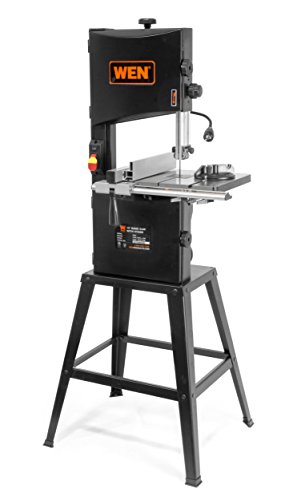
For a 14-inch home-shop bandsaw, the Grizzly G0555 14 in 1 HP bandsaw (13-1/2 in throat, 6 in resaw height, cast-iron table) is the direct-buy pick; on Amazon the closest match is the WEN BA1487 14 in.
Quick Picks: Best Bandsaws 2026
Short on time? Here are our top recommendations for different needs and budgets:



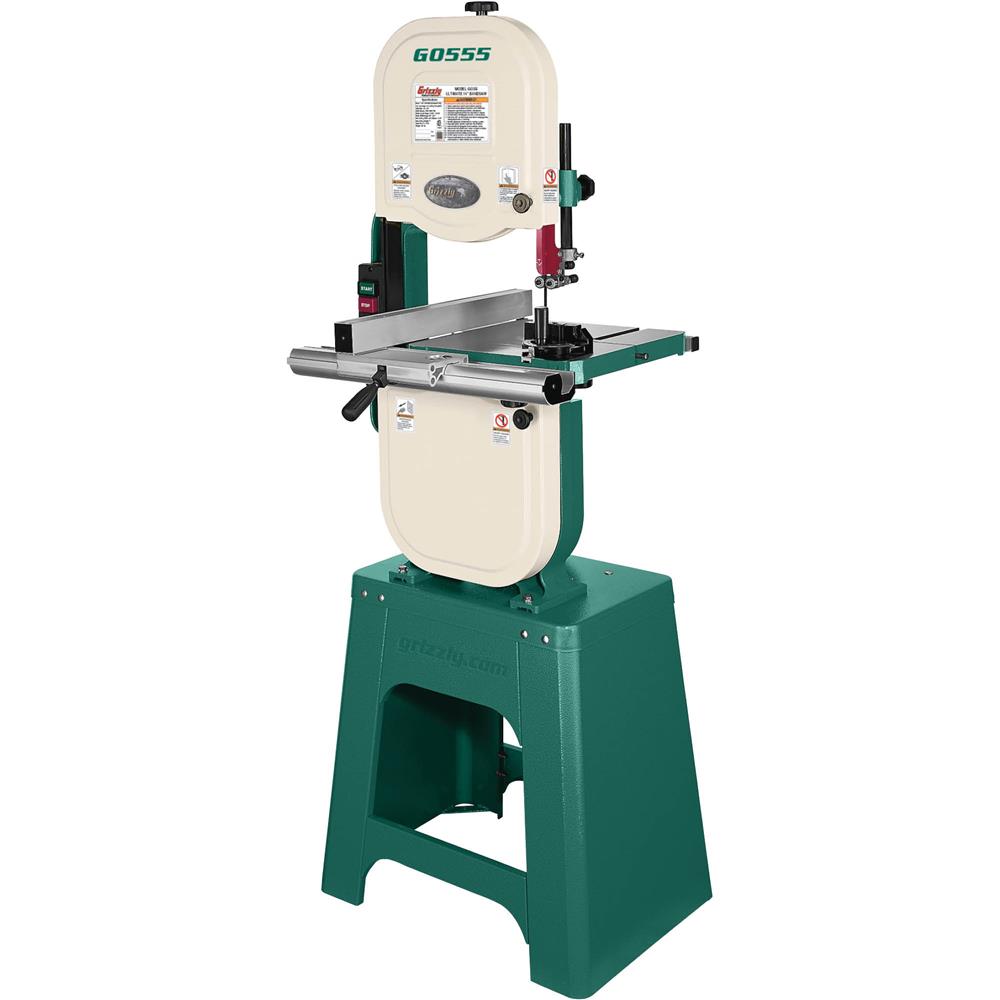
Prefer to buy direct? The Grizzly G0555 14" 1 HP Bandsaw is a strong 14-inch bandsaw from Grizzly Industrial, often priced lower factory-direct than through a reseller and backed by full parts availability and U.S. support.
Shop the G0555 at Grizzly.com →How We Evaluated
Our Evaluation Criteria
We evaluated each bandsaw based on the metrics that matter most to woodworkers: resaw capacity and accuracy, blade guide quality, motor power under load, fence precision, and overall value for money. A bandsaw that cannot track a straight line during resawing or that deflects under cutting pressure will produce disappointing results regardless of its price tag.
Resaw Performance
Maximum resaw height, blade drift, and cut consistency through hardwoods
Blade Guide Quality
Guide type, adjustability, blade support, and tracking precision
Motor Power
Sustained cutting power, ability to maintain speed under heavy load
Value for Money
Performance relative to price, included accessories, and fence quality
Detailed Product Reviews
JWBS-14SFX 14" Woodworking Bandsaw
Best OverallThe JET JWBS-14SFX is our top pick for woodworkers who want a bandsaw that can handle anything from delicate scroll work to serious resawing. The 1-3/4 HP motor provides relentless cutting power, maintaining blade speed through thick hardwoods like hard maple and white oak without hesitation. With roughly 12 inches of resaw capacity and a 13.5-inch throat, this saw handles the stock sizes most home shops will ever need. The precision ball bearing blade guides above and below the table keep the blade tracking true, and the heavy cast-iron frame virtually eliminates vibration. The included fence is serviceable, though serious resawers may upgrade to an aftermarket option for micro-adjustment. JET backs this saw with a long warranty and strong parts availability, making the JWBS-14SFX the best all-around bandsaw in this lineup.
Pros
- Strong 1-3/4 HP motor handles dense hardwoods
- Roughly 12 inches of resaw capacity
- Precision ball bearing blade guides
- Heavy cast-iron frame minimizes vibration
- Runs on 115V or 230V single phase
- Long JET warranty and good parts support
Cons
- Limited stock at last check
- Heavy, needs help for setup
- Stock fence adequate but not exceptional
- Large footprint requires dedicated floor space
BA1487 14" Two-Speed Band Saw
Best 14-inchThe WEN BA1487 is the 14-inch bandsaw we recommend to the majority of home woodworkers who want a real floor-standing machine without a premium price. It hits the sweet spot across every metric that matters: a two-speed drive lets you match blade speed to the material, the 13.5-inch throat covers furniture and cabinet work, and the ball bearing blade guides deliver tracking precision that benchtop saws simply cannot match. The cast-iron table is flat and true, and the included stand keeps the saw at a comfortable working height. WEN has built a strong reputation for affordable tools backed by responsive customer service. If you are shopping for a 14-inch bandsaw and want the best combination of features, performance, and value, the BA1487 should be at the top of your list.
Pros
- Two-speed drive matches blade speed to material
- Full 13.5-inch throat for wide work
- Ball bearing blade guides for accurate tracking
- Floor-standing stand included
- Strong value for a 14-inch saw
- Responsive WEN customer support
Cons
- Limited stock at last check
- 6-inch stock resaw height
- Dust collection port could be larger
- Fence is functional but basic
BA3962 10" Two-Speed Band Saw
Budget PickThe WEN BA3962 proves that you do not need to spend a fortune to own a capable bandsaw. This 10-inch model ships with its own stand and delivers surprisingly smooth cuts for the price. The two-speed motor (1520 and 2620 FPM) lets you match blade speed to the material, and the 6-inch resaw capacity handles basic resawing of standard lumber widths. The ball bearing blade guides are a standout feature at this price point, as most competitors in this range use inferior steel block guides. The rack-and-pinion table tilt adjustment is precise, and the included miter gauge works for basic angle cuts. The WEN BA3962 is ideal for beginners, hobbyists, and small shop owners who need bandsaw capability without the footprint or cost of a large floor model. Pair it with a good 1/2-inch resaw blade and you will be amazed at what this saw can do.
Pros
- Strong value with stand included
- Two-speed motor for versatility
- Ball bearing blade guides (rare at this price)
- Compact footprint saves space
- 6" resaw handles standard lumber
- Large flat table for its size class
Cons
- Limited throat capacity for wider stock
- 3.5A motor struggles with thick hardwoods
- Stock fence is basic and can flex
- Dust collection is minimal
- Not suitable for serious resawing
10-1414 Deluxe 1.75 HP 14" Bandsaw
Editor's ChoiceThe Rikon 10-1414 Deluxe is the bandsaw serious woodworkers buy when resaw capacity is the priority. It delivers a true 14 inches of cutting height under the guides, the deepest in this lineup, without a riser block. The 1.75 HP dual-voltage motor (115/230V) powers through thick hardwoods, two selectable blade speeds (1,476 and 3,280 ft/min) match the saw to the material, and the polymer-coated cast-iron table and cast-iron trunnion keep everything rigid. Spring-loaded tool-less blade guides and a micro-adjustable drift fence make setup fast, and dual 2.5-inch and 4-inch dust ports keep the cabinet clean. It costs more than entry 14-inch saws, but the capacity and build quality justify the premium.
Pros
- Full 14" resaw capacity without a riser block
- 1.75 HP dual-voltage motor (115/230V)
- Two blade speeds for wood and soft metals
- Cast-iron table and trunnion
- Tool-less blade guides and quick-adjust fence
- Dual 2.5" and 4" dust ports
Cons
- Premium price over entry 14" saws
- Heavy machine, plan the move
- 230V wiring recommended for full performance
JWBS-14CS 14" Woodworking Band Saw
Pro PickThe JET JWBS-14CS represents the classic, professional-grade end of the 14-inch bandsaw market. JET has a long history of building commercial-quality woodworking tools, and this bandsaw reflects that heritage in every detail. The cast-iron frame creates a vibration-free cutting platform, and the design is one of the most proven and widely supported in the trade, so accessories and riser blocks are easy to source. The precision ball bearing blade guides keep the blade tracking dead straight, and the saw runs on either 115V or 230V single phase for flexible shop wiring. The 6-inch stock resaw capacity can be extended with a riser block for serious resawing. While the 1 HP motor is best matched to general work and light resawing rather than heavy production cutting, the JWBS-14CS truly shines in build quality and long-term reliability, backed by an industry-leading JET warranty.
Pros
- Cast-iron frame for vibration-free cutting
- Proven design with easy accessory support
- Precision ball bearing blade guides
- Runs on 115V or 230V single phase
- Professional-grade build quality
- Industry-leading JET warranty
Cons
- 1 HP motor limits heavy resawing speed
- 6-inch stock resaw without a riser block
- Premium price for the 14-inch class
- Very heavy and difficult to move
BA3959 9" Benchtop Band Saw
Best Small ShopThe WEN BA3959 is the entry point into bandsaw ownership and an ideal choice for small shop woodworkers, crafters, and hobbyists who need basic bandsaw capability in the smallest possible footprint. At well under $200, it is the most affordable bandsaw on our list, yet it delivers surprisingly clean cuts for its class. The 2.8-amp motor handles softwoods and thin hardwoods without complaint, and the compact 9-inch throat is sufficient for small boxes, jewelry, cutting board blanks, and scroll-style work with narrow blades. The blade guides are basic but functional, and the tilting table enables angle cuts up to 45 degrees. The 3.5-inch resaw capacity is limited, but adequate for cutting thin stock and small project components. If you are testing the waters with a bandsaw or need a compact unit that tucks away on a shelf when not in use, the WEN BA3959 is hard to beat for the price. Just do not expect it to resaw 8/4 lumber.
Pros
- Lowest price on our list, well under $200
- Ultra-compact footprint fits any shop
- Lightweight and portable
- Good for scroll cuts and small work
- Tilting table for angle cuts
- Runs on standard household outlet
Cons
- Very limited resaw capacity (3.5")
- 2.8A motor struggles with hardwoods
- Basic guides need frequent adjustment
- Minimal dust collection
- Fence is barely functional
- Not suitable for serious woodworking
PWBS-14CS 14" Woodworking Bandsaw
Best ValueThe Powermatic PWBS-14CS is the 14-inch bandsaw for woodworkers who want a machine that will outlast everything else in the shop. Powermatic has refined this design over decades, and the result is a heavy, rigid, no-nonsense saw that does everything a 14-inch bandsaw should do with a smoothness that cheaper machines cannot match. The 1.5 HP motor is comfortable with general woodworking and moderate resawing, and runs on either 115V or 230V single phase. The ball bearing blade guides provide accurate tracking, and the thick cast-iron table and trunnion deliver the rigidity you need for precise cuts. The 6-inch stock resaw capacity handles standard lumber, and a riser block is available if you need more height. The blade tension system is smooth and positive. For the woodworker who values a heirloom-grade tool and Powermatic build quality, the PWBS-14CS is a saw you will never outgrow.
Pros
- Heirloom-grade Powermatic build quality
- Ball bearing blade guides for accurate tracking
- Thick cast-iron table, trunnion, and frame
- Smooth, positive blade tension system
- Runs on 115V or 230V single phase
- Proven design refined over decades
Cons
- Highest price among the 14-inch saws
- 6" stock resaw capacity (riser block extra)
- Limited stock at last check
- Very heavy and difficult to move
Calculate Board Feet for Your Resaw Projects
Use our board feet calculator to figure out exactly how much lumber you need and how much you will save by resawing your own stock instead of buying thinner boards.
What Size Bandsaw Do I Need?
This is the most common question we get, and the answer depends on your shop size, the type of woodworking you do, and how much resawing you plan to tackle. The "size" of a bandsaw refers to its throat capacity, which is the distance from the blade to the vertical frame. Here is a quick reference to help you choose the right bandsaw size:
| Shop Type | Typical Projects | Recommended Size | Resaw Capacity | Our Pick |
|---|---|---|---|---|
| Hobby / Small Garage | Small boxes, scroll cuts, light ripping | 9-10 inch | 3.5-6 inches | WEN BA3959 9" |
| Home Woodworker | Furniture, cabinets, general joinery | 14 inch | 6-13 inches | WEN BA1487 14" |
| Serious Hobbyist | Resawing, veneering, bookmatching, thick stock | 14 inch (with riser) | 12-13 inches | Rikon 10-1414 |
| Professional / Production | Production resawing, wide slabs, large curves | 17-18 inch | 12-16 inches | JET JWBS-14SFX |
| Home Woodworker (direct buy) | Furniture, cabinets, general joinery | 14 inch, 1 HP | 6 inches | Grizzly G0555 14 in |
Pro Tip: Most 14-inch bandsaws offer optional riser blocks that increase the resaw capacity by 6 inches. If you are on the fence between a 14-inch and 17-inch, consider a quality 14-inch with a riser block. You get the resaw height of a larger saw at a lower cost, though you sacrifice some frame rigidity. For an exact lumber calculation based on your resawing plans, use our Board Feet Calculator.

Photo via Unsplash
Complete Buying Guide: What to Look For
Before purchasing a bandsaw, understanding these key factors will help you make an informed decision that matches your woodworking needs. Unlike a table saw, which excels at straight rip cuts and crosscuts, the bandsaw's true strengths lie in resawing, curve cutting, and safely handling thick or irregularly shaped stock. If you are trying to decide between the two, check out our table saw vs bandsaw comparison.
Throat Capacity
Throat capacity is the distance from the blade to the vertical frame of the bandsaw. This measurement determines how wide a board you can cut. It is the number used to classify the bandsaw size, so a "14-inch bandsaw" has roughly 13.5 inches of throat capacity.
- 9-10 inch: Benchtop models for small projects, scrollwork, and light cutting tasks. Limited to narrow stock.
- 14 inch: The most popular size for home workshops. Handles boards up to about 13.5 inches wide, which covers the vast majority of furniture and cabinet projects.
- 17-18 inch: Floor-standing models for serious woodworkers and professional shops. Accommodates wider slabs and provides more power and rigidity.
- 20+ inch: Industrial machines for production work. Overkill for most home shops but necessary for lumber mills and high-volume resawing.
Rule of thumb: Buy the largest throat capacity your budget and space allow. You can always cut smaller pieces on a bigger saw, but you cannot cut wider stock on a smaller one.
Resaw Capacity
Resaw capacity is the maximum height of a cut, measured from the table to the upper blade guide. This is the critical specification for woodworkers who want to slice thick boards into thinner pieces, cut veneers, or bookmatch panels.
| Resaw Height | What You Can Do | Typical Saw Size |
|---|---|---|
| 3-4 inches | Thin stock prep, small box parts | 9-10 inch benchtop |
| 6 inches | Standard lumber resawing, basic bookmatching | 14 inch (standard) |
| 10-12 inches | Wide board resawing, thick slab work, full veneering | 14 inch (with riser block) |
| 13-16 inches | Production resawing, wide hardwood slabs, full-size veneers | 17-18 inch floor model |
If resawing is a primary use case, resaw capacity should be your top priority. A saw with a weak motor but tall resaw height will still struggle, so pair adequate resaw capacity with sufficient horsepower for best results.
Motor Power
Motor power determines how thick and hard the material you can cut without the blade bogging down. Bandsaw motors are rated in horsepower (HP) for induction motors or amps for universal motors on benchtop models.
- 2-3.5 Amps (benchtop): Adequate for softwoods and thin hardwoods. Will struggle with thick resawing or dense species like hard maple and white oak.
- 1 HP: Handles general-purpose cutting and light resawing up to 6 inches in moderate hardwoods. The minimum for a serious 14-inch bandsaw.
- 1.5-1.75 HP: The sweet spot for most 14-inch bandsaws. Handles resawing up to 12 inches with the right blade and feed rate. Sufficient for most home shop work.
- 2+ HP: Required for 17-inch and larger saws or heavy production resawing. Maintains blade speed through thick, dense hardwoods without hesitation.
Important: More horsepower means you can feed stock faster and resaw taller pieces without blade deflection. If you plan to resaw regularly, do not skimp on motor power. A saw that bogs down during resawing produces wavy, uneven cuts that waste wood and require additional planing.
Blade Guides
Blade guides keep the blade tracking straight and prevent deflection, directly impacting cut quality and accuracy. There are three main types, and the difference in performance is substantial:
- Steel Block Guides: Found on budget saws. Adequate for basic work but create friction and wear on the blade. Require frequent adjustment.
- Cool Blocks (non-metallic): Composite or ceramic blocks that reduce friction and heat. Better blade life than steel blocks. Found on mid-range saws and available as aftermarket upgrades.
- Ball Bearing Guides: The gold standard. Three precision bearings (two side guides and one thrust bearing) support the blade with minimal friction. Result: straighter cuts, longer blade life, and less vibration. Found on quality 14-inch and larger saws.
If your bandsaw comes with steel block guides, upgrading to bearing guides ($50-$150) is one of the single best improvements you can make. The difference in resaw accuracy alone is worth the investment. For more on the differences between bandsaws and scroll saws for curve cutting, see our scroll saw vs band saw comparison.
Fence Quality
A good fence is essential for accurate rip cuts and consistent resawing. Unfortunately, the fence is where many bandsaw manufacturers cut corners. Here is what to look for:
- Rigidity: The fence must not deflect under side pressure. Cheap stamped-steel fences wobble and produce inconsistent cuts.
- Micro-adjustment: Fine-tuning the fence position by small increments is critical for precise resawing. Look for fences with a micro-adjust knob.
- Drift compensation: Every bandsaw blade drifts slightly. The best fences allow you to angle them to compensate for blade drift, ensuring your resaw cuts are parallel to the reference face.
- Height: For resawing, you need a tall fence (at least as tall as the stock being cut) to support the workpiece through the full height of the cut.
Many experienced woodworkers replace the stock fence with an aftermarket option like the Kreg Bandsaw Fence or Carter Magfence. Budget $80-$200 for a quality aftermarket fence if the stock fence is inadequate.
Dust Collection
Bandsaws generate a surprising amount of fine dust, especially during resawing. Effective dust collection keeps your cuts visible and your lungs healthy. Consider these factors:
- Dust port size: Look for a 4-inch dust port. Smaller 2.5-inch ports restrict airflow and clog easily. Some benchtop saws only include a 2.5-inch port, which is barely adequate.
- Port placement: The dust port should be positioned at the lower wheel housing where most sawdust accumulates. Some models add a second port near the upper guides for fine dust capture.
- Enclosed housing: Fully enclosed wheel housings capture dust better than open designs. Look for tight-fitting doors with gaskets.
- CFM requirements: A 14-inch bandsaw typically needs 350-400 CFM for effective dust extraction. A properly sized dust collection system makes a significant difference in shop air quality.
Even with good dust collection, wear a dust mask or respirator when resawing. The blade action flings fine particles into the air faster than most collection systems can capture them.
Frequently Asked Questions
For most home woodworkers, a 14-inch bandsaw is the sweet spot. It offers enough throat capacity (13-14 inches) for the majority of projects and sufficient resaw height (6-13 inches depending on the model) for veneering and bookmatching. If you primarily do small craft work or scroll cutting, a 9-inch benchtop model like the WEN BA3959 will suffice. If you regularly resaw wide hardwood slabs, step up to a heavier 14-inch machine like the JET JWBS-14SFX.
A bandsaw cannot fully replace a table saw, but it can handle many of the same tasks. Bandsaws excel at resawing, curve cutting, and safely handling thick or irregularly shaped stock. However, table saws are superior for making precise straight crosscuts, dado cuts, and repetitive rip cuts with perfectly flat edges. Many woodworkers consider a quality 14-inch bandsaw with a good fence to be the more versatile tool if they can only own one. For a full breakdown, see our table saw vs bandsaw comparison.
Resaw capacity is the maximum height of a cut a bandsaw can make, measured from the table surface to the upper blade guides. This determines the widest board you can slice into thinner pieces. For example, a bandsaw with 6-inch resaw capacity can split a 6-inch wide board into thinner slabs. For bookmatching and veneer cutting, look for at least 10-12 inches of resaw capacity. Many 14-inch bandsaws can be upgraded with riser blocks to add 6 inches of resaw height.
A 14-inch bandsaw handles 90% of woodworking tasks and fits most home shop budgets (under $2,500). The WEN BA1487 and Rikon 10-1414 are excellent 14-inch options. A 17-inch saw offers more throat capacity and typically a more powerful motor (2 HP vs 1-1.75 HP), better blade guides, and greater resaw height. Choose 17-inch if you regularly work with wide slabs or do production resawing. Otherwise, a quality 14-inch is the better value.
Blade width determines the minimum turning radius. For tight curves and scrollwork, use a 1/8-inch or 3/16-inch blade. For moderate curves like cabriole legs, a 1/4-inch blade works well. For gentle curves and general-purpose cutting, a 3/8-inch blade balances curve ability with straight-line stability. For resawing, use the widest blade your saw can accept (typically 3/4-inch to 1-inch on 14-inch saws) for the straightest, most accurate cuts. If tight curves are your primary focus, you may also want to consider a scroll saw for intricate work.
Blade guides are critical to bandsaw performance. They keep the blade tracking straight and prevent deflection during cuts, directly affecting cut quality and accuracy. There are three main types: steel block guides (basic, adequate for hobby use), cool blocks (reduced friction, longer blade life), and ball bearing guides (best performance, smoothest operation). Quality bearing guides make a noticeable difference in resaw accuracy and blade life. If your bandsaw comes with basic guides, upgrading to bearing guides ($50-$150) is one of the best improvements you can make.
Final Recommendations
After thorough evaluation, here are our recommendations for different scenarios:
Best Overall Bandsaw (Our #1 Pick)
The JET JWBS-14SFX 14-inch Bandsaw is our top recommendation for woodworkers who want a bandsaw that can do it all. The 1-3/4 HP motor, roughly 12-inch resaw capacity, cast-iron frame, and ball bearing blade guides deliver professional-grade performance with the proven JET reliability that holds its value. If you have the shop space and budget, this is the bandsaw you will never outgrow. It handles everything from delicate curve cutting to heavy-duty resawing of thick hardwoods without breaking a sweat.
Best 14-inch Bandsaw
The WEN BA1487 14-inch Bandsaw strikes the ideal balance between performance, build quality, and price in the most popular bandsaw category. The two-speed drive lets you match the blade to the material, the ball bearing guides track accurately, and the floor stand is included. For the home woodworker who wants a real 14-inch saw that handles everything from curves to resawing without a premium price, this is the one to buy.
Best Bandsaw for Resawing
The Rikon 10-1414 Deluxe 14-inch Bandsaw is purpose-built for serious resawing work. A full 14 inches of resaw capacity, a 1.75 HP dual-voltage motor, cast-iron table and trunnion, and tool-less blade guides produce clean resaw cuts that rival machines costing far more. If bookmatching, veneering, and thick stock resawing are your priorities, the 10-1414 delivers the deepest resaw in its class.
Best Budget Bandsaw
The WEN BA3962 10-inch Bandsaw proves you do not need to spend a fortune to get a capable bandsaw. With a 6-inch resaw capacity, a stand included, ball bearing guides, and surprisingly smooth operation for the price, it is an excellent entry point for beginners and small-shop woodworkers. It will not resaw 12-inch hardwood slabs, but for general cutting, curves, and light resawing, it punches well above its price class. Pair it with quality blades and you will be amazed at what a sub-$400 bandsaw can do.
Calculate Your Lumber Needs
Use our Board Feet Calculator to figure out how much lumber you need for your project, or check out our Dust Collection System Guide to set up proper dust extraction for your bandsaw and other shop tools.
Affiliate Disclosure: WorkshopCalc is reader-supported. When you buy through links on our site, we may earn an affiliate commission at no additional cost to you. This helps us maintain and improve our free calculators and guides. We only recommend products we believe provide genuine value to woodworkers.