9 Best Chainsaws 2026: Gas, Battery & Electric for Firewood, Felling & Milling
The chainsaw is one of the most capable, and most dangerous, tools you will own. Whether you are bucking firewood, felling trees on your property, maintaining woodlots, or milling your own lumber, choosing the right chainsaw for your application is critical. This guide covers the best chainsaws of 2026 across gas, battery, and electric power sources, from budget electric saws for occasional homeowner use to professional-grade Stihl and Husqvarna models that handle the most demanding cutting tasks.
Quick Picks: Our Top Recommendations
After extensive research, these are our top chainsaw picks for 2026 across every power source and use case:
Prices change on Amazon. Amounts shown are planning estimates, not live quotes. Tap any button for current pricing.
Product Comparison Table
Compare the key specifications of our top-rated chainsaws:
| Model | Power Source | Bar Length | Engine/Motor | Weight | Chain Type | Budget |
|---|---|---|---|---|---|---|
| Husqvarna 455 Rancher | Gas | 20 inches | 55.5cc 2-stroke | 12.8 lbs (w/o bar) | H80 / 3/8" | Under $1,000 |
| Husqvarna 460 Rancher | Gas | 24 inches | 60.3cc 2-stroke | 13.2 lbs (w/o bar) | H80 / full skip | Under $1,000 |
| Stihl MSA 60.0 C-B | Battery (36V) | 14 inches | 36V brushless motor | 8.4 lbs (w/o battery) | 1/4" PM3 | Under $500 |
| Husqvarna 542i XP 16-inch (Battery) | Battery (40V) | 16 inches | 40V brushless motor | 11.1 lbs (w/o battery) | X-Cut / 3/8" mini | Under $1,000 |
| Echo CS-590 Timber Wolf | Gas | 20 inches | 59.8cc 2-stroke | 13.2 lbs (w/o bar) | Oregon 72LPX | Under $500 |
| Milwaukee M18 FUEL 16-inch Chainsaw Kit | Battery (18V) | 16 inches | M18 brushless motor | 9.5 lbs (w/o battery) | Oregon 3/8" micro-lite | Under $1,000 |
| Oregon CS1500 | Electric (corded) | 18 inches | 15A / 120V motor | 10.4 lbs | Oregon 3/8" low-kickback | Under $250 |
| Holzfforma G888 122cc Milling Power Head | Gas | 36-59 inches | 122cc 2-stroke | 22.5 lbs (power head) | .404" full-skip / ripping | Under $1,000 |
| Husqvarna 540iXP 14-inch Rear-Handle (Battery) | Battery (40V) | 14 inches | 40V brushless motor | 6.6 lbs (w/o battery) | .325" narrow kerf | Under $1,000 |
Detailed Reviews

1. Husqvarna 455 Rancher
Gas ChainsawThe Husqvarna 455 Rancher is our pick for the best overall gas chainsaw, pairing a 55.5cc X-Torq engine with a 20-inch bar for serious property work. X-Torq reduces fuel use and emissions while keeping torque high through hardwood, and the air-injection system keeps the filter cleaner during long cutting sessions. This is the saw that serious landowners reach for when they want gas power that is widely available and easy to service.
Pros
- X-Torq 55.5cc engine balances power and fuel economy
- Excellent all-around bar length at 20 inches
- Air injection extends filter cleaning intervals
- Smart Start and combined choke/stop control for easy starting
- Widely available with strong Husqvarna service support
Cons
- Heavier than smaller homeowner saws for all-day limbing
- Requires 2-stroke fuel mixing
- Higher fuel use than smaller displacement saws
- Bar and chain need regular tensioning during break-in
Our Verdict
The Husqvarna 455 Rancher is our top pick for the best overall gas chainsaw. The X-Torq engine starts and runs consistently, the 20-inch bar covers most property trees, and parts and service are easy to find. If you are buying one gas saw for serious property management, this is it.

2. Husqvarna 460 Rancher
Gas ChainsawThe Husqvarna 460 Rancher is the definitive firewood chainsaw. The 60.3cc engine has enough displacement to efficiently drive 20-24 inch bars for large-diameter hardwoods, the air injection system keeps the air filter clean longer during sawdust-heavy firewood production, and the ergonomic design reduces fatigue during multi-hour cutting sessions.
Pros
- 60.3cc engine handles large-diameter hardwood without bogging
- Air injection pre-cleaner dramatically extends filter cleaning intervals
- Excellent balance and ergonomics for sustained firewood cutting
- X-Torq engine reduces fuel consumption and emissions
- Available in standard Oregon and Husqvarna bar configurations
Cons
- Heavier than the Stihl MS 261 C-M for all-day hand-carrying
- AutoTune system occasionally requires recalibration
- Available at dealers and some big-box stores, wider distribution
- Higher fuel consumption than smaller displacement alternatives
Our Verdict
The Husqvarna 460 Rancher is the best chainsaw for firewood production. The 60cc displacement handles hardwoods that stall smaller saws, the air injection system is genuinely time-saving during heavy cutting, and the ergonomics hold up through long sessions. This is the workhorse for anyone cutting significant firewood volumes annually.

3. Stihl MSA 60.0 C-B
Battery (36V) ChainsawThe Stihl MSA 60.0 C-B is the best battery chainsaw for homeowners, delivering quiet, zero-emission cutting with the instant start and low maintenance that battery saws are known for. It is lightweight and comfortable for green care, limbing, and small-tree work, and it runs on the widely available Stihl AK battery system. For property owners who cut several times per year, this eliminates the gas chainsaw maintenance hassle.
Pros
- Quiet, zero-emission cutting with instant start
- Lightweight and comfortable for limbing and yard work
- No fuel mixing, choke, or pull starts
- Runs on the widely available Stihl AK battery system
- Tool-free chain tensioning
Cons
- Battery and charger sold separately on the tool listing
- Runtime limited per charge for heavy work
- Not rated for felling large-diameter trees
- 14-inch bar limits maximum cut size
Our Verdict
The Stihl MSA 60.0 C-B is the best battery chainsaw for homeowners and property managers who want clean, quiet cutting without gas maintenance. For limbing, bucking small logs, and routine yard work it is ideal. Runtime and bar length are the only real limits for heavier users.
4. Husqvarna 542i XP 16-inch (Battery)
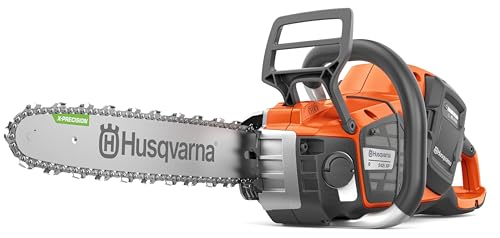
Battery (40V) ChainsawThe Husqvarna 542i XP is a professional-grade battery chainsaw built for arborists and demanding property owners who want gas-class cutting without the fumes. The 40V brushless motor drives a 16-inch bar with the chain speed of a 40cc gas saw, and the professional build quality holds up to daily use. It is the best choice when you want commercial-grade battery performance and run it alongside other Husqvarna 40V tools.
Pros
- Professional-grade 40V brushless power
- Gas-class chain speed with zero emissions
- Quiet operation suited to noise-sensitive job sites
- Built for daily professional use
- Part of the Husqvarna professional battery system
Cons
- Battery and charger sold separately (tool only)
- Premium price for a battery saw
- Runtime limited for full-day felling
- Heavier than homeowner battery saws
Our Verdict
The Husqvarna 542i XP is the best professional battery chainsaw for arborists and serious property owners. If you want commercial-grade cutting without gas fumes and already run Husqvarna 40V tools, the 542i XP performs at a level that justifies its price. It is more saw than the occasional homeowner needs.

5. Echo CS-590 Timber Wolf
Gas ChainsawThe Echo CS-590 delivers professional-grade 59.8cc displacement at a price significantly below comparable Stihl and Husqvarna models. Echo's 5-year consumer / 2-year commercial warranty is the longest in the segment, and the professional-grade construction holds up under sustained use. The best value gas chainsaw for performance-per-dollar.
Pros
- Professional 59.8cc displacement at mid-range price
- Industry-best 5-year consumer warranty
- Anti-vibration system reduces operator fatigue
- Decompression valve makes starting easier
- Widely available through dealers and online retailers
Cons
- Slightly heavier than Stihl equivalents
- Dealer network smaller than Stihl and Husqvarna
- No electronic engine management like M-Tronic or AutoTune
- OEM chain is adequate but benefits from Oregon or Stihl upgrade chain
Our Verdict
The Echo CS-590 is the best value gas chainsaw in our review. The 59.8cc displacement, 5-year warranty, and Echo's build quality deliver near-professional performance at a meaningfully lower price than Stihl and Husqvarna equivalents. The right choice for serious homeowners and small property managers.

6. Milwaukee M18 FUEL 16-inch Chainsaw Kit
Battery (18V) ChainsawThe Milwaukee M18 FUEL 16-inch chainsaw is the best cordless chainsaw for users already invested in the M18 platform. Sharing batteries with 250+ other M18 tools makes this the most economical cordless chainsaw entry for Milwaukee tool owners. The FUEL brushless motor delivers 14-inch gas chainsaw equivalent performance.
Pros
- Shares batteries with entire 250+ tool M18 ecosystem
- FUEL brushless motor for maximum battery efficiency
- Automatic chain oiler with full-time active monitoring
- Tool-free chain tensioning and bar/chain changes
- Most economical cordless option for existing M18 owners
Cons
- Limited to users with existing M18 batteries
- Performance level of a 35-40cc gas saw, not for large trees
- No cold weather start advantage over gas in extreme cold
- Bar length limited to 16 inches on this model
Our Verdict
The Milwaukee M18 FUEL 16-inch chainsaw is the best cordless option for M18 platform owners. If you already have M18 batteries, the cost of entry is very reasonable. For standalone purchase, the Stihl MSA 220 C-B delivers better overall performance for the similar investment.

7. Oregon CS1500
Electric (corded) ChainsawThe Oregon CS1500 is the best budget electric chainsaw for homeowners who need occasional cutting capability without the maintenance of a gas saw or the cost of a battery system. The self-sharpening chain uses a PowerSharp system that can sharpen in under 3 seconds while the saw is running, the most user-friendly sharpening system in the category.
Pros
- Best value for entry-level chainsaw capabilities
- Self-sharpening PowerSharp chain system
- No gas, oil mixing, or carburetor maintenance required
- Consistent power from standard 120V outlet
- Lightweight at 10.4 lbs for easy handling
Cons
- Limited to cord reach, not suitable for remote cutting
- Performance below gas and premium battery alternatives
- Not recommended for felling trees over 12 inches diameter
- PowerSharp system removes metal quickly, chain life shorter
Our Verdict
The Oregon CS1500 is the right choice for homeowners who need occasional chainsaw capability for small trees, limb cleanup, and light firewood without any gas maintenance. For more demanding tasks or remote property work, step up to a battery or gas saw.

8. Holzfforma G888 122cc Milling Power Head
Gas ChainsawThe Holzfforma G888 is a 122cc power head built for one job: milling large timber with an Alaskan mill attachment. Mechanically compatible with the legendary Stihl MS880 / 088 platform, it produces the chain speed needed to drive long bars through old-growth logs at a fraction of the price of a name-brand milling saw. If you are processing large logs into slabs and beams, this is the tool that makes it practical without spending two thousand dollars.
Pros
- Huge 122cc displacement for the largest milling tasks
- Drives 36-inch and longer bars for wide slabs
- Compatible with MS880 / 088 bars, chains, and parts
- A fraction of the cost of name-brand milling saws
- Sold as a power head so you choose your own bar and ripping chain
Cons
- Power head only, bar and chain are not included
- Very heavy at over 22 lbs, not for casual cutting
- Highly specialized, overkill for any non-milling work
- Aftermarket brand without a formal dealer network
Our Verdict
The Holzfforma G888 is purpose-built for chainsaw milling and nothing else. If you are turning large-diameter logs into slabs, beams, and lumber, its 122cc power transforms milling from an arduous task into a manageable operation, and its MS880 compatibility means parts are easy to source. For any other use, a far smaller saw is the correct tool.

9. Husqvarna 540iXP 14-inch Rear-Handle (Battery)
Battery (40V) ChainsawThe Husqvarna 540iXP is a professional-grade lightweight battery chainsaw with a rear-handle design that is safe for everyday ground-based cutting. At well under 7 lbs without the battery, it is the saw to grab for limbing, pruning, and fast trim work where a full-size gas saw is overkill. The brushless motor delivers professional cutting performance with zero emissions and instant start, and it runs on the Husqvarna professional battery system.
Pros
- Professional build in a sub-7 lb package
- Rear-handle design safe for ground-based cutting
- Zero emissions and instant start
- Excellent for limbing, pruning, and trim work
- Husqvarna professional battery ecosystem
Cons
- Battery and charger sold separately (tool only)
- Runtime limited for extended sessions
- 14-inch bar limits maximum cut size
- Premium price for a compact saw
Our Verdict
The Husqvarna 540iXP is the best lightweight battery chainsaw for fast, frequent cutting. The rear-handle design makes it safe for ground use, the light weight reduces fatigue, and the professional motor delivers real cutting power. For limbing and pruning around a property, it is hard to beat.

Photo via Unsplash
Chainsaw Buying Guide
Choosing the right chainsaw requires matching power source, bar length, and displacement to your specific cutting tasks:
Frequently Asked Questions
What size chainsaw do I need for firewood?
For most firewood cutting, a 16-18 inch bar chainsaw with 40-50cc displacement is ideal. This handles trees up to 14 inches in diameter comfortably. The Husqvarna 460 Rancher with an 18 or 20-inch bar is a popular choice for firewood production. For occasional firewood from smaller trees, a 14-16 inch bar is sufficient and easier to handle.
Is a battery chainsaw as good as a gas chainsaw?
For most homeowner tasks, yes. Modern battery chainsaws like the Stihl MSA 60.0 C-B and Milwaukee M18 FUEL deliver power comparable to 40-45cc gas saws for limbing, bucking, and yard work. They start instantly, require less maintenance, and produce no exhaust. Limitations include runtime (typically 30-60 minutes per battery) and reduced power for very large trees or prolonged professional cutting.
What is the best chainsaw brand, Stihl or Husqvarna?
Both are excellent professional brands and the choice often comes down to dealer proximity and personal preference. Stihl generally has a slightly better dealer network in the US and the M-Tronic electronic engine management system is a genuine advantage in cold weather starting. Husqvarna has a broader range from homeowner to professional models and the AutoTune system on professional models is similarly effective. Both outperform big-box store brands significantly.
Can I use a chainsaw for milling lumber?
Yes, with a chainsaw mill attachment. Larger displacement saws with 24-36 inch bars are best for milling. The Holzfforma G888 at 122cc, an MS880-compatible power head, is an affordable way to mill large logs efficiently. The Husqvarna 460 Rancher is a more accessible option for occasional milling of smaller logs. You will need a ripping chain (designed for parallel-to-grain cuts) and an Alaskan Mill attachment.
How often should I sharpen my chainsaw chain?
Sharpen your chain every 2-3 hours of cutting, or whenever you notice the saw pulling to one side, producing fine dust instead of chips, or requiring extra downward pressure. A sharp chain does the work, a dull chain is dangerous because it requires force that causes fatigue and loss of control. Keep a round file and file guide in your gear bag for field sharpening.
Related Calculators & Resources
Extend your chainsaw capabilities with these related resources:
As an Amazon Associate, WorkshopCalc earns from qualifying purchases. Our recommendations are based on research into specifications, pricing, and verified owner reviews, not hands-on testing. We only recommend products we believe provide genuine value to workshop owners and property managers.