7 Best CNC Routers 2026: Hobby, Mid-Range & Industrial Picks [Researched]
A CNC router transforms raw material into precise parts without hand-holding a tool. Whether you are carving signs, making furniture components, or running a small production shop, the right CNC router multiplies your output and repeatability. This guide reviews the seven best CNC routers of 2026 across every budget tier, from a $269 desktop starter to a $1,799 large-format water-cooled-spindle machine, so you can invest with confidence.
Quick Picks: Our Top Recommendations
After extensive research comparing each machine against manufacturer specifications and verified owner reviews, and drawing on our own time in the workshop, these are our top CNC router picks for 2026:
Prices change on Amazon. Amounts shown are planning estimates, not live quotes. Tap any button for current pricing.
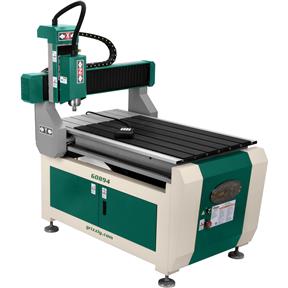
For a production-class machine instead of a hobby kit, Grizzly builds full-frame CNC routers and sells them direct with freight delivery:
- Grizzly G0894 24 x 36 CNC Router is the best reviewed of their line, sized for cabinet parts, signs and small furniture.
- Grizzly G0403 Benchtop CNC Router is the entry point to a rigid steel-frame machine without a full-size footprint.
- Grizzly G0931 47 x 47 CNC Router handles half-sheet work with a T-slot table.
Product Comparison Table
Compare key specs across all seven CNC routers at a glance:
| Model | Work Area | Spindle | Max Speed (IPM) | Controller | Frame | Budget |
|---|---|---|---|---|---|---|
| Genmitsu PROVerXL 4030 V2 | 15.7" x 11.8" | 400W Spindle (included) | 157 IPM | GRBL | All-Metal Aluminum | Under $2,500 |
| Genmitsu PROVerXL 4030S | 15.7" x 11.8" | 710W Spindle (included) | 157 IPM | GRBL + Wireless App | Linear Rail Aluminum | Under $1,000 |
| Genmitsu PROVerXL 6050 Plus | 23.6" x 19.7" | 300W Spindle (included) | 157 IPM | GRBL | Hybrid Table Aluminum | Under $2,500 |
| Genmitsu PROVerXL 6050 Plus 2.2KW | 23.6" x 19.7" | 2.2 kW Water-Cooled | 157 IPM | GRBL | Hybrid Table Aluminum | Under $2,500 |
| FoxAlien Masuter 3S | 15.7" x 15.7" | 400W Spindle (included) | 157 IPM | GRBL | All-Metal | Under $1,000 |
| FoxAlien Masuter Pro | 15.7" x 15.7" | 300W Router (included) | 118 IPM | GRBL | All-Metal | Under $1,000 |
| Genmitsu 3018-PROVer V2 | 11.8" x 7.1" | 775 Motor (included) | 40 IPM | GRBL | Aluminum + Bakelite | Under $500 |
Detailed Reviews
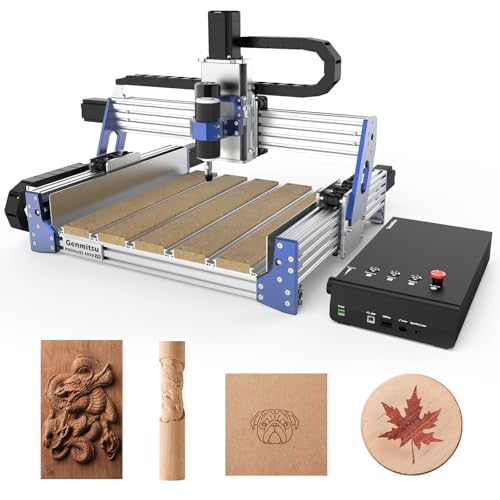
Genmitsu PROVerXL 4030 V2
Desktop Closed-LoopThe Genmitsu PROVerXL 4030 V2 redefines what an affordable desktop CNC router can be. Its NEMA 23 closed-loop stepper motors deliver accuracy and reliability typically found only on machines costing more, and the rigid all-metal structure handles wood, acrylic, PCB, MDF, and soft metals with the included 400W spindle.
Pros
- Closed-loop NEMA 23 steppers deliver reliable accuracy
- Rigid all-metal frame resists deflection
- 400W spindle included, no separate purchase needed
- Cuts wood, acrylic, PCB, MDF, and soft metals
- Strong Genmitsu community and software support
Cons
- Desktop work area limits sheet-goods projects
- GRBL control has a learning curve for beginners
- No enclosure included
Our Verdict
The Genmitsu PROVerXL 4030 V2 is the best all-around desktop CNC router for serious hobbyists. The closed-loop steppers and all-metal frame give it accuracy and rigidity that punch above its price, and the included spindle means you can cut on day one.
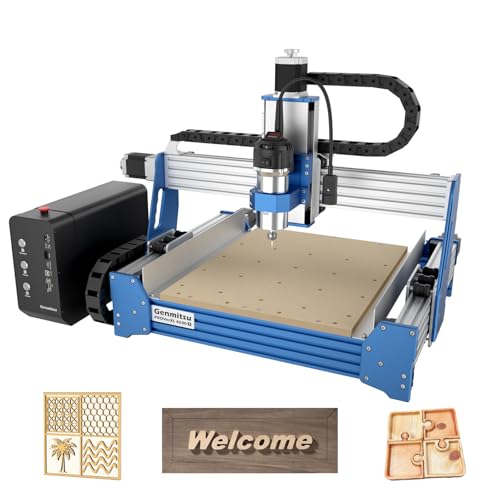
Genmitsu PROVerXL 4030S
Beginner DesktopThe Genmitsu PROVerXL 4030S is the easiest CNC router to get started on. The wireless app control, high-precision linear rails, and upgraded 710W spindle make first projects approachable, while the 130mm Z-height gives room for thicker stock and surfacing the spoilboard.
Pros
- Wireless app control simplifies getting started
- Upgraded 710W spindle included
- High-precision linear rails for smooth motion
- 130mm Z-height handles thicker stock
- Strong documentation and Genmitsu community
Cons
- Desktop work area limits large projects
- App-based workflow still benefits from learning GRBL basics
- No enclosure included
Our Verdict
The Genmitsu PROVerXL 4030S is the single best choice for someone buying their first CNC router. The wireless app, linear rails, and included 710W spindle remove friction from the learning curve while still leaving room to grow.

Genmitsu PROVerXL 6050 Plus
Large-Format DesktopThe Genmitsu PROVerXL 6050 Plus bridges the gap between small desktop machines and large-format CNCs. The 600 x 500mm work area and hybrid T-slot and MDF table accommodate cabinet doors, sign blanks, and larger panels that overwhelm 4030-class machines, all in a footprint a home shop can absorb.
Pros
- Large 23.6" x 19.7" work area for bigger projects
- Hybrid T-slot and MDF table simplifies workholding
- Rigid aluminum frame handles wood, acrylic, and MDF
- 115mm Z-clearance for thicker stock
- GRBL control works with all major CAM software
Cons
- Larger footprint needs dedicated bench or stand
- Still desktop class, not a 4x8 production router
- Assembly and tramming take patience
Our Verdict
The Genmitsu PROVerXL 6050 Plus is the best mid-range CNC router for woodworkers who have outgrown small desktop machines but cannot justify a full-size industrial router. The large work area and hybrid table make real furniture and cabinet work possible.
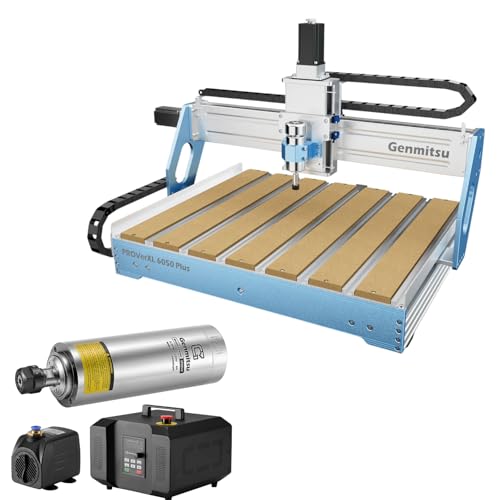
Genmitsu PROVerXL 6050 Plus 2.2KW
Water-Cooled SpindleThe Genmitsu PROVerXL 6050 Plus 2.2KW is the most capable machine in this guide for sustained cutting. The water-cooled 2.2 kW spindle runs quieter and cooler than air-cooled routers, enabling longer sessions in hardwoods and aluminum, while the large 600 x 500mm bed handles serious project sizes.
Pros
- 2.2 kW water-cooled spindle for long, quiet sessions
- Large 23.6" x 19.7" work area
- Cooler operation extends spindle life under load
- Cuts hardwoods, acrylic, and aluminum confidently
- Hybrid table simplifies workholding
Cons
- Water-cooling adds a pump and reservoir to manage
- Higher price than air-cooled desktop kits
- Setup and tramming take time
Our Verdict
The Genmitsu PROVerXL 6050 Plus 2.2KW is the right choice for makers who run long jobs and want spindle power that does not bog or overheat. The water-cooled spindle and large bed make it the closest thing to a small production router in this lineup.

FoxAlien Masuter 3S
All-Metal Closed-LoopThe FoxAlien Masuter 3S pairs NEMA 23 closed-loop stepper motors with a 400W spindle and a stout all-metal frame. The closed-loop motors recover from stalls instead of losing steps, which makes it a dependable workhorse for makerspaces and small studios that need consistent, repeatable results.
Pros
- Closed-loop NEMA 23 motors resist lost steps
- 400W spindle included for wood, acrylic, and aluminum
- Rigid all-metal construction
- FoxAlien support and active user community
- Square 15.7" work area suits signs and panels
Cons
- Desktop bed size limits large sheet work
- GRBL workflow benefits from some CNC experience
- No enclosure included
Our Verdict
The FoxAlien Masuter 3S is the pick for makers who want closed-loop reliability and an all-metal frame without stepping up to large-format machines. It runs consistently job after job, which is exactly what shared shops and small studios need.

FoxAlien Masuter Pro
Hobby All-MetalThe FoxAlien Masuter Pro is the best value entry into all-metal hobby CNC routing. It ships with a 300W spindle and a rigid metal frame at a price close to plywood-frame kits, making it a clear step up in durability for makers cutting wood, acrylic, MDF, and nylon.
Pros
- All-metal frame at a near-budget price
- 300W router spindle included
- Cuts wood, acrylic, MDF, and nylon
- Compact 15.7" square work area
- Easy GRBL workflow with broad software support
Cons
- Smaller work area than large-format machines
- Modest spindle power for dense hardwoods
- No enclosure included
Our Verdict
The FoxAlien Masuter Pro is the best value CNC router for makers who want an all-metal machine without paying for a large format. It is a durable, dependable starting point that handles the bulk of hobby projects.

Genmitsu 3018-PROVer V2
Budget DesktopThe Genmitsu 3018-PROVer V2 is the most accessible entry point into CNC routing. The compact metal-and-bakelite frame, included spindle, Z-probe, limit switches, and emergency stop keep costs low while still delivering functional cutting for signs, small parts, PCBs, and learning the fundamentals of CNC programming.
Pros
- Most affordable way to start learning CNC routing
- Includes Z-probe, limit switches, and emergency stop
- Spindle and controller included out of the box
- GRBL controller works with all major CAM software
- Light enough to move and store between sessions
Cons
- Small work area limits project size
- Slow feed rates limit productivity
- Not suitable for aluminum or dense hardwoods
- Limited Z-axis clearance for thick material
Our Verdict
The Genmitsu 3018-PROVer V2 is the best CNC router under $300. It will not compete with large-format machines, but it is a genuine tool for learning CNC work, making signs, engraving PCBs, and cutting small wood and plastic parts.

Photo via Unsplash
CNC Router Buying Guide
Choosing the right CNC router means matching the machine to your materials, volume, and workspace. Here is what matters most:
Upgrade Pick and What You'll Also Need
A CNC router ships as a bare machine. These are the parts every first cut needs, plus the step up if you want a bigger bed.
- Upgrade pick: the Genmitsu PROVerXL 6050 Plus doubles the work area to roughly 24 x 20 inches, enough for cabinet doors and larger signs.
- A dust shoe: Genmitsu 65mm/69mm dust shoe connects the spindle to a shop vac; CNC routing throws fine dust everywhere.
- Starter bits: HQMaster 1/8 in. upcut end mills, 10-pack for wood and MDF, plus a Genmitsu V-groove bit set for signs and lettering.
- Hold-downs: UTOOL T-track hold-down clamps, 4-pack keep stock from shifting mid-cut.
Outfitting the whole shop? Our workshop setups list complete tool sets for a beginner, intermediate and pro shop.
Deal season note: Prices on these often drop during Prime Big Deal Days and Black Friday. The picks and prices above were checked against live Amazon listings for 2026; if a price looks different when you click through, the listing has changed since.
Sources
- Genmitsu (SainSmart) and FoxAlien machine specifications and manuals (manufacturers)
- GRBL open-source CNC controller documentation
- OSHA woodworking machinery guidance on dust and guarding
Researched from published specifications and standards, not hands-on testing.
Frequently Asked Questions
What is the best CNC router for a beginner?
The Genmitsu PROVerXL 4030S is the top beginner choice due to its wireless app control, linear rails, and reliable performance out of the box. The Genmitsu 3018-PROVer V2 is the best entry-level budget option for those just learning CNC basics on a tight budget.
How much does a good hobby CNC router cost?
Expect to spend $250-$600 for a basic hobby CNC router, $850-$1,500 for a quality mid-range desktop machine like the Genmitsu PROVerXL 6050 Plus, and $1,800 and up for large-format or water-cooled-spindle machines. Most desktop CNC routers include a spindle, so you usually do not need to buy one separately.
What materials can a CNC router cut?
Most hobby and mid-range CNC routers cut wood, MDF, plywood, plastics (acrylic, HDPE), foam, and soft metals like aluminum with the right tooling and feeds/speeds. Harder metals require industrial spindles and rigid machine frames. Always match your feeds, speeds, and tooling to the material.
What spindle power do I need for woodworking?
For wood carving and signage, a 1.5 kW (2 HP) spindle is adequate. For production routing of hardwoods and full sheet goods, a 2.2 kW (3 HP) or larger spindle is recommended. Industrial machines use 4+ kW spindles for continuous duty cycles with large-diameter tooling.
Is a CNC router or laser cutter better for woodworking?
CNC routers excel at 3D carving, deep profiles, joinery, and sign-making with depth. Laser cutters are better for fine detail, engraving, and cutting thin materials quickly. Most serious makers eventually own both. Start with a CNC router if you want to produce functional wood parts.
What software do I need to run a CNC router?
You need CAD software (design), CAM software (toolpath generation), and a machine controller. Popular free options include Fusion 360 (CAD/CAM) and GRBL-based senders like Candle, UGS, or cncjs. The Genmitsu and FoxAlien machines in this guide all run GRBL. Vectric VCarve Pro ($700) is the industry standard for sign and furniture work.
Related Calculators & Resources
Use these tools to plan your CNC router setup:
As an Amazon Associate, WorkshopCalc earns from qualifying purchases. Our recommendations are based on thorough research against manufacturer specifications and verified owner reviews. We only recommend products we believe provide genuine value to makers and woodworkers.