7 Best Metal Lathes 2026: Benchtop, Gunsmithing & Full-Size Shop Lathes
A metal lathe is the foundational machine of any serious home machine shop. From turning custom bolts and bushings to gunsmithing barrel work and producing precision components, the right lathe determines what you can make. This guide reviews the seven best metal lathes of 2026, from a $509 mini lathe to a $3,349 lathe and mill combo, so you can find the right lathe for your skill level, space, and work. To round out the shop, pair your lathe with one of the best benchtop milling machines 2026 for flats, slots, and holes, and cut your stock to length first with one of the best metal-cutting bandsaws 2026.
For a home machinist, the Grizzly G4000 9 x 19 benchtop metal lathe (3/4 HP, 19 in between centers, six speeds from 130 to 2,000 RPM) is the direct-buy pick; on Amazon the closest match is the VEVOR 8x16 550W precision lathe.
Quick Picks: Our Top Recommendations
After evaluating metal lathes across home shops, gunsmithing benches, and production environments, these are our top picks for 2026:
Prices change on Amazon. Amounts shown are planning estimates, not live quotes. Tap any button for current pricing.
Product Comparison Table
Compare key specifications across all seven metal lathes at a glance:
| Model | Swing | Between Centers | Spindle Bore | Motor HP | Weight | Budget |
|---|---|---|---|---|---|---|
| Grizzly G4000 9x19 Bench Lathe | 9" | 19" | 3/4" | 3/4 HP | 161 lbs | $2,500+ |
| Grizzly G0769 8x16 Lathe/Mill Combo | 8" | 16" | 3/4" | Variable Speed | 320 lbs | $2,500+ |
| VEVOR 7x16 800W Benchtop Lathe | 7" | 16" | 3/4" | 800W | 110 lbs | Under $1,000 |
| VEVOR 8.3x29.5 Brushless Lathe | 8.3" | 29.5" | 7/8" | 750W Brushless | 209 lbs | Under $2,500 |
| Erie Tools 7x14 Precision Mini Lathe | 7" | 14" | 3/4" | Variable Speed | 84 lbs | Under $1,000 |
| VEVOR 8x16 550W Precision Lathe | 8" | 16" | 3/4" | 550W | 121 lbs | Under $1,000 |
| WEN ML712 7x12 Variable-Speed Lathe | 7" | 12" | 3/4" | Variable Speed | 79 lbs | Under $1,000 |
Detailed Reviews

Grizzly G4000 9x19 Bench Lathe
Benchtop 9x19The Grizzly G4000 is the benchmark benchtop metal lathe for serious home machinists. With a 9-inch swing, 19-inch between-centers capacity, and Grizzly cast iron construction, it delivers precision well beyond what its compact footprint suggests. The G4000 is a proven platform backed by Grizzly parts availability and support.
Pros
- Grizzly cast iron headstock and bed minimize vibration
- 3/4-inch spindle bore handles common round bar stock
- Quick-change-style threading covers common pitches
- Compact 9x19 footprint fits a sturdy bench or stand
- Grizzly parts availability and American customer support
Cons
- Requires cleanup and adjustment out of the box, typical for cast iron machines
- 19-inch capacity limits longer workpieces
- Stand sold separately, budget extra for a quality stand
Our Verdict
The Grizzly G4000 is our top pick for home machinists who want a serious bench lathe without a full-size footprint. The cast iron build, real Grizzly support, and balanced 9x19 capacity make it the best all-around benchtop pick.

Grizzly G0769 8x16 Lathe/Mill Combo
Combo 8x16The Grizzly G0769 is a variable-speed combination lathe and mill that packs turning and milling into one machine. For a one-machine home shop with limited floor space, it is one of the most capable options available, letting you turn parts and then mill flats, slots, and holes without a second tool.
Pros
- Combination lathe and mill saves significant shop space
- Variable-speed control for smooth turning and milling
- Grizzly cast iron construction for rigidity in its class
- Handles both turning and light milling operations
- Grizzly parts and documentation support
Cons
- Higher price reflects the dual-function design
- Compromises versus dedicated standalone lathe or mill
- Heavier than a simple benchtop lathe, plan placement carefully
Our Verdict
The Grizzly G0769 is the best choice for a space-constrained shop that needs both turning and milling. The combo design and variable speed make it a strong one-machine solution for the serious hobbyist who cannot fit two machines.

VEVOR 7x16 800W Benchtop Lathe
Budget Benchtop 7x16The VEVOR 7x16 benchtop lathe offers 800W of power and continuously variable speed at a price that undercuts almost everything else with this capacity. With a 3-jaw chuck included and 150 to 2,500 RPM range, it is a strong value pick for machinists who want real turning capability without a premium price.
Pros
- 800W motor with continuously variable speed
- 3-jaw chuck and tool box included in the box
- 150 to 2,500 RPM range covers most hobby work
- Light enough to position on most benches
- Best price-to-capability ratio in its class
Cons
- Import quality control, expect setup and tuning out of the box
- 3/4-inch spindle bore limits bar-through stock diameter
- Lighter build shows in finish on heavy cuts
Our Verdict
The VEVOR 7x16 is the best budget benchtop metal lathe for machinists who need real capability without spending thousands. Plan a day of tuning after delivery and it will serve well for hobby and small production work.

VEVOR 8.3x29.5 Brushless Lathe
Premium Benchtop 8.3x29.5The VEVOR 8.3x29.5 is the longest-capacity machine in our lineup, pairing a 750W brushless motor with an LCD display and continuously variable speed. The 29.5-inch between-centers capacity handles longer shafts and parts that smaller benchtop lathes simply cannot accommodate, all without a floor-standing footprint.
Pros
- 29.5-inch between centers handles long shafts and parts
- 750W brushless motor runs quiet and efficient
- LCD speed display and continuously variable speed
- Metal gears for durable feed and threading
- Largest work capacity in our lineup without floor-standing size
Cons
- Heaviest benchtop machine here, plan a strong bench
- Import quality control, budget time for setup
- 7/8-inch bore smaller than dedicated gunsmithing lathes
Our Verdict
The VEVOR 8.3x29.5 is the premium pick for machinists who need long between-centers capacity in a benchtop package. The brushless motor, LCD display, and 29.5-inch capacity make it the most capable single machine in this guide for long parts.

Erie Tools 7x14 Precision Mini Lathe
Mini 7x14The Erie Tools 7x14 precision mini lathe is the most accessible entry point into metal turning. It ships with a digital readout, variable speed up to 2,500 RPM, and a 5-piece cutter kit, so it sits on any workbench and handles small parts, model engineering, and learning the fundamentals without a major floor-space or budget commitment.
Pros
- Most affordable way to start metal turning
- Includes digital readout and a 5-piece cutter kit
- Fits on any bench, no dedicated machine stand needed
- Variable speed up to 2,500 RPM for smooth control
- Good introduction to lathe operation concepts
Cons
- 7-inch swing and 14-inch capacity severely limits workpiece size
- 3/4-inch spindle bore limits bar-through stock diameter
- Light build creates vibration at high speeds and heavy cuts
- Not suitable for gunsmithing or larger parts
Our Verdict
The Erie Tools 7x14 is the best choice for beginners on a budget or machinists who specifically need a compact machine for small parts and model work. Buy knowing its limitations and the included DRO and cutter kit deliver real value in its intended role.

VEVOR 8x16 550W Precision Lathe
Value Benchtop 8x16The VEVOR 8x16 precision lathe advertises a 0.0003-inch spindle accuracy with metal gears and a 550W variable-speed motor. It bridges the gap between mini lathes and larger machines, giving machinists a capable benchtop tool for precision parts, threading, soft metals, and wood at a mid-range price.
Pros
- 0.0003-inch rated spindle accuracy for precision parts
- Metal gears for durable threading and feeds
- 550W variable-speed motor, 0 to 2,500 RPM
- Handles soft metals and wood as well as steel
- Strong value for an 8x16 capacity machine
Cons
- Import quality control less consistent than premium brands
- May require more setup time than premium machines
- Support infrastructure smaller than major US brands
Our Verdict
The VEVOR 8x16 is the best value pick for machinists who want better precision than a mini lathe without jumping to a four-figure premium machine. Budget time for initial setup and expect solid performance for hobby and small production work.
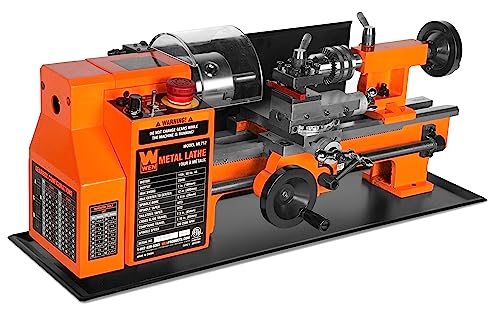
WEN ML712 7x12 Variable-Speed Lathe
Precision Benchtop 7x12The WEN ML712 is a 7x12 benchtop lathe from a brand machinists trust for consistent fit and finish. With variable speed and two-direction operation, it prioritizes clean cuts and dependable threading over maximum size, making it a refined choice for the machinist who values quality over capacity.
Pros
- WEN brand reputation for consistent quality
- Variable speed with two-direction operation
- Compact 7x12 footprint fits any bench
- 3/4-inch spindle bore for common bar work
- Strong threading capability for its size class
Cons
- Higher price than comparable mini import lathes
- 7x12 capacity smaller than larger benchtop machines
- Limited stock, availability can vary
Our Verdict
The WEN ML712 is the best precision benchtop lathe for machinists who prioritize fit and finish over maximum capacity. The WEN build standard and two-direction variable speed deliver clean, repeatable results that cheaper mini machines struggle to match.

Photo via Unsplash
Metal Lathe Buying Guide
Choosing the right metal lathe means matching machine size, precision, and features to your actual work. Here is what matters most:
🔗 Finishing lathe parts? A bench buffer brings turned steel and brass to a mirror polish.
Frequently Asked Questions
What size metal lathe do I need for home shop use?
For most home machinists, a 7x16 to 9x19 benchtop lathe handles the majority of hobby and small production work. If you plan to turn parts longer than 18 inches or work on rifle barrels and larger shafts, a longer-bed or full-size lathe is the better choice. Buy the largest lathe that fits your space and budget: you can always do small work on a big lathe.
What does 10x22 mean on a metal lathe?
The first number is the swing over the bed, the maximum diameter workpiece that can be turned without hitting the bed. A 10-inch swing means the lathe can turn a 10-inch diameter workpiece (5-inch radius from center). The second number is the distance between centers, the maximum length of workpiece that can be held between the headstock and tailstock.
What is spindle bore and why does it matter?
Spindle bore is the diameter of the hole through the center of the headstock spindle. Long bar stock passes through this hole for turning without having to be cut to length first. For gunsmithing and barrel work, a 1-inch or larger bore is essential. Most benchtop lathes have 3/4-inch to 1-inch bores; larger lathes have 1.5-inch to 2.5-inch bores.
How much does a good home shop metal lathe cost?
Budget $700-$1,200 for a quality 7x14 to 10x22 benchtop lathe, $2,400-$4,200 for a 9x20 to 13x40 mid-size machine, and $5,500-$9,000+ for a full-featured 13x40 or 14x40 precision lathe. Factor in tooling costs ($300-$600 for a basic starter set of turning tools, chuck, and face plate).
Can I do gunsmithing work on a benchtop lathe?
Yes, with the right lathe. Gunsmithing requires adequate spindle bore to pass barrel blanks through, a 4-jaw chuck for precise centering, and enough between-centers distance for rifle barrels (typically 28-30 inches minimum for a dedicated gunsmithing lathe). A longer-bed machine like the VEVOR 8.3x29.5, with its 29.5-inch between centers, handles most pistol and short rifle work, though dedicated barrel work calls for a larger spindle bore.
Related Calculators & Resources
Use these tools to plan your machine shop setup:
As an Amazon Associate and Grizzly Industrial affiliate, WorkshopCalc earns from qualifying purchases. Our recommendations are based on research into specifications, pricing, and verified owner reviews, not hands-on testing. We only recommend products we believe provide genuine value to machinists and home shop users.