Best Random Orbital Sanders 2026: Complete Reviews
A random orbital sander is essential for achieving smooth, finish-ready surfaces in woodworking. After researching specifications and verified owner feedback on dozens of models, we have identified the best random orbital sanders for every budget and use case. This comprehensive guide covers 5-inch and 6-inch models, corded and cordless options, and everything you need to choose the right sander for your workshop. A random orbital sander excels on flat and gently curved surfaces; for shaping edges and contoured work you will also want stationary machines, so see our guides to the best belt & disc sanders 2026 and the best oscillating spindle sanders 2026.
Quick Picks: Our Top Recommendations
Short on time? Here are our top picks for the best random orbital sanders in 2026:

Bosch ROS20VSC
The best combination of performance, features, and value. Variable speed, excellent dust collection, low vibration, and a 5-year warranty make this the top choice for most users.
- 5-inch pad, 3/32" orbit
- 7,500-12,000 OPM variable speed
- 2.5 amp motor
- Microfilter dust canister

SKIL SR211601 5-Inch
Reliable performance at an unbeatable price. Single speed but smart, with a cyclonic dust box that keeps fine dust contained. Perfect for beginners and occasional users.
- 5-inch pad, 3/32" orbit
- 12,000 OPM single speed
- 2.8 amp motor
- Cyclonic dust box included

Milwaukee 2648-20
Powerful brushless motor with M18 battery compatibility. Variable speed and excellent runtime make this the best cordless option for job sites.
- 5-inch pad, 7/64" orbit
- 7,000-12,000 OPM variable speed
- Brushless motor
- M18 battery system (sold separately)
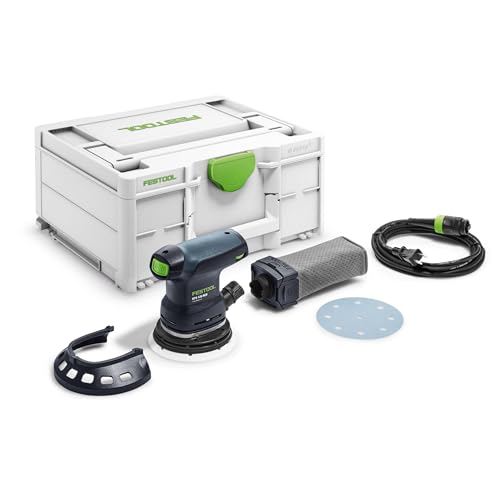
Festool ETS 125 REQ-Plus
Premium sander with exceptional dust extraction, ultra-low vibration, and precision engineering. The professional's choice for flawless finishes.
- 5-inch pad, 1/8" orbit
- 6,000-12,000 OPM variable speed
- Brushless motor, 250W
- Systainer case included

Mirka DEROS II 650
Professional-grade 6-inch sander with a lightweight brushless motor and dust-free extraction. Exceptional for large surfaces and production work.
- 6-inch pad, 5mm orbit
- 4,000-10,000 OPM variable speed
- Brushless motor
- Direct vacuum connection
In-Depth Random Orbital Sander Reviews
The Bosch ROS20VSC has been our top pick for years, and the 2026 version continues to impress. This sander strikes the perfect balance between performance, comfort, and value that makes it ideal for both DIYers and professionals. The variable speed dial (7,500-12,000 OPM) provides excellent control for different tasks. Use lower speeds for delicate finish work or sanding veneer, and crank it up for aggressive stock removal with coarse grits. The microfilter dust collection system captures up to 90% of particles, keeping your workspace clean without requiring a shop vacuum. What sets the ROS20VSC apart is its vibration damping. The pad dampening system reduces vibration significantly, making extended sanding sessions more comfortable.
Pros
- Excellent dust collection without a vacuum
- Low vibration for comfortable extended use
- Variable speed for versatile applications
- Durable construction with 5-year warranty
- Carrying bag and microfilter included
Cons
- Dust canister requires frequent emptying
- Not as aggressive as some competitors
- Speed dial can be accidentally bumped

The DeWalt DWE6423 is a professional-grade sander at a mid-range price. With a powerful 3.0 amp motor and variable speed control (8,000-12,000 OPM), it handles everything from fine finishing to aggressive stock removal with ease. DeWalt's separate counterweight design produces exceptionally smooth operation. The pad spins freely with minimal vibration, reducing fatigue during long sanding sessions. The dust-sealed switch is a thoughtful feature that extends tool life by keeping abrasive particles out of the electronics. The one-hand locking dust bag makes emptying quick and clean.
Pros
- Powerful 3.0 amp motor
- Smooth, low-vibration operation
- Dust-sealed switch for longevity
- One-hand locking dust bag
- Excellent balance and ergonomics
Cons
- Narrower speed range than competitors
- Dust bag less effective than canister systems
- Slightly louder than Bosch

The Makita BO5041 stands out with its larger 1/8-inch orbit - 33% bigger than standard 3/32-inch sanders. This aggressive orbit pattern removes material faster while still leaving a finish suitable for staining. It's the ideal choice when you need to blend patches, level joints, or prepare surfaces quickly. Variable speed from 4,000-12,000 OPM gives you exceptional range. The unusually low minimum speed is perfect for delicate work on veneer or final sanding before finish coats. Build quality is excellent - this sander is built to last through years of professional use.
Pros
- Aggressive 1/8-inch orbit for fast removal
- Wide speed range (4,000-12,000 OPM)
- Comfortable rubberized grip
- Durable professional construction
- Large trigger with lock-on feature
Cons
- Larger orbit may leave visible scratch pattern
- Only 1-year warranty
- Dust bag less effective than competitors
The Festool ETS 125 REQ is the gold standard for random orbital sanders. Yes, it costs significantly more than competitors, but professionals who sand all day understand the value. The ultra-low vibration, exceptional dust extraction, and precision engineering deliver superior results with less fatigue. Festool's dust extraction is in a class of its own. When paired with a Festool CT vacuum, the ETS 125 captures over 95% of dust particles - noticeably better than any competitor. The brushless EC-TEC motor runs cool and quiet, with a service life measured in decades rather than years.
Pros
- Industry-leading dust extraction
- Exceptionally low vibration
- Brushless motor with long service life
- Soft-start prevents initial marks
- Systainer case included
- Lightweight at only 2.6 lbs
Cons
- Premium price point
- Best results require Festool vacuum
- Proprietary sandpaper system
The Milwaukee 2648-20 brings cordless freedom without sacrificing performance. The brushless motor delivers corded-like power from the M18 battery system, with runtime of 45-60 minutes on a 5.0Ah battery depending on the speed setting and pressure applied. Variable speed (7,000-12,000 OPM) provides flexibility for different tasks. The slightly smaller 7/64-inch orbit is a nice compromise between finishing smoothness and material removal rate. Build quality is excellent, with the durability Milwaukee is known for on job sites.
Pros
- Cordless freedom for job site use
- Brushless motor for efficiency and longevity
- M18 battery compatibility (200+ tools)
- Variable speed control
- 5-year warranty
Cons
- Battery and charger sold separately
- Heavier than corded alternatives
- Runtime limited by battery capacity
The Mirka DEROS II 650 is a professional-grade 6-inch sander built for production work. The larger pad covers 44% more surface area than 5-inch models, dramatically reducing time spent sanding large surfaces like tabletops, doors, and panels. Mirka pioneered brushless technology in sanders, and the DEROS shows that expertise. The motor runs cool even under heavy use, and the direct-drive design eliminates the gear noise common in other sanders. At just over 2 pounds, it is one of the lightest 6-inch sanders available, reducing fatigue during all-day finishing work.
Pros
- 6-inch pad covers more area faster
- Brushless motor - extremely durable
- Excellent dust-free extraction with a vacuum
- Exceptionally lightweight (2.2 lbs)
- Quiet operation
Cons
- Premium price
- 6-inch sandpaper costs more
- Less maneuverable in tight spaces
- Only 1-year warranty
The SKIL SR211601 proves you don't need to spend a fortune for a capable random orbital sander. This single-speed workhorse delivers reliable performance at an entry-level price, making it the easiest first sander to recommend. The standout feature is the cyclonic dust box, which separates fine dust and keeps the collection chamber from clogging, unusual at this price. You lose variable speed control, but for general sanding tasks the fixed speed works fine, and the hook-and-loop pad accepts widely available 5-inch discs. Build quality is solid for the money.
Pros
- Excellent value for the price
- Cyclonic dust box keeps dust contained
- Reliable, simple single-speed design
- Accepts common 5-inch hook-and-loop discs
- Lightweight and easy to control
Cons
- No variable speed control
- Higher vibration than premium models
- Shorter warranty than pro tools

The Ryobi ONE+ 18V Random Orbit Sander offers cordless convenience at a budget-friendly price. Part of Ryobi's extensive ONE+ 18V battery system, it's an excellent entry point for DIYers who already own Ryobi tools or want an affordable cordless sanding solution. Performance is adequate for DIY projects, though professionals may find it lacking power compared to corded alternatives or the Milwaukee 2648-20. The single-speed operation (10,000 OPM) limits versatility, but it works well for general sanding tasks.
Pros
- Very affordable cordless option
- ONE+ battery compatibility (300+ tools)
- Lightweight and maneuverable
- Good for light-duty DIY work
Cons
- No variable speed
- Less power than corded or pro cordless
- Brushed motor (less efficient)
- Basic dust collection
5-Inch vs 6-Inch Random Orbital Sanders
The two most common pad sizes are 5-inch and 6-inch. Understanding the differences helps you choose the right size for your work.
| Feature | 5-Inch Sanders | 6-Inch Sanders |
|---|---|---|
| Sanding Area | 19.6 sq inches | 28.3 sq inches (44% larger) |
| Best For | General purpose, furniture, cabinets | Large flat surfaces, production work |
| Maneuverability | Excellent - works in tight spaces | Limited - harder in corners |
| Weight | 2.5-3.5 lbs typically | 2.5-4.0 lbs typically |
| Sandpaper Cost | Lower - more widely available | Higher - specialty sizes |
| Sandpaper Selection | Huge variety from all brands | Good but more limited options |
| Speed (Large Surfaces) | Standard | 44% faster coverage |
| Price Range | $40-400 | $150-500 |
| Recommendation | Best for most users | Best for pros with large surfaces |
Our Recommendation
Start with a 5-inch sander. It handles 95% of sanding tasks effectively and sandpaper is cheaper and more readily available. Add a 6-inch sander later if you frequently work on large surfaces like tabletops, doors, or panel work where the 44% larger coverage area saves significant time.
Key Features to Consider
Variable Speed Control
Variable speed lets you adjust the sander's aggressiveness for different tasks. Lower speeds (4,000-8,000 OPM) are ideal for:
- Sanding veneer without burning through
- Delicate finish work on softwoods
- Scuffing between finish coats
- Working with heat-sensitive materials
Higher speeds (10,000-12,000 OPM) work best for:
- Aggressive stock removal with coarse grits
- Sanding hardwoods
- Leveling joints and patches
- General-purpose sanding
Dust Collection
Good dust collection keeps your workspace clean and protects your lungs. There are three main approaches:
- Dust bags: Basic collection, needs frequent emptying. Works for quick jobs but not ideal for extended sanding.
- Dust canisters: Better collection with microfilters that trap fine particles. The Bosch ROS20VSC excels here.
- Vacuum connection: Best collection when connected to a shop vacuum or dust extractor. Festool and Mirka lead in this category.
Pad Brake
A pad brake stops the sanding disc from spinning when you lift the sander off the work. This prevents accidental scratches when setting the sander down and extends pad life. Most quality sanders include this feature, but budget models may not.
Orbit Size
Orbit size (also called stroke length) affects how aggressively the sander removes material:
- 3/32 inch (2.4mm): Standard orbit size, good balance of removal and finish quality
- 1/8 inch (3.2mm): Larger orbit for faster stock removal (Makita BO5041)
- 5mm: Common on 6-inch professional sanders
Larger orbits remove material faster but may leave more visible scratch patterns. For fine finishing, smaller orbits or lower speeds produce better results.
Ergonomics and Vibration
You'll hold a random orbital sander for extended periods, so comfort matters. Look for:
- Vibration dampening (reduces fatigue and hand-arm vibration syndrome)
- Soft-grip surfaces that don't become slippery with sweat
- Balanced weight distribution
- Multiple grip positions for different tasks
Corded vs Cordless Random Orbital Sanders
| Factor | Corded | Cordless |
|---|---|---|
| Power | Consistent, unlimited | Good but may fade as battery drains |
| Runtime | Unlimited | 30-60 min per battery typically |
| Weight | Lighter (no battery) | Heavier with battery attached |
| Mobility | Limited by cord length | Complete freedom |
| Best For | Shop work, extended sessions | Job sites, outdoor, quick tasks |
| Price (tool only) | $40-400 | $80-250 (battery extra) |
| Total Cost | Tool cost only | Add $100-200 for battery + charger |
When to Go Cordless
Choose cordless if you work on job sites, do outdoor projects, or already own batteries in a compatible system (Milwaukee M18, DeWalt 20V MAX, Makita 18V LXT, Ryobi ONE+). For dedicated shop use with extended sanding sessions, corded remains the better choice for consistent power and lighter weight.

Photo via Unsplash
Buying Guide: How to Choose
For Beginners and DIYers
The Bosch ROS20VSC is our top recommendation. It's forgiving, easy to use, has excellent dust collection without a vacuum, and the variable speed helps you learn proper technique. The carrying bag and microfilter included make it a complete package.
If budget is tight, the SKIL SR211601 delivers reliable performance at a fraction of the price. You lose variable speed but gain a proven, simple tool with a clever cyclonic dust box.
For Serious Hobbyists
The DeWalt DWE6423 or Makita BO5041 offer professional features at reasonable prices. The DeWalt excels at smooth operation, while the Makita's larger orbit handles stock removal faster.
For Professionals
The Festool ETS 125 REQ-Plus is worth the investment if you sand extensively. The dust extraction, low vibration, and build quality reduce fatigue and produce superior results. Pair it with a Festool CT vacuum for the best experience.
For production work on large surfaces, the Mirka DEROS II 650 (6-inch) dramatically increases productivity with its larger pad and lightweight brushless design.
For Cordless Needs
The Milwaukee 2648-20 leads the cordless category with professional-grade performance. For budget-conscious users, the Ryobi ONE+ 18V Random Orbit Sander offers cordless convenience at an affordable price.
Sandpaper Matters Too
The best sander in the world won't perform well with cheap sandpaper. Invest in quality discs from brands like 3M, Norton, Diablo, or Mirka. For grit selection and progression, see our Sandpaper Grit Chart.
Frequently Asked Questions
What is the best random orbital sander for beginners?
The Bosch ROS20VSC is the best random orbital sander for beginners. It offers excellent value with variable speed control (7,500-12,000 OPM), superior dust collection, and low vibration. The ergonomic design and forgiving nature make it easy to learn proper sanding technique without damaging your workpiece.
Is a 5-inch or 6-inch random orbital sander better?
5-inch sanders are more versatile and better for most users. They're lighter, easier to control, and sandpaper is more affordable and widely available. 6-inch sanders cover 44% more area per pass, making them faster for large flat surfaces like tabletops and doors. Professional cabinet makers often prefer 6-inch models for production work.
What orbit size is best for random orbital sanders?
Most random orbital sanders have a 3/32-inch (2.4mm) orbit, which is ideal for finish sanding. Some aggressive models like the Makita BO5041 feature a larger 1/8-inch (3.2mm) orbit for faster stock removal. Smaller orbits leave finer finishes, while larger orbits remove material faster but may leave more visible scratch patterns.
Are cordless random orbital sanders worth it?
Cordless random orbital sanders are excellent for job site work, outdoor projects, and situations where cord management is difficult. Modern brushless cordless sanders like the Milwaukee 2648-20 perform nearly as well as corded models. However, corded sanders offer unlimited runtime and are typically more powerful, making them better for extended shop use.
How important is variable speed on a random orbital sander?
Variable speed is very important for versatile sanding. Lower speeds (4,000-8,000 OPM) are ideal for delicate work, preventing burn-through on veneer, and sanding between finish coats. Higher speeds (10,000-12,000 OPM) are better for aggressive stock removal with coarse grits. Variable speed also helps control heat buildup when sanding plastics or heat-sensitive materials.
What causes swirl marks with a random orbital sander?
Swirl marks are caused by pressing too hard, using worn sandpaper, skipping grits, or moving the sander too fast. Let the weight of the sander do the work, replace sandpaper frequently, progress through grits systematically (don't skip more than one grit level), and move the sander slowly at about 1 inch per second. Also ensure the pad is spinning freely and not stalled.
How long do random orbital sander pads last?
Hook-and-loop sanding pads typically last 6-12 months with regular use. Signs of wear include sandpaper not sticking properly, torn or flattened hooks, and visible pad damage. Replace the pad when sandpaper starts slipping or not adhering evenly. Quality pads from the original manufacturer last longer than generic replacements.
Is Festool worth the price for random orbital sanders?
Festool sanders are worth the investment for professionals who sand extensively. The ETS 125 REQ-Plus offers exceptional dust extraction (95%+ collection rate with Festool vacuums), extremely low vibration, and a brushless motor with long service life. For occasional DIY use, mid-range options like the Bosch ROS20VSC or DeWalt DWE6423 offer better value. Festool's quality is unmatched, but the price premium is only justified by heavy professional use.
As an Amazon Associate, WorkshopCalc earns from qualifying purchases. We only recommend products we have thoroughly researched. Our reviews are independent and not influenced by affiliate relationships.