9 Best HVLP Spray Systems 2026: Turbine, Gravity-Feed & Airless for Finishing
A quality spray system transforms your finishing results. Brushing lacquer or polyurethane produces brush marks no amount of sanding fully eliminates. Spraying the same finish delivers glass-smooth results with far less effort. Whether you are finishing furniture in a dedicated spray booth, painting kitchen cabinets on a renovation project, or applying exterior stain across a large deck, the right HVLP or airless spray system makes the work faster and the results dramatically better. This guide covers the best spray systems in 2026 across every category and price point.
Quick Picks: Our Top Recommendations
Here are our top spray system picks across every category based on finish quality, reliability, and value:
Prices change on Amazon. Amounts shown are planning estimates, not live quotes. Tap any button for current pricing.
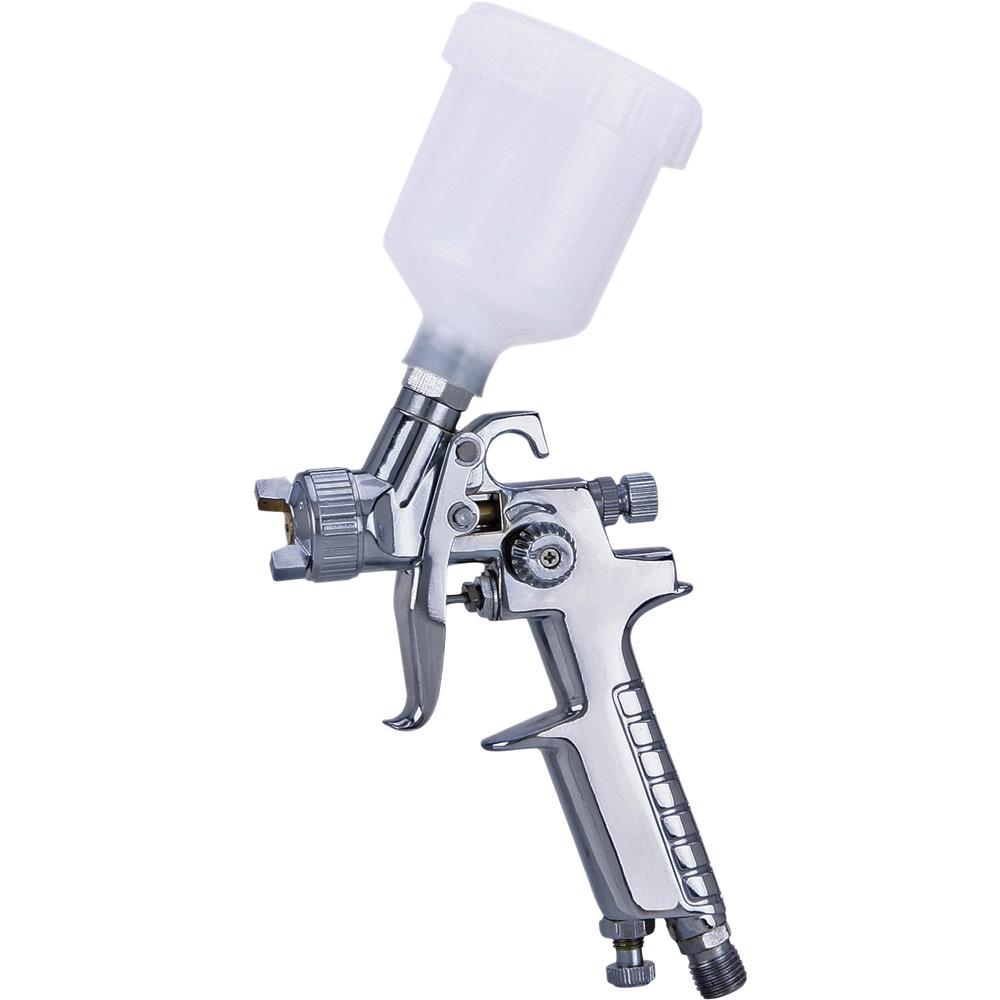
Prefer to buy direct? The Grizzly H7673 Deluxe Mini HVLP Spray Gun is a strong HVLP finishing spray gun from Grizzly Industrial, often priced lower factory-direct than through a reseller and backed by full parts availability and U.S. support.
Shop the H7673 at Grizzly.com →Product Comparison Table
Compare key specifications across all 9 spray systems:
| Model | Type | Stages / PSI | Needle Size | Hose Length | Best For | Budget |
|---|---|---|---|---|---|---|
| Fuji Spray Mini-Mite 4 | HVLP Turbine | 4-Stage Turbine | 1.3mm (included) | 25 ft | Furniture, Cabinets, Fine Finishing | Under $2,500 |
| Graco Magnum X5 | Airless | 2,800 PSI | RAC IV guard | 75 ft max | Walls, Ceilings, Exterior Painting | Under $500 |
| Fuji Spray Semi-PRO 2 | HVLP Turbine | 2-Stage Turbine | 1.3mm (included) | 20 ft | Stains, Thin Finishes, Beginners | Under $1,000 |
| Wagner Earlex 6700 Pro HVLP | HVLP Turbine | Pro turbine | Pro 9 adjustable gun | 13 ft | Professional Finishing, All Materials | Under $1,000 |
| Wagner Spraytech FLEXiO 5000 | HVLP Electric | Powered turbine (X-Boost) | iSpray + Detail nozzles | Stationary base + hose | DIY Projects, Interior Walls, Furniture | Under $500 |
| Wagner Earlex 5700 HVLP | HVLP Turbine | 2-Stage Turbine | 1.5mm (included) | 13 ft | Furniture, Stain, Occasional Use | Under $500 |
| Graco TrueCoat 360 Handheld Airless | Airless Handheld | Handheld airless | RAC reversible tip | Cup-fed (no hose) | Trim, Touch-up, Tight Spaces | Under $500 |
| Apollo Power-5 VS HVLP | HVLP Turbine | 5-Stage Turbine | Pro gun included | 25 ft | Production Shops, Automotive, Professional Use | Under $2,500 |
| HomeRight Super Finish Max | HVLP Electric | Single-motor turbine (450W) | 1.5mm standard | Direct-connect (no hose) | Beginners, Light Projects, Low Budget | Under $100 |
Detailed Reviews

Fuji Spray Mini-Mite 4
HVLP TurbineThe Fuji Spray Mini-Mite 4 is the industry standard for serious woodworking HVLP finishing. The 4-stage turbine delivers consistent air volume and pressure for a wide range of finish viscosities, from thin dyes to full-viscosity conversion varnish. The included gravity-feed gun with non-bleed design and pattern fan control makes dialing in the perfect spray pattern straightforward, even for users new to spray finishing.
Pros
- Industry benchmark for HVLP turbine performance
- 4-stage turbine handles virtually all woodworking finishes
- Non-bleed gravity gun reduces material waste
- Pattern fan control dial on gun for quick adjustments
- 25-foot hose provides excellent workspace reach
- Quiet operation versus competing turbine brands
- Excellent Fuji customer support and parts availability
Cons
- Turbine unit is bulky; not the most portable setup
- Higher price than 2-stage entry models
- Gravity cup capacity is modest at 1 quart
- Cleaning requires care to maintain performance
Our Verdict
The Fuji Mini-Mite 4 is the best overall HVLP spray system for woodworkers. If you are serious about spray finishing furniture, cabinets, or millwork, this is the system to buy. The 4-stage turbine eliminates the frustrating atomization issues that plague cheaper 2-stage systems with thicker finishes.

Graco Magnum X5
AirlessThe Graco Magnum X5 is the best airless paint sprayer for serious DIYers and professional painters tackling large interior and exterior painting projects. The stand-mounted design is easy to move room to room, and the stainless steel piston pump handles undiluted paints and heavier coatings that HVLP systems cannot manage. The ability to draw directly from a 1 or 5-gallon bucket speeds production significantly.
Pros
- Handles undiluted latex, primers, and heavier coatings
- Draws directly from 1 or 5-gallon buckets
- Stand-mounted design moves easily between areas
- Flexible hose allows up to 75 feet of reach
- RAC IV SwitchTip reverses to clear clogs without tools
- Annual tune-up kits available for long-term ownership
Cons
- More overspray than HVLP systems
- Not ideal for fine furniture finishing
- Requires thorough cleaning immediately after use
- Learning curve for consistent film thickness
Our Verdict
The Graco Magnum X5 is the best airless sprayer for painting projects. If your work involves large surfaces, walls, or exterior applications where speed matters more than fine detail, the X5 delivers professional results at a price accessible to serious DIYers and small painting contractors.

Fuji Spray Semi-PRO 2
HVLP TurbineThe Fuji Spray Semi-PRO 2 brings the legendary Fuji quality and engineering to a 2-stage turbine at a budget-accessible price. It handles thin materials beautifully, including waterborne stains, dyes, shellac, and thinned waterborne finishes, but requires more thinning than the Mini-Mite 4 for heavier materials. For anyone who primarily applies stains and thin topcoats, it provides professional-quality results at a lower entry cost.
Pros
- Fuji quality at a significantly lower price point
- Excellent for stains, dyes, shellac, and thinned finishes
- Pattern fan control on T70 spray gun
- Reliable 2-stage motor for occasional use
- Compact turbine footprint
- Good Fuji parts and support access
Cons
- 2-stage limits viscosity handling versus 4-stage models
- Requires more material thinning for heavier finishes
- Shorter 20-foot hose limits reach
- Not suitable for production cabinet finishing
Our Verdict
The Fuji Semi-PRO 2 is the best budget HVLP system for woodworkers who primarily spray stains and thin finishes. It is also an excellent introduction to Fuji quality for those who plan to upgrade to the Mini-Mite 4 later.
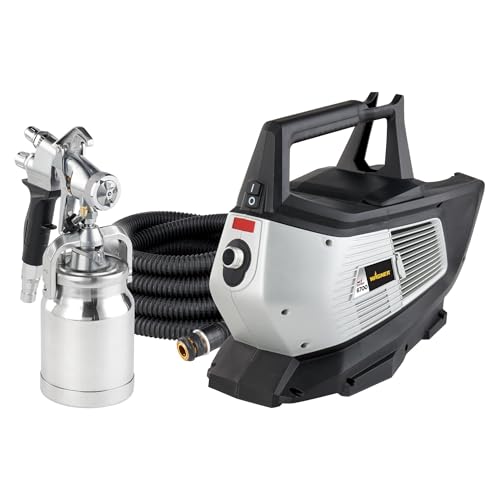
Wagner Earlex 6700 Pro HVLP
HVLP TurbineThe Wagner Earlex 6700 is a professional stationary HVLP system built for woodworkers and finish pros who need consistent results with both oil-based and waterborne materials. The Pro 9 adjustable spray gun dials in pattern, flow, and viscosity for fine finishing on furniture and cabinetry, and the turbine delivers steady air for repeatable coats. It is a serious step up from entry HVLP units without reaching cabinet-shop prices.
Pros
- Professional-grade turbine for consistent fine finishing
- Pro 9 adjustable gun handles oil and water-based materials
- Excellent atomization for furniture and cabinet work
- Stationary base keeps the gun light and easy to handle
- Strong reputation in the woodworking community
- Wagner parts and support widely available
Cons
- Higher price than entry HVLP systems
- Shorter hose than the Fuji systems
- Overkill for occasional hobby use
- Limited stock at last check
Our Verdict
The Wagner Earlex 6700 Pro is the best mid-range turbine HVLP for serious finishers who want professional results with oil and waterborne finishes. The Pro 9 gun and steady turbine produce repeatable coats on furniture and cabinetry at a price well below cabinet-shop production systems.

Wagner Spraytech FLEXiO 5000
HVLP ElectricThe Wagner FLEXiO 5000 is the best all-around spray system for DIY homeowners who want to tackle both furniture and wall painting projects with one machine. This bundle pairs the stationary X-Boost turbine, which handles undiluted interior latex paints with the iSpray nozzle, with a Detail Finish nozzle for furniture and trim, plus a spray shelter to contain overspray. The handheld gun on a hose keeps it easy to maneuver around furniture and cabinetry.
Pros
- Handles both walls and furniture with included nozzles
- No thinning required for most interior latex paints
- Includes a spray shelter to contain overspray
- X-Boost turbine provides variable speed control
- Excellent value for the versatility offered
- Available at major home improvement stores
Cons
- Finish quality not at Fuji HVLP level for fine work
- Harder to dial in a perfect pattern versus dedicated HVLP systems
- Cleaning requires more disassembly than turbine units
- Bulkier kit than a simple handheld sprayer
Our Verdict
The Wagner FLEXiO 5000 is the best spray system for homeowners and DIYers who need versatility across both furniture and large surface painting, and the included spray shelter is a genuine bonus. For dedicated woodworking finishing, the Fuji Semi-PRO 2 produces meaningfully better results, but the FLEXiO handles the broadest range of everyday projects.

Wagner Earlex 5700 HVLP
HVLP TurbineThe Wagner Earlex 5700 is a compact and capable stationary HVLP turbine popular among hobbyist woodworkers for its combination of performance and portability. The spray gun handles a wider viscosity range than many entry competitors with both oil and water-based materials, and the adjustable settings remove much of the guesswork from finishing. Earlex has built a strong reputation in the woodworking community for reliable turbine performance at an accessible price.
Pros
- Compact and easy to set up and move
- Handles oil and water-based finishing materials
- 1.5mm needle handles moderately thick finishes
- Reliable turbine with good longevity
- Earlex brand trusted in the woodworking community
- Good value compared to Fuji at similar capability
Cons
- Short 13-foot hose limits reach around large workpieces
- Not a 4-stage turbine for the thickest finishes
- Gun quality is below the Fuji standard
- Replacement parts availability is less consistent than Fuji
Our Verdict
The Wagner Earlex 5700 is the best value turbine HVLP for woodworkers who primarily work with stains and thinner topcoats and want a simple, reliable system. The adjustable gun and accessible price make it an easy recommendation for hobbyist finishing.

Graco TrueCoat 360 Handheld Airless
Airless HandheldThe Graco TrueCoat 360 is a compact handheld airless sprayer that skips the hose-and-cart setup of full-size airless units. The cup-fed, all-in-one design reaches into tight spaces, stairwells, and exterior trim areas where a stand-mounted airless sprayer is awkward to position. It sprays unthinned paints and stains and is the easy grab for fences, furniture, and touch-up work.
Pros
- Compact handheld design needs no cart or hose
- Sprays unthinned paints and stains
- Ideal for trim, fences, furniture, and touch-up work
- Reversible RAC tip clears clogs easily
- Quick to set up and clean for small jobs
- Affordable entry into airless spraying
Cons
- Small cup limits run time on big projects
- More overspray than HVLP for fine furniture work
- Corded operation still needs an outlet nearby
- Less suitable for large-volume painting than the Magnum X5
Our Verdict
The Graco TrueCoat 360 is the best compact handheld airless for trim, touch-up, and tight-space work where a full cart sprayer is impractical. It is not a replacement for the Magnum X5 on large projects, but it fills a distinct and valuable role at a budget price.
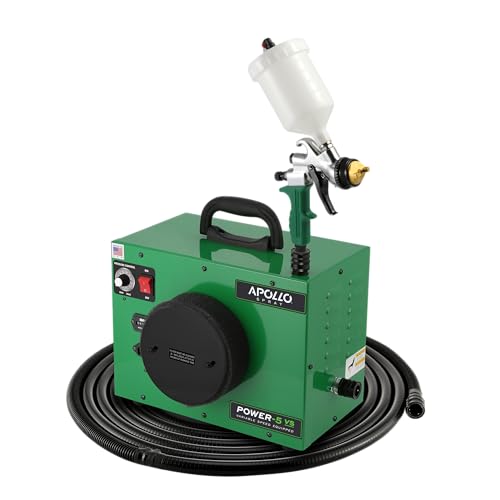
Apollo Power-5 VS HVLP
HVLP TurbineThe Apollo Power-5 VS is a professional 5-stage turbine HVLP system built for automotive and custom finish work where atomization quality is everything. The variable-speed turbine lets you tune air pressure to the material, from thin automotive clears to heavier waterborne coatings, and the professional gun delivers the fine, consistent pattern that high-end finishing demands. This is the system for shops that depend on spray finishing for their livelihood.
Pros
- Professional 5-stage turbine for the finest atomization
- Variable speed tunes pressure to each material
- Excellent for automotive and custom finishes
- Consistent performance over long production runs
- Pro-grade gun included
- Apollo is a respected name in turbine HVLP
Cons
- Premium professional price
- Far more than an occasional hobbyist needs
- Larger, heavier turbine unit
- Limited stock at last check
Our Verdict
The Apollo Power-5 VS is the best HVLP production system for professional and automotive finishers. The 5-stage variable-speed turbine and pro gun produce the consistent, fine atomization that high-end work demands, justifying the premium for shops that finish for a living.
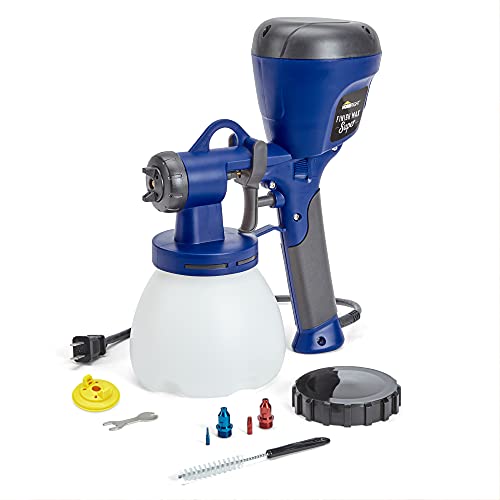
HomeRight Super Finish Max
HVLP ElectricThe HomeRight Super Finish Max is the entry point for spray finishing. At under $100, it dramatically improves brush and roller results for users applying stains, sealers, and thin finishes to furniture, decks, and fences. It is not a professional finishing tool, but it is a genuine sprayer that produces real results for users who have never sprayed before and want to learn the basics without a major investment.
Pros
- Lowest cost entry to spray finishing at around $70
- Handles stains, sealers, chalk paint, and thinned finishes
- Easy to clean and maintain
- Good introduction to spray technique for beginners
- Widely available at home improvement stores
- Three spray pattern settings (horizontal, vertical, circular)
Cons
- Cannot handle full-viscosity latex or heavier finishes
- Finish quality does not match turbine HVLP systems
- Single motor lacks power for professional finishes
- Direct-mount cup limits reach
- Not suitable for production work or fine furniture finishing
Our Verdict
The HomeRight Super Finish Max is the right choice when budget is the main constraint. It provides genuine spray finishing capability for stains and light finishes, and teaches the fundamentals of gun control and distance that apply when upgrading to a better system later.

Photo via Unsplash
Spray System Buying Guide
Choosing a spray system requires matching the technology to your specific finishing applications. Here is what you need to understand:
Frequently Asked Questions
What is the difference between HVLP and airless spray systems?
HVLP (High Volume Low Pressure) systems use high air volume at low pressure (under 10 PSI at the cap) to atomize material. They produce a fine, controllable spray pattern with 65-80% transfer efficiency, meaning less material wasted as overspray. HVLP excels at fine finishing work on furniture, cabinets, and trim. Airless systems use hydraulic pressure (1,000-3,000 PSI) to atomize material without air. They apply material much faster but with more overspray. Airless is ideal for large surfaces like walls, ceilings, and exterior painting.
Do I need an air compressor for an HVLP spray system?
Turbine HVLP systems like the Fuji Mini-Mite include a built-in turbine and require no air compressor. This makes them self-contained and portable. Gravity-feed HVLP spray guns require a separate air compressor producing at least 40-60 CFM at 40-50 PSI. Compressor-driven guns offer slightly better atomization at the cost of requiring a large compressor. For most woodworkers, a turbine HVLP system is the more practical and space-efficient choice.
What viscosity materials can HVLP sprayers handle?
HVLP turbine systems handle most waterborne and oil-based materials including lacquer, conversion varnish, polyurethane, stain, shellac, and thinned latex paint. Very thick materials like undiluted latex or epoxy may require thinning to achieve proper atomization. A 4-stage turbine provides enough air volume to handle higher-viscosity materials without excessive thinning. Always check your finish manufacturer's recommendations for spray viscosity and adjust accordingly.
How do I thin material for HVLP spraying?
A standard viscosity test is to fill a Zahn cup and time the flow. Most HVLP systems work best with material thinned to 20-30 seconds on a #2 Zahn cup. For waterborne finishes, use distilled water in 5-10% increments. For oil-based finishes, use the appropriate solvent listed on the finish's technical data sheet. Never thin more than 10-15% without testing on scrap first, as excessive thinning reduces film build and protection.
How many turbine stages do I need for woodworking finishes?
A 2-stage turbine handles thin materials like stain, shellac, and thinned waterborne finishes adequately. A 3-stage turbine is the practical minimum for undiluted waterborne finishes and oil-based polyurethane. A 4-stage turbine handles virtually all woodworking finishes at full or slightly thinned viscosity, including conversion varnish and catalyzed lacquer. Professional cabinet shops typically use 4-5 stage turbines for consistent results across all finish types.
Related Calculators & Resources
Use these tools to plan your finishing setup and calculate material quantities:
As an Amazon Associate and Grizzly Industrial affiliate, WorkshopCalc earns from qualifying purchases. Our recommendations are based on research into specifications, pricing, and verified owner reviews, not hands-on testing. We only recommend products we believe provide genuine value to woodworkers and finishing professionals.