Best Workbench Vises 2026: Front, End & Bench Vise Reviews
A quality workbench vise is essential for secure workholding in any woodworking shop. Whether you need a front vise for edge work, an end vise for face clamping, or a specialized leg vise for hand tool work, this comprehensive guide covers the best options at every price point. We review vises from Yost, Eclipse, Wilton, Groz, O'SKOOL, and WoodRiver to help you choose the perfect vise for your bench.
Quick Picks: Our Top Recommendations
After researching specifications and verified owner feedback, these are our top picks for the best workbench vises in 2026:
Prices change on Amazon. Amounts shown are planning estimates, not live quotes. Tap any button for current pricing.
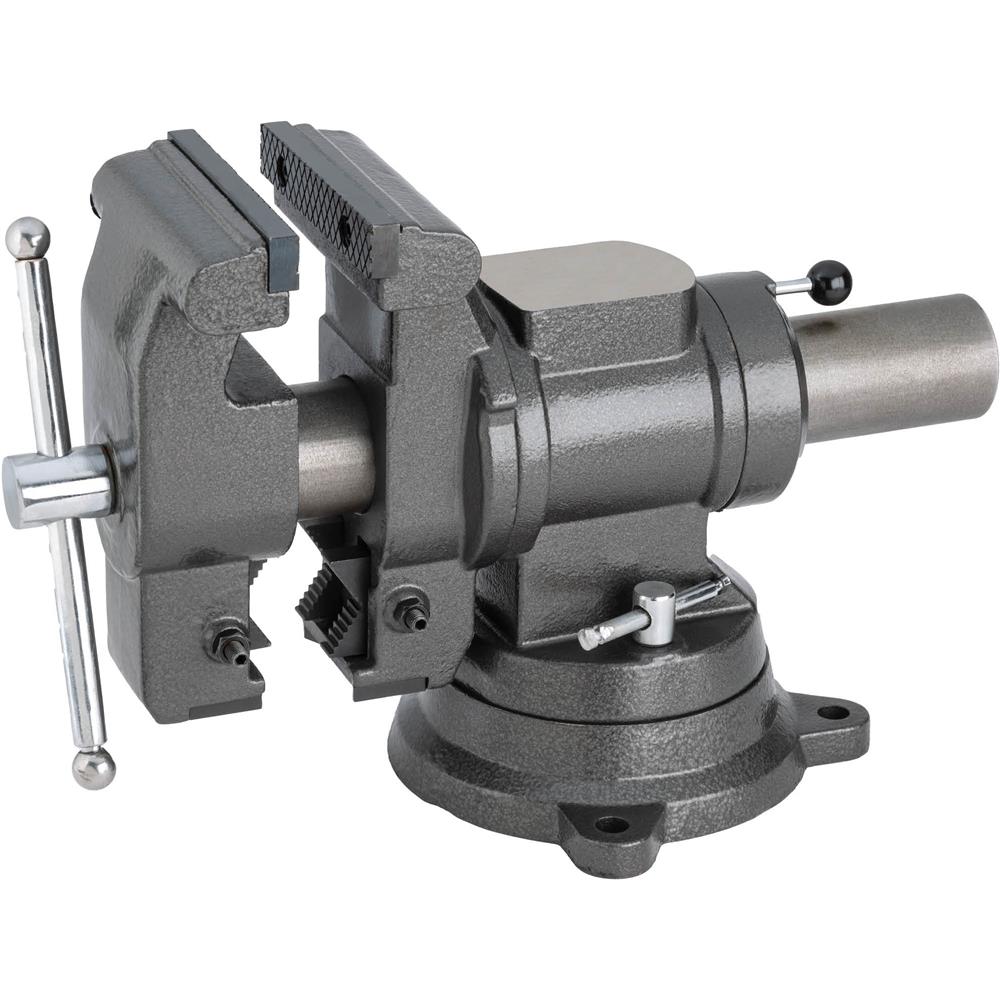
Prefer to buy direct? The Grizzly T33818 5" Swivel-Base Drop-Forged Workbench Vise is a strong heavy-duty workbench vise from Grizzly Industrial, often priced lower factory-direct than through a reseller and backed by full parts availability and U.S. support.
Shop the T33818 at Grizzly.com →Vise Types Explained
Understanding the different types of workbench vises helps you choose the right one for your woodworking style:
Front Vise (Face Vise)
The most common type, mounted on the front edge of your workbench. Typically positioned on the left side for right-handed woodworkers.
- Holds boards on edge for planing and sawing
- Clamps workpieces against the bench front
- Often features quick-release mechanism
- Jaw widths from 7" to 13"
End Vise (Tail Vise)
Mounted at the end of your workbench, works with bench dogs to clamp workpieces flat on the benchtop.
- Clamps boards flat for planing and routing
- Works with dog holes along bench length
- Provides powerful horizontal clamping
- Essential for traditional workbenches
Leg Vise
A large wooden vise attached to the front leg of your workbench using a wooden screw or metal hardware.
- Tremendous clamping pressure
- Can hold very long boards
- No metal to damage hand tools
- Popular with hand tool woodworkers
Moxon Vise
A portable twin-screw vise that clamps to your benchtop. Designed for dovetailing and joinery work at a comfortable height.
- Raises work to comfortable eye level
- Wide jaw capacity for panels
- Portable and removable
- Ideal for dovetails and fine joinery
Twin-Screw Vise
Features two screws for parallel jaw movement. Provides excellent clamping for wide panels and angled work.
- Keeps jaws parallel under load
- Wide capacity for panels
- Can hold tapered pieces
- Premium option for serious work
Product Comparison Table
Compare the key specifications of our top-rated workbench vises:
| Model | Type | Jaw Width | Opening | Quick Release | Budget |
|---|---|---|---|---|---|
| Eclipse 10" Quick Release Vise | Front Vise | 10" | 13" | Yes | Under $250 |
| VEVOR 9" Quick Release Vise | Front Vise | 9" | 10.2" | Yes | Under $100 |
| Groz 9" Quick Release Vise | Front Vise | 9" | 13" | Yes | Under $250 |
| Wilton 79A Pivot Jaw Vise | Front Vise | 4" x 10" | 13" | Yes | Under $500 |
| COGNATIVE 7" Quick Release Vise | Front Vise | 7" | 8" | Yes | Under $100 |
| O'SKOOL 9" Quick Release Front Vise | Front Vise | 9" | 13" | Yes | Under $250 |
| Groz 7" Front Vise | Front Vise | 7" | 8" | Yes | Under $250 |
| WoodRiver Quick Release Front Vise | Front Vise | 10" | 13" | Yes | Under $250 |
| Taytools Moxon Vise Hardware Kit | Moxon Vise | Variable | 10" | No | Under $100 |
| Yost 10WW-CA Heavy Duty Vise | Front Vise | 10" | Under $250 |
Detailed Reviews

Eclipse 10" Quick Release Vise
Front ViseThe Eclipse 10-inch quick release woodworking vise is a legendary tool trusted by professional woodworkers for decades. Built from precision gray cast iron, this vise delivers smooth quick-release operation and exceptional durability.
Pros
- Genuine English-made quality and precision
- Smooth quick-release mechanism
- Heavy-duty cast iron construction
- Pre-drilled holes for wooden jaw faces
- Excellent 13" jaw opening capacity
Cons
- Higher price than import alternatives
- Heavy at 30+ pounds
- Requires substantial benchtop mounting area
Our Verdict
The Eclipse 9" is our top overall pick for its combination of quality, durability, and proven performance. If you can afford it, this is the vise that will last a lifetime.

VEVOR 9" Quick Release Vise
Front ViseThe VEVOR 9-inch quick-release vise offers impressive value with heavy-duty construction and smooth operation. The 9-inch jaws open to 10.2 inches, and the quick-release mechanism speeds up repositioning between clamp-ups.
Pros
- Excellent value for the quality
- Smooth quick-release action
- Heavy-duty construction for stability
- Wide 10.2" opening capacity
Cons
- May require cleanup from machining oil
- Guide bars need occasional lubrication
- Not quite as refined as premium brands
Our Verdict
The VEVOR 9" Quick Release is our top pick for best front vise. It delivers most of the performance of premium brands at a fraction of the cost, making it ideal for most woodworkers.

Groz 9" Quick Release Vise
Front ViseThe Groz 9-inch quick release woodworking vise pairs a trigger-action quick release with a toe-in feature that pulls the jaws tight at the top for gap-free clamping. The cast iron body and adjustable front dog make it a capable front vise for planing, sawing, and general workholding.
Pros
- Trigger-action quick release
- Toe-in jaws close gap-free at the top
- Adjustable front dog for bench dog use
- Solid cast iron construction
- Generous 13-inch opening
Cons
- Installation requires careful planning
- Heavier than budget vises
- Limited stock at last check
Our Verdict
For traditional workbench builders, the Groz 9-inch quick release vise provides excellent clamping with its toe-in jaws and adjustable dog at a reasonable price. Pairs perfectly with dog holes.

Wilton 79A Pivot Jaw Vise
Front ViseThe Wilton 79A features a unique pivot jaw design that adjusts to grip tapered and irregular workpieces securely, with a generous 13-inch opening. Built with legendary Wilton quality for demanding shops.
Pros
- Made in USA quality
- Pivot jaw grips tapered work
- Smooth quick-release operation
- Exceptional build quality
- Versatile for irregular shapes
Cons
- Narrower 4" jaw width
- Higher price point
- Overkill for basic clamping needs
Our Verdict
The Wilton 79A is a premium choice for those who work with irregular or tapered pieces. The pivot jaw feature and USA-made quality justify the investment for serious woodworkers.

COGNATIVE 7" Quick Release Vise
Front ViseThe COGNATIVE 7-inch quick-release vise is an excellent entry-level pick that punches above its weight class. The maker rates it at 3,300 pounds of clamping force, and the 7-inch jaws handle most projects while the price keeps it accessible for beginners.
Pros
- Outstanding value under $100
- Quick-release mechanism included
- Solid construction for the price
- Good for smaller benches
Cons
- Smaller 7" jaw width
- Limited 8" opening
- Lighter construction than premium vises
Our Verdict
Our budget pick, the COGNATIVE 7" Quick Release proves you do not need to spend a fortune to get a functional vise. Perfect for beginners and smaller benches.

O'SKOOL 9" Quick Release Front Vise
Front ViseThe O'SKOOL 9-inch quick release front vise delivers heavy-duty cast iron construction, a generous 13-inch opening, and a beechwood handle at a value price. It is a smooth, no-fuss front vise for woodworkers who want quality clamping without a premium spend.
Pros
- Heavy-duty cast iron body
- Generous 13" opening capacity
- Smooth quick-release action
- Beechwood handle included
- Strong value for a 9-inch front vise
Cons
- Less brand heritage than legacy makers
- Wooden jaw faces sold separately
- Heavy at install
Our Verdict
The O'SKOOL 9-inch front vise is a smart value pick that delivers a 13-inch opening and smooth quick-release action at well under premium prices. A solid all-around bench vise for most woodworkers.

Groz 7" Front Vise
Front ViseThe Groz 7-inch quick release front vise pairs trigger-action quick release with an adjustable front dog and toe-in jaws. A solid choice for smaller benches or outfitting a secondary bench with genuine cast iron quality.
Pros
- Trigger-action quick release
- Adjustable front dog and toe-in jaws
- Adequate for light to medium work
- Easy installation
- Genuine Groz cast iron quality
Cons
- Smaller 7-inch jaw capacity
- 8-inch opening limits thick stock
- May need adjustment out of box
Our Verdict
For a compact bench, the Groz 7" gets the job done with trigger-action quick release and an adjustable dog. A capable small-bench vise from a trusted vise maker.
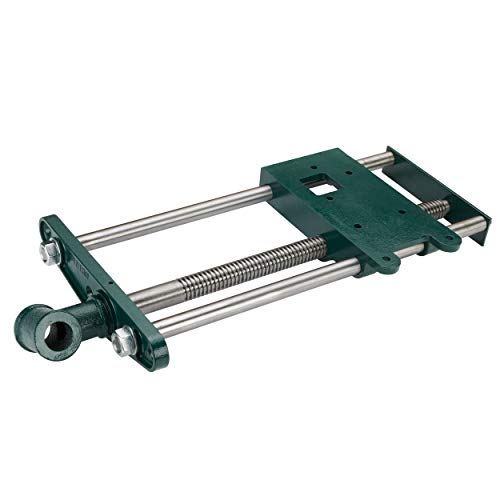
WoodRiver Quick Release Front Vise
Front ViseThe WoodRiver Economy Quick Release Front Vise delivers serious bench-builder capacity at a sensible price. The wide jaw and generous opening, paired with smooth quick-release action, make it a strong choice for a dedicated woodworking bench.
Pros
- Smooth quick-release operation
- Wide jaw plate for big stock
- Generous 13" opening
- Solid value for the capacity
- Pre-drilled for wooden jaw faces
Cons
- No-frills economy finish
- Heavy to mount solo
- Requires substantial mounting area
Our Verdict
For those building a workbench on a budget without giving up capacity, the WoodRiver Quick Release Front Vise is an excellent value that will provide years of reliable service.

Taytools Moxon Vise Hardware Kit
Moxon ViseThis Taytools twin-screw Moxon vise hardware kit provides the 10-inch threaded rods, cast knobs, nuts, washers, and steel bushings needed to build your own twin-screw vise. Perfect for dovetailing and joinery at a comfortable working height.
Pros
- Build to your exact specifications
- Raises work to comfortable height
- Ideal for dovetail joinery
- Portable and removable
- Wide capacity for panels
Cons
- Requires wooden jaw construction
- No quick-release mechanism
- DIY assembly required
Our Verdict
For hand-cut dovetails and joinery, a Moxon vise is invaluable. This hardware kit lets you build one to your exact needs at a reasonable cost.

Yost 10WW-CA Heavy Duty Vise
Front ViseThe Yost 10WW-CA steps up the capacity with 10-inch jaws and heavy-duty ductile iron construction, which is significantly stronger than standard cast iron. It handles demanding workloads in active shops.
Pros
- Large 10" jaw capacity
- Ductile iron, stronger than cast iron
- Heavy-duty construction
- Good value for size
Cons
- Very heavy - needs sturdy bench
- Large mounting footprint
- Overkill for small projects
Our Verdict
The Yost 10WW is the choice for furniture makers and those working with larger stock. The extra capacity makes wide board work much easier.
Vise Installation Guide
Installing a workbench vise is a manageable project that requires careful planning and accurate layout. Here is a step-by-step guide:
-
Plan Your Vise Position
For a front vise, position it on the left side of your bench (for right-handers) with the jaw face flush with the bench front. For an end vise, align it with dog holes along your benchtop. Mark the vise outline on your bench.
-
Create the Mounting Recess
Most vises require a recess so the top of the vise body sits below the benchtop surface. Use a router with a template or chisel to remove material. The recess depth typically equals the vise body height minus the jaw height.
-
Drill Mounting Holes
Use the vise as a template or measure carefully from the manufacturer's specifications. Drill holes slightly oversized for adjustment. Counterbore from below if using carriage bolts.
-
Install Guide Bars
If your vise has guide bars, drill holes through the benchtop to allow them to pass through. Ensure holes are aligned so the vise operates smoothly without binding.
-
Attach Wooden Jaw Faces
Prepare wooden jaw faces from hardwood like maple or beech. Drill and countersink holes to match the vise's jaw plate holes. Attach with screws from behind. Make the outer jaw face flush with your bench front.
-
Test and Adjust
Test the vise operation before fully tightening all bolts. Check for smooth movement and parallel jaw alignment. Apply wax or paste wax to threads and guide bars for smooth operation.
Installation Tip
Take your time with layout. Once you cut the recess into your benchtop, there is no going back. Double-check all measurements and consider making a cardboard template first.
Planning a New Workbench?
Use our workbench materials calculator to plan your build.
Jaw Width and Opening Considerations
Choosing the right jaw width and opening capacity is crucial for your workholding needs:
Frequently Asked Questions
What is the difference between a front vise and an end vise?
A front vise (face vise) mounts on the front edge of your workbench, typically on the left side for right-handed woodworkers. It excels at holding boards on edge for jointing, planing, and sawing. An end vise (tail vise) mounts at the end of the bench and works with bench dogs to clamp workpieces flat on the benchtop for planing, routing, and carving. Many serious workbenches have both types.
What jaw width do I need for a workbench vise?
For most woodworkers, a 7-10 inch jaw width handles common tasks well. A 7-inch vise suits smaller benches and light to medium work. A 9-10 inch vise offers more versatility for larger stock and is our recommendation for most users. Consider 10+ inches if you regularly work with wide boards or do furniture making with substantial panels.
Should I get a quick-release vise?
Quick-release mechanisms allow you to slide the jaw in and out rapidly, then engage threads for final clamping. This speeds up workflow significantly when frequently clamping different sized pieces. For occasional use, a standard screw mechanism works fine and is simpler. For frequent workholding changes in an active shop, quick-release is highly recommended and worth the modest price premium.
Can I install a vise myself?
Yes, vise installation is a manageable DIY project for most woodworkers. You will need to create a mounting recess in your benchtop, drill holes for the mounting bolts, and attach wooden jaw faces. Allow 2-4 hours for a typical installation. Accurate layout is crucial for proper alignment - measure twice, cut once applies here.
What is a leg vise and when should I use one?
A leg vise attaches to the front leg of your workbench with a large wooden screw mechanism. Leg vises offer tremendous clamping power, can hold very long boards that would overwhelm a face vise, and have no metal parts to damage hand tools. They are ideal for hand tool woodworking, especially for tasks like hand planing edges of long boards or securing work for sawing.
How much should I spend on a workbench vise?
Budget $75-150 for a quality import vise that will serve most hobbyists well. Spend $150-250 for premium quick-release models with better materials and tighter tolerances. High-end vises from manufacturers like Lee Valley Veritas can exceed $250-400 but offer exceptional quality and will last generations with proper care.
Related Calculators and Resources
Use these tools to help plan your workbench project:
As an Amazon Associate and Grizzly Industrial affiliate, WorkshopCalc earns from qualifying purchases. Our recommendations are based on research into specifications, pricing, and verified owner reviews, not hands-on testing. We only recommend products we believe provide genuine value to woodworkers.