Welding Shop Setup Guide 2026: Layout, Ventilation & Equipment

Photo via Unsplash
Setting up a home welding shop is one of the most satisfying projects a metalworker can undertake, but it demands more planning than a woodworking or general tool shop. Fire hazards, toxic fumes, high-amperage electrical requirements, and UV exposure create a set of challenges that require deliberate solutions before you strike your first arc. This guide walks you through every phase of planning a safe, functional, and efficient welding shop for 2026.
Space Requirements
A welding shop is not just a place where you put a welder, it is an environment that must support safe movement around workpieces, adequate clearance from combustibles, and unrestricted access in an emergency. Minimum usable area depends heavily on the type of welding you plan to do.
Minimum Space by Welding Type
- Hobbyist / light fabrication: 150–250 square feet. Enough for a welding table, welder, and basic hand tools with safe clearance around all four sides of your work area.
- Serious home shop: 300–500 square feet. Accommodates a welding table, plasma cutter, angle grinder station, bench grinder, and basic metal storage.
- Full metalworking shop: 500–800 square feet. Allows a drill press, bandsaw, metal lathe, tube bender, and overhead hoist for heavy work.
Critical Clearances
The welding table is your anchor point. Everything else should be positioned with these clearances in mind:
- All sides of welding table: Minimum 36 inches of clear space for movement and emergency egress
- From combustibles: NFPA 51B requires 35 feet of clearance from welding to combustible materials, or use fire-resistant barriers
- Welder to wall: Minimum 24 inches for cable management and heat dissipation
- Cylinder storage: Separate zone from welding area with non-combustible construction
Garage vs Dedicated Building
A single-car garage (220–260 sq ft) is the most common starting point for a home welding shop. It works, but requires careful management: remove vehicles before welding, seal the door gap at the bottom, and ensure that fume ventilation doesn't push exhaust toward the house. A two-car garage gives dramatically more flexibility and allows a permanent welding zone separate from storage and other work areas.
A dedicated outbuilding gives you the most control. You can design the ventilation, electrical, and layout from scratch. Prioritize non-combustible walls (concrete block, metal stud with drywall) if budget allows.
Welding Shop Layout Tools
Tape Measure (25ft)
Essential for plotting clearances and planning equipment placement before buying anything.
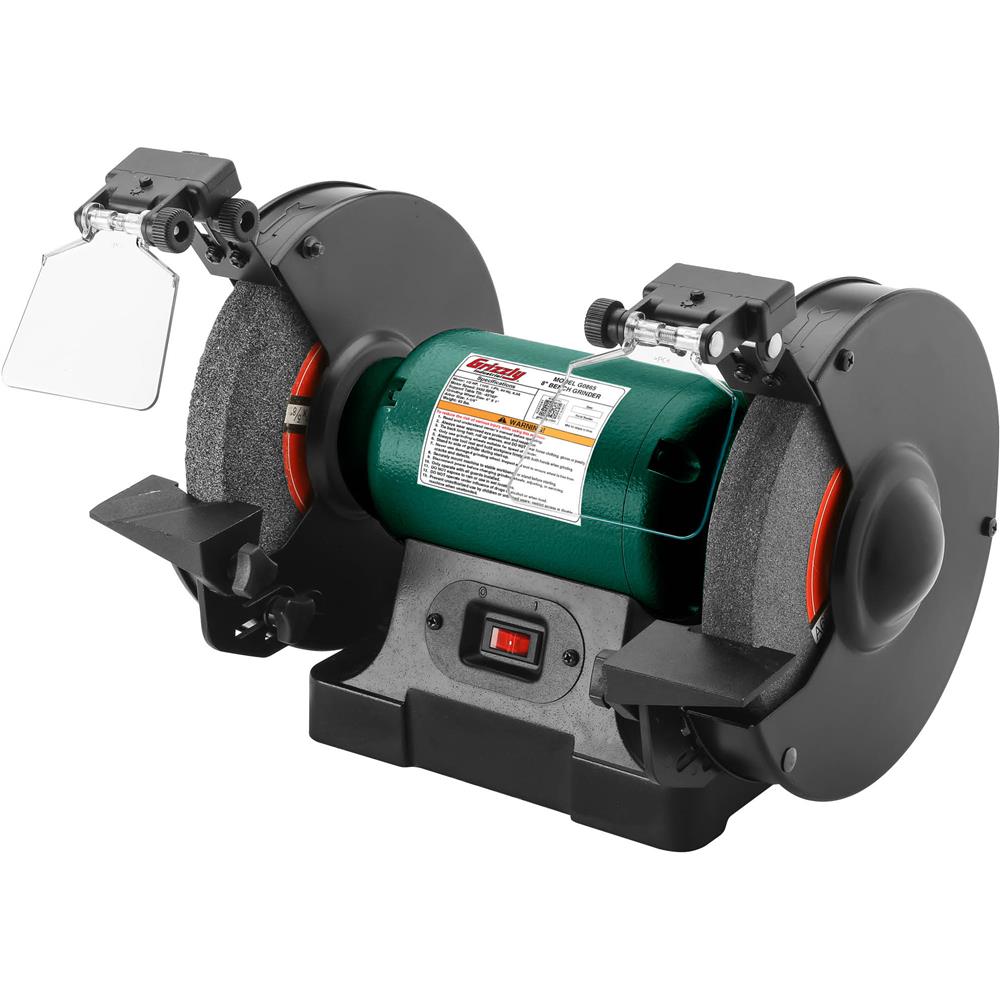
A metal and welding shop needs grinding, drilling, and cutting. Grizzly Industrial makes these factory-direct, often priced lower than through a reseller and backed by full parts availability and U.S. support:
G0865 Bench Grinder → T34614 Drill Press → G0926 Metal Bandsaw →
Ventilation & Fume Extraction
Welding fumes are the most serious health hazard in any welding shop. Hexavalent chromium from stainless steel welding is a known carcinogen. Manganese in mild steel fumes causes neurological damage with chronic exposure. Zinc fumes from galvanized steel cause metal fume fever. You cannot see most dangerous fumes, assume every welding process generates hazardous airborne particles.
OSHA and ACGIH Limits
The OSHA permissible exposure limit (PEL) for welding fumes is 5 mg/m3 as a time-weighted average. ACGIH's threshold limit value (TLV) is even lower at 1 mg/m3 for general welding fume. A basic shop ventilation system should target at minimum 10 air changes per hour; 20+ changes per hour is better for continuous welding.
Ventilation Options
- Source capture fume extractor: The most effective option. A flexible arm-mounted extractor positioned 2–4 inches from the weld captures fumes at the source before they spread. Look for units with at least 350 CFM and HEPA-rated or electrostatically enhanced filtration.
- General dilution ventilation: Exhaust fans removing air from the welding zone and supplying fresh air from the opposite side. Works as a supplement to source capture. Size for a minimum of 10 air changes per hour in the full shop volume.
- Natural ventilation: Adequate only for occasional outdoor or open-bay welding. Never rely on natural ventilation in an enclosed space.
Fan Placement Rules
- Exhaust should pull air away from the welder's breathing zone, not across it
- Position supply air inlet at low level, exhaust at high level to flush rising fumes
- Never position fans to blow fresh air from behind the welder, it disrupts shielding gas coverage
- When welding outdoors in wind, position yourself so wind blows fumes away from your face
Recommended Fume Extractors
Lincoln Electric K3763-1 Interceptor Portable Fume Extractor
350 CFM portable unit with flexible arm capture, HEPA filter, and integrated spark arrestor. Designed specifically for welding fume capture.
Xtract-All Portable Welding Fume Extractor
Budget-friendly source capture unit with flexible hose and replaceable filter cartridge. Good starting option for occasional welders.
Respiratory Protection
Even with good ventilation, wear respiratory protection. For mild steel MIG or stick welding, an N95 respirator provides basic protection. For stainless, galvanized, or high-alloy materials, use a half-face respirator with OV/P100 combination cartridges. A powered air-purifying respirator (PAPR) is ideal for extended production welding.
Electrical: 240V Circuits
Most MIG welders rated above 140 amps require a dedicated 240V circuit. Undersized wiring causes voltage drop that degrades weld quality and can overheat conductors. Planning your electrical system before welding equipment arrives saves expensive rework.
Circuit Requirements by Welder Type
| Welder Type | Typical Input Amps | Minimum Circuit | Recommended Wire Gauge | Outlet Type |
|---|---|---|---|---|
| 120V MIG (140A output) | 20A | 20A/120V dedicated | 12 AWG | NEMA 5-20R |
| 240V MIG (200A output) | 30A | 30A/240V dedicated | 10 AWG | NEMA 6-50R or 14-50R |
| 240V MIG (250A output) | 50A | 50A/240V dedicated | 6 AWG | NEMA 6-50R |
| TIG welder (200A) | 30–40A | 50A/240V dedicated | 6 AWG | NEMA 6-50R |
| Plasma cutter (60A cut) | 20–30A | 30A/240V dedicated | 10 AWG | NEMA 6-50R |
| Bench grinder (1HP) | 10–15A | 20A/120V | 12 AWG | NEMA 5-20R |
Subpanel Planning
If you plan to run multiple 240V tools, a dedicated subpanel in the shop is the cleanest solution. Size it for your current needs plus 50% for growth. A 60-amp subpanel handles most hobbyist setups. A 100-amp subpanel accommodates a welder, plasma cutter, and dedicated lighting circuit without strain.
Calculate Your Electrical Load
Determine total shop load and subpanel size based on all your tools.
For detailed electrical planning, see our Workshop Electrical Guide.
The Welding Table
Your welding table is the most important permanent fixture in the shop. It is your positioning reference, work support, and ground path. A well-designed welding table makes complex work easier and improves consistency across every project.
Table Construction
- Top material: 1/2" to 3/4" steel plate is standard. Cast iron gives more mass but is harder to find and modify. Avoid stainless and coated steels, they contaminate the weld.
- Top flatness: The table does not need to be machined flat, but it should be flat enough to use as a reference for squaring assemblies. Check with a long straightedge and correct with shimming or grinding if needed.
- Table height: 34–38 inches is typical for most welders standing at the table. Higher tables reduce back strain for lighter work; lower tables allow more leverage on heavy assemblies.
- Leg design: Square tube or heavy angle iron with cross-bracing. The table must not flex when you push heavy assemblies against stops or vice-mounted to it.
Fixturing Holes and Accessories
Fixture tables with a 2-inch grid of 5/8" holes (Siegmund, Strong Hand, Fireball Tool pattern) allow clamping and fixturing jigs in any configuration. A basic 2x4 foot tabletop with 5/8" holes in a 2-inch grid transforms a flat table into a true fixturing system. Even drilling your own holes in a basic steel plate top adds significant capability.
Recommended Welding Tables
Strong Hand Tools BuildPro Welding Table
Professional fixture table with 5/8" grid holes on 2" centers. Heavy-duty cast iron table top, rated for 1,000+ lb loads. The benchmark for home and professional welding shops.
ERGOMASTER 36" x 18" Welding Table
Steel welding table on wheels rated for 1,200 lbs, with tool slots and 5/8" fixture holes for clamping.
Eastwood Steel Welding Table 36x24
Budget-friendly 1/4" steel top welding table with casters and adjustable lower shelf. Good starter table for hobbyists building their first shop.

Photo via Unsplash
Fire Safety
Welding produces sparks that travel 35 feet or more. Hot slag can remain above ignition temperature for hours. A fire that starts in a welding shop is often not discovered until significant damage has occurred. Build fire safety into the shop design, not as an afterthought.
Combustibles
- Remove or protect: Any combustible material within 35 feet of the welding arc. This includes wood framing, cardboard, paper, stored solvents, plastic bins, and rubber hoses.
- Non-combustible surfaces: Use concrete, bare steel, or cement board near the welding zone. Avoid rubber mats, wood floors, and painted surfaces near the arc.
- Cover gaps: Sparks fall into floor cracks and smolder. Fill concrete cracks and seal floor penetrations.
Fire Extinguishers
- Mount a 5-lb ABC dry chemical extinguisher within arm's reach of the welding station, not across the shop
- A second 10-lb extinguisher near the exit provides backup
- Check pressure gauges every 6 months and service annually
- Know how to use a fire extinguisher before you need it, PASS: Pull, Aim, Squeeze, Sweep
Hot Work Fire Watch
NFPA 51B requires a 30-minute fire watch after all welding and cutting operations. Stay in the shop for 30 minutes after your last arc and visually inspect all surfaces, joints, and hidden spaces where sparks could have settled. Many welding fires start 30–60 minutes after the welder has left the building.
Never Weld Near These Materials
Gasoline, propane, solvents, aerosols, paint thinner, and any compressed gas cylinder not rated for welding service. One stray spark in a vapor cloud can cause an explosion. Clear your entire shop of flammables before every welding session.
Fire Safety Equipment
Kidde 21005779 ABC Pro 5 Fire Extinguisher
5-lb ABC-rated dry chemical, wall-bracket included, pressure gauge for easy status check. Mount within immediate reach of your welding position.
Waylander Welding Fire Blanket
Carbon felt welding blanket for protecting nearby combustibles, cables, and surfaces from spatter. Reusable, rated to 1,800°F.
Floor Protection
A welding shop floor takes constant abuse from sparks, hot slag, dropped metal, and grinding debris. Concrete is the ideal floor for a welding shop, it is non-combustible, easy to clean, and handles thermal shock from hot workpieces. If your floor is bare concrete, consider sealing or coating it for easier cleanup and moisture resistance.
Floor Treatment Options
- Bare sealed concrete: Best choice for welding zones. Apply a penetrating concrete sealer to reduce dust and make spatter cleanup easier. Avoid epoxy coatings near the welding station, they burn and emit toxic fumes.
- Anti-fatigue mats (away from welding): Use rubber or foam anti-fatigue mats at the grinder station, workbench, and other non-welding areas. Keep all mats at least 5 feet from the welding arc.
- Welding area marking: Paint or tape a permanent boundary around the welding zone. This reinforces the habit of keeping combustibles clear and helps visitors understand where the hot zone is.
Drain Planning
If you plan to use cutting fluid or quench metal in water, a floor drain in the welding zone is invaluable. If your space doesn't have one, position a heavy-duty drainage tray or catch basin under the areas where liquids may splash.
Gas Cylinder Storage
Shielding gas cylinders are under high pressure and must be secured against tipping at all times. A falling cylinder can shear the valve, converting it into an unguided rocket. This is not a theoretical risk, multiple fatalities occur every year from unsecured industrial cylinders.
Cylinder Securing Requirements
- Chain or strap every cylinder to a wall, column, or dedicated cylinder cart at all times, including when empty
- Keep protective valve caps on all cylinders not currently in use
- Store oxygen and fuel gas cylinders a minimum of 20 feet apart, or separated by a non-combustible 5-foot-high barrier with a fire resistance rating of at least 30 minutes
- Never store cylinders in direct sunlight or near heat sources
- Store cylinders in an upright position only
Cylinder Storage Zone
Designate a specific area of your shop for cylinder storage, ideally near an exterior wall with ventilation. Install a cylinder bracket or freestanding rack rated for your cylinder sizes. CO2 and argon/CO2 blend cylinders for MIG welding are typically 20-, 40-, or 80-cubic-foot sizes. Larger cylinders (200–330 CF) are more economical for production use but require more robust securing systems.
Cylinder Storage
Forney Industries Gas Cylinder Cart
Steel welding cart that secures the welder, two cylinders, and cables in one mobile unit. Chain securing loops for both cylinders, heavy-duty pneumatic tires.
Wall-Mount Gas Cylinder Bracket
Heavy-duty steel wall bracket with chain for securing single or dual cylinders to shop wall. Simple, reliable, inexpensive.
Essential Tools List
A complete welding shop requires more than just a welder. Build your tool collection in priority order, start with what you need for your first projects and add as your fabrication goals expand.
Tier 1: Core Welding Setup
- Welder: MIG welder is the best all-around starting point for a home shop. A dual-voltage 210A machine (Lincoln Power MIG, Hobart Handler, Miller Millermatic) handles everything from 24-gauge sheet to 3/8" plate in a single pass. See our Best Welders guide for specific picks.
- Welding table: As discussed above, your single most important fixed investment.
- Auto-darkening welding helmet: A quality auto-darkening helmet (shade 9–13, variable) makes you faster and improves weld quality. Budget minimum $100; premium helmets ($250+) have faster reaction times and better clarity.
- Angle grinder (4.5" or 5"): For grinding, cutting, cleaning welds, and material prep. The most-used tool in any fabrication shop after the welder itself. Get a 4.5" corded unit plus extra cutting and grinding discs.
- Welding clamps and magnets: Corner magnets, C-clamps, locking pliers, and pipe clamps hold work in position while you tack. Start with a set of four 90-degree magnets and six C-clamps.
Tier 2: Expanded Metalworking Capability
- Plasma cutter: Cuts steel, stainless, and aluminum faster and with less distortion than a grinder or torch. A 40-amp plasma cutter handles up to 1/2" steel. See our Best Plasma Cutters guide.
- Bench grinder (8"): For dressing grinding wheels, sharpening drill bits, deburring, and general metal prep. An 8" grinder with one grinding wheel and one wire wheel is a versatile combination. See our Best Bench Grinders guide.
- Metal-cutting bandsaw: Far better than a cold saw or abrasive saw for accurate, repeatable cuts in bar stock, tubing, and structural shapes. Horizontal/vertical combo bandsaws give the most flexibility.
- Drill press: Accurate holes in consistent positions, critical for layout work, jig fixtures, and bolt-pattern drilling.
- Chop saw / cold saw: Fast, accurate cut-off for repetitive stock lengths. Abrasive chop saws are cheap; cold saws are slower but produce burr-free cuts and no heat.
Tier 3: Precision and Finishing
- TIG welder: For stainless, aluminum, and thin materials requiring precise heat control. A TIG machine is a significant skill investment but opens a different level of fabrication quality. See MIG vs TIG comparison.
- Metal lathe: Turning round stock, threading, boring, essential for mechanical fabrication and repair work.
- Sheet metal tools: Box-and-pan brake, slip roller, shear for sheet metal work.
Recommended Welders
Lincoln Electric Power MIG 210 MP
Multi-process MIG/Stick/TIG on 120V or 230V. The most versatile home shop welder available. 210A output handles everything from thin sheet to 3/8" plate.
YESWELDER DP200 MIG Welder
120V/240V dual-voltage 8-in-1 machine: MIG, pulsed MIG, flux core, spool gun, lift TIG, and stick. Synergic settings match wire speed and voltage to material thickness.
Budget Planning
Welding shop costs vary dramatically based on what you already have and what type of work you plan to do. These ranges are realistic for 2026 costs in the continental US.
Starter Welding Shop: $1,500–4,000
- Entry-level or used 140–180A MIG welder
- Basic welding table (DIY or import)
- Auto-darkening helmet ($100–150)
- 4.5" angle grinder with discs
- Welding clamps and magnets
- Safety equipment (helmet, gloves, jacket)
- 20A or 30A electrical circuit (if needed)
Capable Home Shop: $5,000–12,000
- Quality 200–210A dual-voltage MIG welder
- Professional welding table
- 40–60A plasma cutter
- 8" bench grinder
- Horizontal bandsaw
- Source capture fume extractor
- 50A dedicated electrical circuit
- Complete safety and PPE kit
- Basic gas cylinder storage and cart
Full Fabrication Shop: $15,000–35,000+
- Multi-process welder (MIG/TIG/Stick)
- Precision fixture table
- 60A+ plasma cutter
- Metal lathe
- Metal-cutting bandsaw (floor model)
- Drill press
- Overhead hoist or engine crane
- 100A subpanel with multiple 240V circuits
- Dedicated ventilation system
- Sheet metal tools