Calculating Chip Load
Chip load is the single most important concept in CNC routing. Every feeds and speeds decision flows from it. A correct chip load means efficient cutting, cool temperatures, long bit life, and clean surface finish.
Chip Load Formula
Chip Load = Feed Rate (IPM) / (RPM x Number of Flutes)
To find feed rate when you know your target chip load:
Feed Rate (IPM) = Chip Load x RPM x Number of Flutes
| Bit Diameter |
Material |
Target Chip Load |
Notes |
| 1/8" (3.175mm) | Softwood | 0.002–0.004" | Small bit = small chip load |
| 1/8" (3.175mm) | Aluminum | 0.001–0.002" | Use single-flute bit |
| 1/4" (6.35mm) | Softwood | 0.005–0.008" | Most common bit size |
| 1/4" (6.35mm) | Hardwood | 0.004–0.007" | Reduce for harder species |
| 1/4" (6.35mm) | Acrylic | 0.003–0.006" | O-flute or single-flute |
| 1/4" (6.35mm) | Aluminum | 0.001–0.003" | Single-flute, coolant |
| 3/8" (9.525mm) | Softwood | 0.007–0.012" | Larger chip load |
| 1/2" (12.7mm) | Softwood | 0.010–0.018" | High feed rate required |
| 1/2" (12.7mm) | Hardwood | 0.008–0.014" | Reduce for dense woods |
Tools for this chart
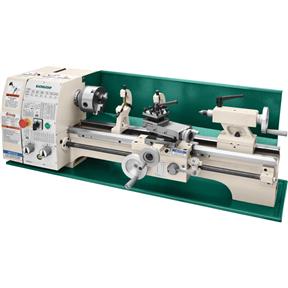
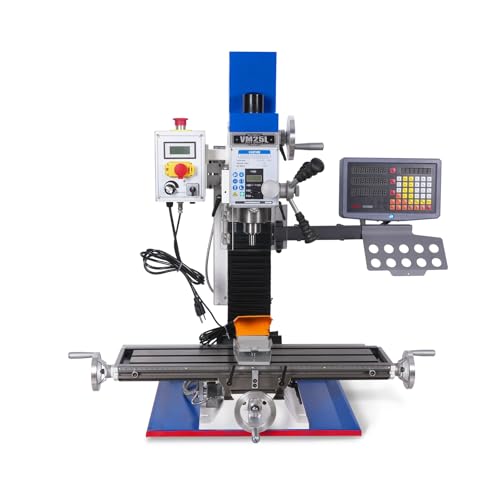
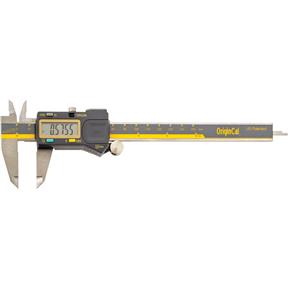
Benchtop metal latheA lathe is where spindle speed and feed rate matter most.Amazon pick: VEVOR 7 x 14 in Benchtop Metal Lathe; Grizzly pick: Grizzly G0602 10 x 22 Benchtop Metal Lathe Benchtop mill/drillMills need the speeds from this chart; this class has variable speed.Amazon pick: Mechmaxx 7 x 27-1/2 in Benchtop Mini Mill Drill; Grizzly pick: Grizzly G0704 7 x 27 1 HP Mill/Drill with Stand 6 in digital caliperVerify part and cutter diameters before you set speeds.Amazon pick: Adoric 0-6 in Digital Caliper; Grizzly pick: iGaging 6 in Absolute Origin Digital Caliper WorkshopCalc is an Amazon Associate and a Grizzly Industrial affiliate. We earn from qualifying purchases.
Signs of Incorrect Chip Load
| Problem |
Likely Cause |
Fix |
| Bit burning, discoloration | Chip load too low (rubbing) | Increase feed rate or decrease RPM |
| Bit breaking | Chip load too high | Decrease feed rate or increase RPM |
| Melted material (acrylic, HDPE) | Too much heat, low chip load | Increase feed rate, check flute type |
| Fuzzy edge on wood | Chip load too low or dull bit | Increase feed rate or replace bit |
| Chip re-welding (aluminum) | Chips not clearing, no coolant | Add air blast, reduce depth per pass |
| Chatter marks | Too much depth, deflection | Reduce depth of cut or stepover |
Shopping for the person who uses this page? The CNC machinist who tunes feeds and speeds is the one who needs a 10-pack of end mills and an accurate caliper. Start with our
gifts for the CNC machinist, or see the
best gifts for woodworkers; every pick is a specific stocked model, ranked from the big machines down to stocking stuffers.
Wood & Sheet Goods Feeds and Speeds
Settings for 2-flute upcut spiral carbide bits unless otherwise noted. Use these as starting points, adjust based on your specific machine's rigidity, spindle power, and workholding.
Softwood (Pine, Cedar, Douglas Fir, Spruce)
| Bit Diameter |
Flutes |
RPM |
Feed Rate (IPM) |
Depth per Pass |
Notes |
| 1/8" | 2 | 22,000–24,000 | 60–90 | 1/8" (1x dia) | Light passes, small bit |
| 1/4" | 2 | 18,000–22,000 | 100–150 | 1/4" (1x dia) | Standard production setting |
| 1/4" | 2 | 18,000 | 120–180 | 3/8" (1.5x dia) | Push deeper on rigid machines |
| 3/8" | 2 | 16,000–18,000 | 140–200 | 3/8" (1x dia) | Faster material removal |
| 1/2" | 2 | 14,000–18,000 | 180–250 | 1/2" (1x dia) | High feed required for chip load |
| 1/2" compression | 2 | 16,000–18,000 | 150–220 | Full depth (single pass) | Up/downcut for clean top and bottom |
Hardwood (Oak, Maple, Walnut, Cherry, Hard Maple)
| Bit Diameter |
Flutes |
RPM |
Feed Rate (IPM) |
Depth per Pass |
Notes |
| 1/8" | 2 | 20,000–22,000 | 40–70 | 1/16" (0.5x dia) | Shallow passes in hard species |
| 1/4" | 2 | 16,000–20,000 | 80–130 | 1/4" (1x dia) | Reduce for very hard woods |
| 3/8" | 2 | 14,000–18,000 | 110–170 | 5/16" (0.8x dia) | More rigidity required |
| 1/2" | 2 | 12,000–16,000 | 140–210 | 3/8" (0.75x dia) | Reduce depth for dense hardwoods |
Plywood (Baltic Birch, Hardwood Ply)
| Bit Diameter |
Bit Type |
RPM |
Feed Rate (IPM) |
Depth per Pass |
Notes |
| 1/4" | Upcut spiral | 18,000–20,000 | 100–140 | 1/4" | Good chip evacuation |
| 1/4" | Downcut spiral | 18,000–20,000 | 80–120 | 1/8" | Clean top surface, shallow passes |
| 1/4" | Compression | 16,000–18,000 | 100–150 | Full depth | Best surface on both faces |
| 3/8" | Upcut spiral | 16,000–18,000 | 140–190 | 3/8" | Faster for thick sheets |
| 1/2" | Compression | 14,000–18,000 | 150–220 | Full depth | Production nesting operations |
MDF (Medium Density Fiberboard)
| Bit Diameter |
Bit Type |
RPM |
Feed Rate (IPM) |
Depth per Pass |
Notes |
| 1/4" | Upcut spiral | 18,000–22,000 | 120–180 | 1/4" | MDF cuts easily but dulls bits fast |
| 1/4" | Downcut spiral | 18,000–22,000 | 100–150 | 1/8" | Reduces top-face tearout |
| 3/8" | Upcut spiral | 16,000–20,000 | 160–240 | 3/8" | High feed needed for chip load |
| 1/2" | Upcut spiral | 14,000–18,000 | 180–280 | 1/2" | Cabinet production setting |
MDF is abrasive due to its resin content. Expect 50–70% shorter bit life compared to solid wood. Use carbide bits and consider diamond-coated tools for high-volume production. Always use dust collection, MDF dust is a respiratory hazard.
CNC routers that run these feeds and speeds
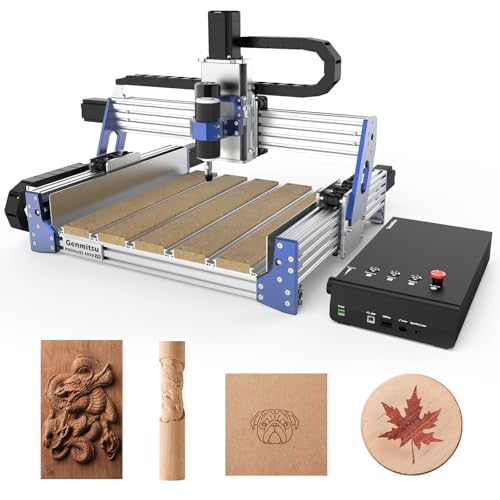
Chip load and feed rate are only as good as the machine holding the bit. These closed-loop desktop routers are the top picks in our CNC router guide.
Compare all CNC routers →
As an Amazon Associate, WorkshopCalc earns from qualifying purchases. Prices are approximate and can change.
Plastics Feeds and Speeds
Acrylic (Cast and Extruded)
Acrylic cuts cleanly at high feed rates with single-flute (O-flute) bits. Low chip load causes heat that melts and re-fuses the material. Cast acrylic machines better than extruded acrylic, extruded is more stress-prone and may crack.
| Bit Diameter |
Bit Type |
RPM |
Feed Rate (IPM) |
Depth per Pass |
Notes |
| 1/8" | Single-flute (O-flute) | 18,000–22,000 | 50–80 | 1/16" | Small passes in thin acrylic |
| 1/4" | Single-flute (O-flute) | 16,000–20,000 | 80–130 | 1/8" | Best surface finish |
| 1/4" | 2-flute upcut | 14,000–18,000 | 60–100 | 1/8" | Increase feed to avoid melting |
| 3/8" | Single-flute (O-flute) | 14,000–18,000 | 100–160 | 3/16" | Faster removal, thicker stock |
| 1/2" | 2-flute upcut | 12,000–16,000 | 120–180 | 1/4" | High feed to maintain chip load |
HDPE (High-Density Polyethylene)
HDPE is soft and gummy, it tends to melt and re-weld if chip load is too low. Single-flute bits and aggressive feed rates are key. HDPE is forgiving of imperfect settings compared to acrylic.
| Bit Diameter |
Bit Type |
RPM |
Feed Rate (IPM) |
Depth per Pass |
Notes |
| 1/4" | Single-flute (O-flute) | 16,000–20,000 | 80–140 | 1/4" | High feed to prevent re-welding |
| 1/4" | 2-flute upcut | 14,000–18,000 | 70–120 | 1/8" | Adequate for most HDPE work |
| 3/8" | Single-flute | 14,000–18,000 | 110–170 | 3/8" | Fast removal of thick stock |
| 1/2" | Single-flute | 12,000–16,000 | 140–200 | 1/2" | High feed rate required |
Aluminum Feeds and Speeds
Aluminum is machinable on hobby CNC routers with correct settings. The biggest risk is heat from chip re-cutting, ensure chips clear the cut zone with compressed air or mist coolant. Never let aluminum chips pile up in the cut.
Aluminum CNC Safety Tips
Use compressed air or cutting fluid to clear chips continuously. Aluminum chips re-welding to the bit cause instant failure. Keep depth of cut shallow (0.010"–0.040" per pass), use carbide single or two-flute end mills, and never use router bits designed for wood on aluminum.
6061 Aluminum (Most Common Alloy)
| Bit Diameter |
Flutes |
RPM |
Feed Rate (IPM) |
Depth per Pass |
Notes |
| 1/8" | 1 | 16,000–20,000 | 20–35 | 0.010" | Very shallow, air blast required |
| 1/8" | 2 | 14,000–18,000 | 15–25 | 0.008" | Slower, more careful |
| 1/4" | 1 | 12,000–16,000 | 30–55 | 0.020" | Standard hobby CNC aluminum |
| 1/4" | 2 | 10,000–14,000 | 25–45 | 0.015" | More rigid machines |
| 3/8" | 2 | 10,000–14,000 | 40–70 | 0.025" | Stiff machine required |
| 1/2" | 2 | 8,000–12,000 | 50–80 | 0.030" | Industrial-class CNC machine |
These settings assume a hobby to mid-grade CNC router (Shapeoko, X-Carve, Avid, Onefinity) with standard spindle. Industrial VMCs run 10–20x higher feed rates. Reduce all values by 25% for less rigid machines.
Foam (Tooling Foam, Rigid Foam, Sign Foam)
| Foam Type |
Bit Type |
RPM |
Feed Rate (IPM) |
Depth per Pass |
Notes |
| Sign foam (PVC foam board) | O-flute or upcut | 16,000–20,000 | 150–250 | 1/2"–full depth | Very easy to cut, high feed |
| Rigid tooling foam | Ball nose or upcut | 14,000–18,000 | 120–200 | Full depth | 3D carving, prototype work |
| EPS foam (styrofoam) | Any sharp bit | 10,000–16,000 | 200–400 | Full depth | Extremely easy, any sharp bit |
| HDU (high-density urethane) | Upcut or V-bit | 14,000–18,000 | 100–180 | 1/4"–1/2" | Sign carving, clean detail |
Climb vs Conventional Milling
Understanding milling direction helps you get better surface finish and extend bit life.
| Method |
Chip Thickness |
Surface Quality |
Machine Requirement |
Best Use |
| Conventional milling |
Thin to thick |
Good, slightly rougher |
Any CNC |
Roughing passes, slotting |
| Climb milling |
Thick to thin |
Excellent, smoother |
Rigid, low-backlash |
Finishing passes, hardwood |
For hobby CNC routers (Shapeoko, X-Carve, Onefinity, etc.), use conventional milling for roughing to avoid pulling the workpiece and chatter. A light final climb-milling pass (0.005"–0.010" depth) dramatically improves surface finish on hardwood and plastic.
Bit Selection Guide
Choosing the right bit geometry matters as much as choosing the right speeds and feeds.
| Bit Type |
Best Materials |
Advantage |
Limitation |
| Upcut spiral |
Wood, plywood, MDF, plastics |
Excellent chip evacuation, fast cuts |
Slightly rough top surface |
| Downcut spiral |
Plywood, laminates, veneered panels |
Clean top surface, minimal tearout |
Chips stay in cut, shallower passes needed |
| Compression (up/down) |
Plywood, laminates, MDF |
Clean top and bottom edges simultaneously |
Must cut at full depth of upcut section |
| O-flute (single-flute) |
Acrylic, HDPE, soft plastics, aluminum |
Large chip clearance, prevents melting |
Lower rigidity at high forces |
| Ball nose |
3D carving, organic shapes |
Smooth 3D surfaces, finish passes |
Slow, many overlapping passes needed |
| V-bit (60°, 90°, 120°) |
Sign lettering, engraving, chamfers |
Sharp, detailed profiles |
Depth-sensitive to surface flatness |
| Surfacing bit (fly cutter) |
Spoilboard, large flat surfaces |
Fast, even surface in one pass |
Not for profiling or slots |
Recommended CNC Router Bits
These are the bits used by professional CNC operators and serious hobbyists for consistent results and long tool life.
1/4" dia
3/4" cut length
Under $50
- Amana's premium solid carbide upcut
- Excellent for wood, plywood, and MDF
- Spektra coating for longer edge life
- 1/4" shank fits most hobby CNC spindles
1/4" dia
1" cut length
Under $50
- American-made solid carbide
- Excellent for hardwood, plywood, MDF
- Consistent quality batch-to-batch
- Great value at the price point
1/4" dia
2-flute coated
Under $250
- Extreme tool life coating (ZrN)
- Up to 4x longer life in abrasive materials
- Ideal for MDF, particleboard, melamine
- Premium pick for production environments
As an Amazon Associate, WorkshopCalc earns from qualifying purchases. This helps support our free calculators and reference guides.