Screw Size Converter and Wood Screw Size Chart

Photo via Unsplash
Complete reference guide for wood screw gauges, lengths, head styles, drive types, and materials. Find the right screw for every woodworking project.
Photo via Unsplash
Complete reference guide for wood screw gauges, lengths, head styles, drive types, and materials. Find the right screw for every woodworking project.
As an Amazon Associate, we earn from qualifying purchases. See all recommendations
Choosing the right wood screw ensures strong joints that last. This comprehensive chart covers screw gauge to diameter conversion, length selection by material thickness, head and drive types, materials, and holding power. Whether you're building furniture, decking, or cabinets, this guide helps you select the perfect fastener.
Enter a screw gauge to get its diameter in inches and mm, or enter millimeters to get the nearest gauge and fraction. Uses diameter = 0.060 + 0.013 x gauge.
| US gauge | Diameter (in) | Diameter (mm) | Nearest metric |
|---|---|---|---|
| #4 | 0.112 | 2.8 | M3 |
| #6 | 0.138 | 3.5 | M3.5 |
| #8 | 0.164 | 4.2 | M4 |
| #10 | 0.190 | 4.8 | M5 |
| #12 | 0.216 | 5.5 | M5.5 to M6 |
| #14 | 0.242 | 6.1 | M6 |
WorkshopCalc is an Amazon Associate and a Grizzly Industrial affiliate. We earn from qualifying purchases.
Wood screw gauge numbers indicate shank diameter (the higher the number, the thicker the screw. A #6 screw is 0.138", a #8 is 0.164" (the most common, used for most furniture and cabinets), and a #10 is 0.190". For length, aim for at least 2/3 of the screw to penetrate the receiving piece) joining two 3/4" boards typically calls for a 1-1/4" #8 screw. See full diameters, lengths, and uses in the chart below. For pocket hole joinery, use the pocket hole screw size chart instead.
Wood screw gauge numbers indicate shank diameter. The higher the number, the larger the screw. This chart shows exact diameters in both imperial and metric units, plus the typical head diameter for each gauge.
| Screw Gauge | Shank Diameter (inches) | Shank Diameter (mm) | Head Diameter (flat) | Common Uses |
|---|---|---|---|---|
| #2 | 0.086" | 2.2mm | 3/16" (4.8mm) | Hinges, small hardware, delicate work |
| #3 | 0.099" | 2.5mm | 7/32" (5.6mm) | Light hardware, thin panels |
| #4 | 0.112" | 2.8mm | 1/4" (6.4mm) | Small hinges, trim, light duty |
| #5 | 0.125" | 3.2mm | 1/4" (6.4mm) | Trim work, small brackets |
| #6 | 0.138" | 3.5mm | 9/32" (7.1mm) | General woodworking, drawer slides |
| #7 | 0.151" | 3.8mm | 5/16" (8mm) | Cabinetry, medium-duty applications |
| #8 | 0.164" | 4.2mm | 5/16" (8mm) | Most common - furniture, cabinets, general |
| #9 | 0.177" | 4.5mm | 3/8" (9.5mm) | Heavy-duty furniture, outdoor |
| #10 | 0.190" | 4.8mm | 3/8" (9.5mm) | Structural, decking, heavy loads |
| #12 | 0.216" | 5.5mm | 7/16" (11mm) | Structural connections, lag alternatives |
| #14 | 0.242" | 6.1mm | 1/2" (12.7mm) | Heavy structural, timber framing |
#8 screws are the most versatile and commonly used for furniture, cabinetry, and general woodworking. #6 is ideal for lighter work and face frames. #10 handles structural and outdoor applications.
Quality structural screws replace most of the lag bolts and generic screws above, and the right bit set drills every pilot hole.
 Better Pick
GRK R4 #10 x 3-1/8" Multi-Purpose Screws, 630 ct
Self-countersinking, no pre-drill in most stock
Under $100
Check Price on Amazon
Structural Pick
GRK RSS 5/16" x 4" Structural Screws, 25 ct
Lag-bolt strength for ledgers and framing
Under $50
Check Price on Amazon
Better Pick
GRK R4 #10 x 3-1/8" Multi-Purpose Screws, 630 ct
Self-countersinking, no pre-drill in most stock
Under $100
Check Price on Amazon
Structural Pick
GRK RSS 5/16" x 4" Structural Screws, 25 ct
Lag-bolt strength for ledgers and framing
Under $50
Check Price on Amazon
 Good Pick
DEWALT 21-Piece Titanium Pilot Point Drill Bit Set
Clean pilot holes for every gauge on this chart
Under $25
Check Price on Amazon
Good Pick
DEWALT 21-Piece Titanium Pilot Point Drill Bit Set
Clean pilot holes for every gauge on this chart
Under $25
Check Price on Amazon
As an Amazon Associate, WorkshopCalc earns from qualifying purchases. Prices are approximate and can change.
The golden rule: at least 2/3 of the screw length should penetrate the receiving (bottom) piece. This chart shows recommended screw lengths when joining materials of different thicknesses.
| Top Piece Thickness | Bottom Piece Thickness | Recommended Screw Length | Minimum Thread Engagement |
|---|---|---|---|
| 1/4" (6mm) | 1/2" or thicker | 5/8" - 3/4" | 3/8" (10mm) |
| 3/8" (10mm) | 1/2" or thicker | 3/4" - 1" | 1/2" (12mm) |
| 1/2" (12mm) | 1/2" or thicker | 1" - 1-1/4" | 1/2" (12mm) |
| 3/4" (19mm) | 3/4" or thicker | 1-1/4" - 1-1/2" | 3/4" (19mm) |
| 3/4" (19mm) | 1-1/2" or thicker | 1-1/2" - 2" | 1" (25mm) |
| 1" (25mm) | 1" or thicker | 1-1/2" - 2" | 3/4" (19mm) |
| 1-1/2" (38mm) | 1-1/2" or thicker | 2-1/2" - 3" | 1" (25mm) |
| 2x lumber (1-1/2") | 2x lumber | 2-1/2" - 3" | 1-1/4" (32mm) |
When in doubt, choose a screw that is about 1/4" shorter than the combined thickness of both pieces. This ensures the screw tip does not poke through the back while maximizing thread engagement.
Different head styles serve different purposes. Choose based on whether you need the screw to sit flush, how visible it will be, and the aesthetic requirements of your project.
| Head Style | Profile | Best For | Countersink Required | Concealment |
|---|---|---|---|---|
| Flat (Countersunk) | Tapered underside, flat top | Furniture, cabinets, any flush application | Yes | Sits flush or below surface |
| Pan | Low dome, flat underside | Sheet metal, hardware attachment | No | Visible above surface |
| Round | Domed top, flat underside | Decorative, visible fastening | No | Visible, decorative |
| Oval (Raised Countersunk) | Tapered underside, domed top | Decorative trim, visible hardware | Yes | Visible dome above surface |
| Trim Head | Very small flat head | Finish carpentry, trim, minimal visibility | Minimal | Nearly invisible |
| Bugle | Curved countersink, flat top | Drywall, deck screws | Self-countersinking | Sits flush without pre-drilling |
| Washer Head | Large integrated washer | Soft materials, spreading load | No | Visible, low profile |
The drive type determines which bit you need and affects torque transfer and cam-out resistance. Modern drive types like Torx and square offer significant advantages over traditional Phillips.
| Drive Type | Also Called | Cam-Out Resistance | Torque Transfer | Common Bit Sizes | Best For |
|---|---|---|---|---|---|
| Phillips | Cross, + | Low | Good | #1, #2, #3 | General use, widely available |
| Square | Robertson | High | Excellent | #1, #2, #3 | Pocket holes, power driving |
| Torx | Star, 6-lobe | Very High | Excellent | T15, T20, T25, T30 | High-torque, structural, decking |
| Combo | Square/Phillips | Medium-High | Good | #2 Phillips or #2 Square | Versatility, accepts either bit |
| Slotted | Flat, Standard | Very Low | Poor | Various widths | Restoration, hand driving only |
| Pozidriv | PZ | Medium | Good | PZ1, PZ2, PZ3 | European products, Festool |
For the best power-driving experience, choose Torx or square drive screws. They virtually eliminate cam-out (bit slipping), reducing stripped screw heads and driver bit wear. The small premium in cost pays for itself in time and frustration saved.
The material and coating determine corrosion resistance, strength, and compatibility with different wood types. Choosing the wrong material can lead to premature failure or wood staining.
| Material/Coating | Corrosion Resistance | Strength | Cost | Best Applications |
|---|---|---|---|---|
| Zinc Plated | Fair (indoor) | Good | Low | Interior furniture, cabinets |
| Yellow Zinc | Good | Good | Low | Interior, light outdoor use |
| Black Phosphate | Fair (indoor) | Good | Low | Drywall, interior framing |
| Hot-Dipped Galvanized | Excellent | Good | Medium | Pressure-treated lumber, outdoor |
| Ceramic Coated | Excellent | High | Medium-High | Decking, outdoor, ACQ lumber |
| Stainless Steel 305 | Very Good | Medium | High | Outdoor furniture, coastal (mild) |
| Stainless Steel 316 | Excellent (marine) | Medium | Very High | Marine, saltwater exposure |
| Silicon Bronze | Excellent | Medium | Very High | Boat building, teak, marine |
| Brass | Good | Low | High | Decorative, brass hardware |
Modern ACQ (Alkaline Copper Quaternary) pressure-treated lumber is highly corrosive to standard zinc-plated screws. Always use screws rated for ACQ: hot-dipped galvanized, ceramic coated, or stainless steel. Using the wrong screws can result in complete fastener failure within 1-2 years.
Holding power varies by screw gauge, thread design, and wood species. This chart shows approximate withdrawal resistance in pounds per inch of thread engagement.
| Screw Gauge | Pine (SG 0.50) | Douglas Fir (SG 0.55) | Oak (SG 0.68) | Hard Maple (SG 0.72) |
|---|---|---|---|---|
| #6 | 85 lbs/in | 95 lbs/in | 140 lbs/in | 155 lbs/in |
| #8 | 105 lbs/in | 120 lbs/in | 175 lbs/in | 195 lbs/in |
| #10 | 125 lbs/in | 145 lbs/in | 210 lbs/in | 235 lbs/in |
| #12 | 150 lbs/in | 170 lbs/in | 250 lbs/in | 280 lbs/in |
| #14 | 175 lbs/in | 200 lbs/in | 290 lbs/in | 325 lbs/in |
SG = Specific Gravity. Higher specific gravity indicates denser wood with greater holding power. End-grain holding power is approximately 50-75% of face-grain values.
Pocket hole joinery requires specific screw lengths and thread types based on material thickness. This chart follows Kreg system recommendations.
| Material Thickness | Kreg Jig Setting | Screw Length | Thread Type | Applications |
|---|---|---|---|---|
| 1/2" | 1/2" | 3/4" | Fine | Thin plywood, hardwood panels |
| 3/4" | 3/4" | 1-1/4" | Coarse (softwood/ply) or Fine (hardwood) | Cabinets, furniture, face frames |
| 1" | 1" | 1-1/2" | Coarse or Fine | Thick hardwood, heavy-duty |
| 1-1/4" | 1-1/4" | 2" | Coarse or Fine | Thick stock, structural |
| 1-1/2" | 1-1/2" | 2-1/2" | Coarse (2x lumber) | 2x construction, framing |
Coarse thread: Softwoods (pine, cedar, fir), plywood, and OSB. Fine thread: Hardwoods (oak, maple, walnut), MDF, particleboard, and melamine. Using the wrong thread type is the #1 cause of pocket hole joint failure.
Deck screws are designed for outdoor use with self-drilling tips and corrosion-resistant coatings. Use this chart to select the right size for your decking project.
| Application | Screw Size | Length | Gauge | Notes |
|---|---|---|---|---|
| 5/4 Decking to Joist | #8 | 2-1/2" | #8 x 2-1/2" | Most common deck screw size |
| 2x Decking to Joist | #9 or #10 | 3" | #10 x 3" | For thicker deck boards |
| Deck Railing Posts | #10 | 3" - 3-1/2" | #10 x 3" | Or use structural screws |
| Ledger to House | Structural | 4" - 6" | 5/16" | Use approved structural screws (GRK, Spax) |
| Joist to Beam | Structural | 3" - 4" | 5/16" | Hurricane ties or structural screws |
| Composite Decking | #8 or #10 | 2-1/2" - 3" | Varies | Use screws rated for composite |
| Hardwood Decking (Ipe) | #8 | 2-1/2" | #8 x 2-1/2" | Pre-drill required, stainless recommended |
Pre-drilling prevents splitting, ensures straight screw paths, and is essential for hardwoods. See our complete pilot hole chart for exact drill bit sizes.
Our comprehensive pilot hole chart covers every screw gauge with exact drill bit sizes for softwood, hardwood, and clearance holes.
View Pilot Hole ChartCountersinking creates a cone-shaped recess that allows flat-head screws to sit flush with or below the surface.
| Screw Gauge | Countersink Diameter | 82-Degree Countersink Bit | Counterbore for Plugs |
|---|---|---|---|
| #6 | 9/32" (7.1mm) | 82-degree x 5/16" | 3/8" (10mm) |
| #8 | 5/16" (8mm) | 82-degree x 3/8" | 3/8" (10mm) |
| #10 | 3/8" (9.5mm) | 82-degree x 7/16" | 1/2" (12mm) |
| #12 | 7/16" (11mm) | 82-degree x 1/2" | 1/2" (12mm) |
| #14 | 1/2" (12.7mm) | 82-degree x 9/16" | 5/8" (16mm) |
For the cleanest results, use a combination pilot/countersink bit (countersink with pilot) matched to your screw size. These bits drill the pilot hole and countersink in one operation, ensuring perfect alignment. Brands like Fuller, Snappy, and WL Fuller make excellent combination bits.
These premium screws offer superior performance with self-drilling tips, cam-out resistant drives, and high-quality coatings. All links are affiliate links - we may earn a commission at no cost to you.
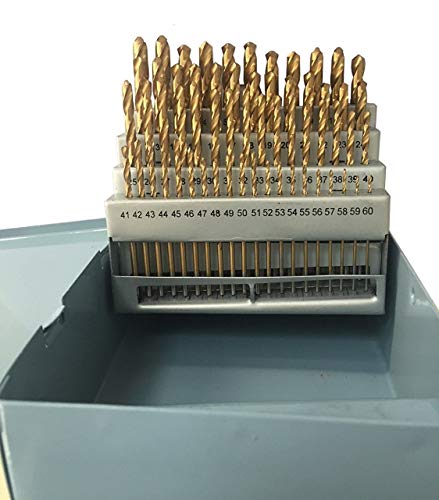
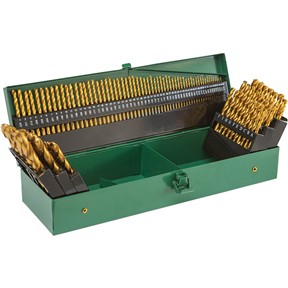
Drilling proper pilot holes prevents wood from splitting and ensures screws seat correctly. These drill bit sets include the most common pilot hole sizes referenced in the chart above.
As an Amazon Associate, WorkshopCalc earns from qualifying purchases. This helps support the site at no additional cost to you. We only recommend products we would use in our own workshops.
Pilot hole sizes for wood screws in softwood and hardwood by gauge.
View Chart →Complete reference for fractional, number, letter, and metric drill bit sizes.
View Chart →Benchtop and floor drill presses compared and ranked for workshops.
Read Guide →Updated 2026. US wood screws are named by gauge and length. A #8 x 1-1/2 screw is gauge #8 (0.164 in, 4.2 mm major diameter) and 1-1/2 inches long, measured from under the head for flat-head screws and overall for pan and round heads. The gauge number is a code, not a measurement, but it converts with one formula: diameter in inches = 0.060 + 0.013 x gauge, so #10 is 0.060 + 0.130 = 0.190 in. Metric wood screws are labeled by diameter in millimeters, such as 4 x 40 (4 mm by 40 mm), and the table maps them to the nearest gauge.
| Metric Screw | Nearest US Gauge | Actual Diameter of Gauge |
|---|---|---|
| 2.5 mm | #3 (0.099") | 2.5 mm |
| 3.0 mm | #5 (0.125") or #4 (0.112") | 3.2 mm / 2.8 mm |
| 3.5 mm | #6 (0.138") | 3.5 mm |
| 4.0 mm | #8 (0.164") or #7 (0.151") | 4.2 mm / 3.8 mm |
| 4.5 mm | #9 (0.177") | 4.5 mm |
| 5.0 mm | #10 (0.190") | 4.8 mm |
| 5.5 mm | #12 (0.216") | 5.5 mm |
| 6.0 mm | #14 (0.242") | 6.1 mm |
The most common sizes are #6 (drawer slides, light cabinet work), #8 (furniture and general woodworking) and #10 (heavier framing and outdoor use). Pick the pilot hole for your gauge in the pre-drilling guide above, or in the pilot hole chart.
For 3/4 inch plywood, use #8 screws that are 1-1/4 to 1-1/2 inches long. This provides adequate penetration into the receiving piece (at least 3/4 inch) while not being so long that they poke through. For face-frame applications or joining two pieces of 3/4 inch material, 1-1/4 inch screws work best. Use coarse-thread screws for plywood and ensure you're at least 1/2 inch from any edge to prevent splitting.
Wood screw gauge numbers (#2 through #14) indicate the diameter of the screw shank. Higher numbers mean larger diameters. The gauge system originated from the wire gauge system used in manufacturing. A #8 screw has a shank diameter of 0.164 inches (4.2mm), while a #10 screw is 0.190 inches (4.8mm). The most common gauge for general woodworking is #8, which offers a good balance of strength and holding power without being overly large.
Coarse thread screws have fewer, larger threads per inch and are designed for softwoods (pine, cedar, fir) and plywood. They drive faster and provide better grip in softer, more porous materials. Fine thread screws have more threads per inch and are made for hardwoods (oak, maple, walnut), MDF, and particleboard. The closer thread spacing provides better holding power in dense materials that might strip with coarse threads. Using the correct thread type is especially critical for pocket hole joinery.
Use stainless steel screws for outdoor projects exposed to weather, marine or coastal environments, or when fastening naturally rot-resistant woods like cedar and redwood (these woods contain tannins that react with zinc, causing staining and accelerated corrosion). Zinc-plated screws are perfectly suitable for interior projects and offer good corrosion resistance at lower cost. For pressure-treated lumber, avoid standard zinc and instead use screws rated for ACQ treatment: hot-dipped galvanized, ceramic-coated, or stainless steel.
The general rule is that 2/3 of the screw length should penetrate into the receiving (bottom) piece. For joining two pieces of the same thickness, choose a screw that is about 1/4 inch shorter than the combined thickness. For example, joining two 3/4 inch boards requires a 1-1/4 inch screw. Always ensure at least 1/2 inch to 3/4 inch of thread engagement in the receiving piece for adequate holding power. When screwing into end grain (which has 50% less holding power), use longer screws or consider alternative joinery methods.
Square drive (Robertson) and Torx (star) drives are superior to Phillips because they virtually eliminate cam-out (the bit slipping out under torque) and transfer more driving force. Torx is ideal for high-torque applications like deck screws and structural fasteners. Square drive is the standard for pocket hole screws and popular in general woodworking. Phillips remains the most widely available but tends to strip more easily under high torque, especially with cordless drills. If given the choice, always opt for square or Torx drive screws.
A #8 wood screw has a major (thread) diameter of 0.164 inch, or 4.2 mm, and a shank about 5/32 inch wide. It is the most common wood screw size for furniture, cabinets and general woodworking, and the metric equivalent is a 4 mm screw.
A #10 wood screw measures 0.190 inch (4.8 mm) in diameter, close to a 5 mm metric screw. It is a step up from #8 for decking, framing and outdoor work.
The first number is the gauge (diameter) and the second is the length in inches. A #8 x 1-1/2 wood screw is 0.164 inch in diameter and 1-1/2 inches long. For a good grip, about two thirds of the screw length should sit in the bottom piece.
Use diameter in inches = 0.060 + 0.013 x gauge, then multiply by 25.4. For example, #6 is 0.138 in or 3.5 mm, #8 is 0.164 in or 4.2 mm, and #10 is 0.190 in or 4.8 mm.