A bench buffer turns polishing compound and a soft cloth wheel into a mirror finish on metal, knife blades, jewelry, and detail parts. The choice comes down to three things: the motor and speed (enough horsepower not to bog down, and a high enough surface speed at the rim to cut and color), the wheel size and arbor (matched to the buffing wheels and compounds you run), and speed control (fixed, dual-speed, or variable so you can slow down for soft materials). A buffer is a close cousin of the grinder, so compare with our best bench grinders guide, and for shared cloth-and-abrasive work see our best belt and disc sanders guide. Below are our top bench buffer picks for 2026, followed by a buying guide.
For most metal shops the best bench buffer is a 1 HP variable-speed 8-inch machine: the JET IBG-8VSB (under $1,000, 900 to 3,600 RPM, cast iron body) or, for less, the BUCKTOOL 8-inch VFD buffer (under $500, same speed range). For heavy daily buffing, the Baldor 332B (under $2,500) is the industrial benchmark. On a budget, the Woodskil 8-inch dual-speed (under $250, 1725/3450 RPM) covers knives and hobby work, and the Grizzly G1061 is the pick if you buy factory-direct.
Our Top Bench Buffer Picks
Prices vary by production run and retailer; treat the figures below as planning estimates (checked in 2026) and tap any image or button for current pricing.
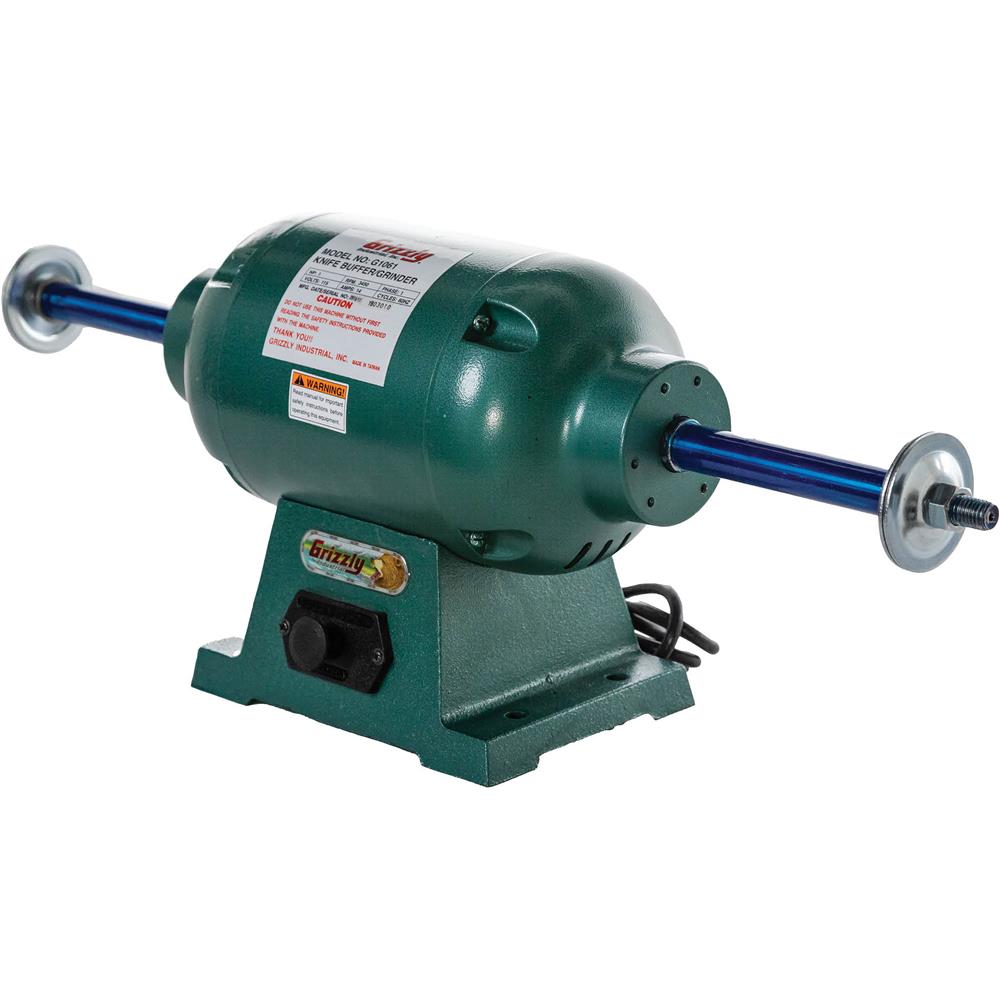
Grizzly G1061 1 HP, 3450 RPM Buffer
1 HP motor, 3450 RPM, full-size bench buffer.
Shop at Grizzly.com →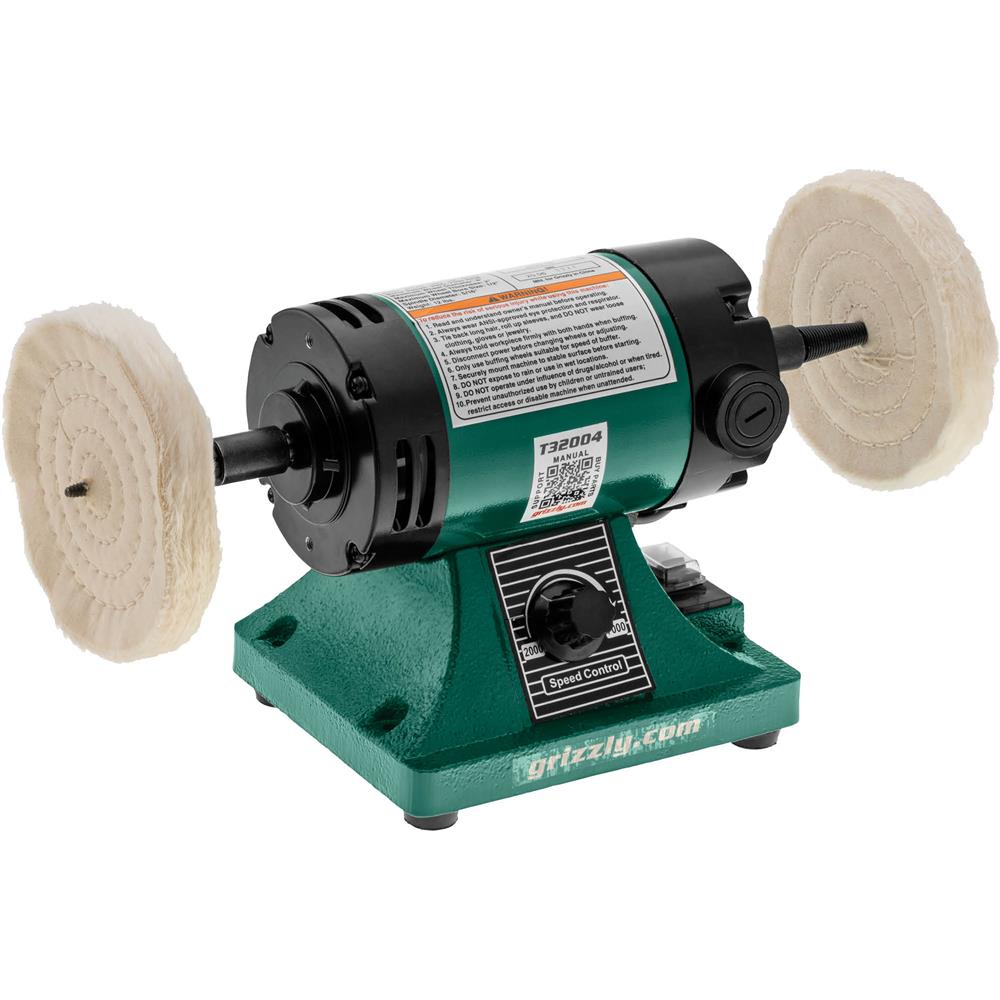
Grizzly T32004 3/4 HP Variable-Speed Mini Benchtop Buffer
3/4 HP variable-speed mini buffer for delicate and mixed work.
Shop at Grizzly.com →
JET 8-Inch Industrial Bench Buffer, Variable Speed, 1 HP, 115/230V 1Ph (IBG-8VSB)
8-inch, 1 HP, 900 to 3,600 RPM variable speed, cast iron body, brake resistor for fast wheel stops, CSA/CUS certified.
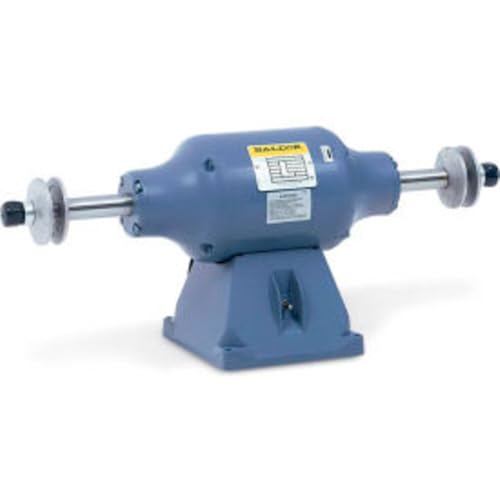
Baldor 332B 3/4 HP Industrial Buffer
3/4 HP, 1800 RPM heavy-duty industrial buffer, 115/230V single phase, made for daily buffing of steel, aluminum, brass and copper.

BUCKTOOL 8-Inch 1 HP VFD Variable-Speed Buffer
1 HP inverter (VFD) motor, 900 to 3,600 RPM with a speed-memory button, 8-inch wheels.

Baldor 111 1/3 HP Heavy-Duty Buffer
1/3 HP, 3600 RPM, 1/2-inch shaft, takes up to 6-inch wheels, UL listed. Small footprint, Baldor build.
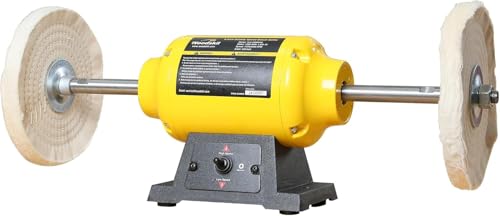
Woodskil 8-Inch 1/2 HP Dual-Speed Bench Buffer
8-inch dual-speed 1725/3450 RPM brushless induction motor, two cotton wheels on long ball-bearing shafts.
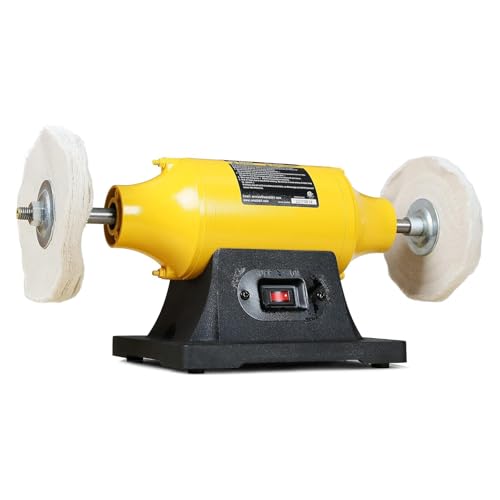
Woodskil 6-Inch 1/2 HP Bench Buffer
6-inch 3450 RPM compact polisher with a hard wheel for burrs and rust and a flannelette wheel for the final shine.
Bench Buffers Compared
Prices change often; the figures below are approximate. Tap any product button above for live pricing.
| Model | Wheel Size | Motor | RPM | Budget | Best For |
|---|---|---|---|---|---|
| JET IBG-8VSB | 8 in | 1 HP | 900-3,600 variable | Under $1,000 | Best industrial, variable speed |
| Baldor 332B | See listing | 3/4 HP | 1800 | Under $2,500 | Heavy daily buffing |
| BUCKTOOL 8" VFD | 8 in | 1 HP | 900-3,600 variable | Under $500 | Variable speed on a budget |
| Grizzly G1061 | See Grizzly | 1 HP | 3450 | See Grizzly | Full-size, factory-direct |
| Grizzly T32004 | See Grizzly | 3/4 HP | Variable | See Grizzly | Mixed and delicate work |
| Baldor 111 | Up to 6 in | 1/3 HP | 3600 | Under $500 | Compact heavy-duty |
| Woodskil 8" dual-speed | 8 in | 1/2 HP | 1725 / 3450 | Under $250 | Knives and hobby work |
| Woodskil 6" | 6 in | 1/2 HP | 3450 | Under $100 | Compact and jewelry |
Bench Buffer Buying Guide
Motor Power & RPM
Buffing is about surface speed at the rim of the wheel, not just the number on the motor plate. A higher RPM spins the cloth faster, and it is that speed that lets the compound cut, blend, and color the metal; too little speed just smears compound and loads the wheel. At the same time you want enough horsepower that the wheel does not bog when you lean a part into it, since a motor that stalls under pressure ruins the finish and the rhythm. A 1 HP, 3450 RPM buffer is a strong all-round baseline for metal work, while smaller fractional-horsepower units are fine for jewelry and light detail. Remember that surface speed rises with wheel diameter, so a large wheel on a fast motor gets very fast at the rim, which is where control and safe technique matter.
Wheel Size & Arbor
The wheels and the shaft they mount on determine what work fits and how much compound you can carry. Six-inch wheels suit compact units and small, controllable work such as knives and jewelry, while eight-inch wheels raise rim speed and give more room for larger parts, which is why full-size and industrial buffers favor them. Look at the arbor length and thread: buffers use longer, often tapered arbors so you can stack a full width of stitched or loose cloth wheels for different compounds. Confirm the wheels you plan to run match the arbor diameter and thread, and leave clearance so a fully loaded stack still spins freely without contacting a guard or the housing.
Fixed vs Variable Speed & Safety
Fixed single-speed buffers are simple and rigid and are all most metal polishing needs, but a dual-speed or variable-speed machine earns its keep the moment you work soft metals, plastics, or delicate jewelry, where a lower speed near 1725 RPM avoids burning and loading. Whatever the speed, a buffer throws lint and can grab a workpiece, so treat it with respect: work below the centerline of the wheel so a catch throws the part down and away, keep loose clothing, gloves, and long hair clear of the spinning cloth, wear eye protection, and secure the buffer to a solid bench so it cannot walk. Good lint and dust pickup keeps the compound haze out of your air and the finish cleaner.
Set Up the Whole Metal Bench
A buffer is one station in a metal shop. See how it fits alongside your grinder, sander, and layout tools with our full setup guide.
Read the Metalworking Shop Setup GuideAs an Amazon Associate and Grizzly Industrial affiliate, WorkshopCalc earns from qualifying purchases. We do not bench-test these machines: picks are researched from published specs, certifications and verified owner reviews, not paid placement. This is general information, not professional advice; wear eye protection and follow the manufacturer's safety instructions.