Best Woodworking Clamps 2026: Top Bar, Pipe & Parallel Clamp Picks Ranked
Which woodworking clamps should you buy first? Whether you need premium parallel jaw clamps for flawless panel glue-ups or budget-friendly bar clamps to build out your collection, this guide covers the 7 best woodworking clamps for 2026 across every category and price point. We have evaluated clamps from Bessey, IRWIN, Jorgensen, DEWALT, and Pony based on clamping pressure, jaw alignment, build quality, and real-world durability. From the Bessey K Body REVO parallel clamps (under $100 each) to spring clamps under $5, here are the clamps that deliver the best holding power for your money. You will also find our clamp sizing guide, a complete buying guide covering clamp types and jaw materials, and answers to the most common clamping questions woodworkers ask.
Quick Picks: Best Woodworking Clamps 2026
Short on time? Here are our top recommendations for different needs and budgets:


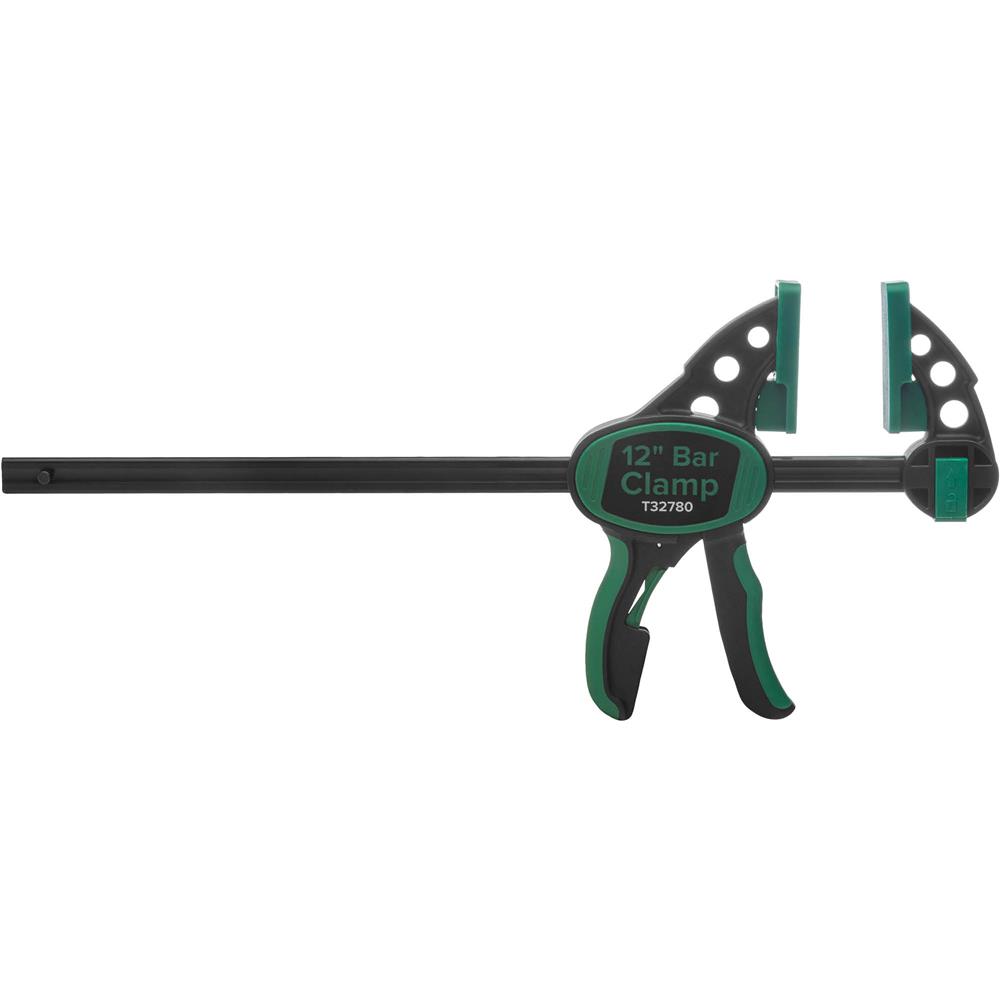
Prefer to buy direct? The Grizzly T32780 12" One-Handed Bar Clamp is a strong one-handed bar clamp from Grizzly Industrial, often priced lower factory-direct than through a reseller and backed by full parts availability and U.S. support.
Shop the T32780 at Grizzly.com →Clamps for Woodworking: Types at a Glance
Updated 2026. The best clamps for woodworking are parallel jaw clamps for glue-ups, bar or pipe clamps for long panels, and a few quick-grip and spring clamps for holding work in place. Most shops need at least 6 to 8 clamps of 24 to 36 inches before anything else, then add longer clamps as the projects get bigger. The table compares the eight clamp types woodworkers use.
| Clamp Type | Best For | Typical Size | Clamping Force |
|---|---|---|---|
| Parallel jaw clamp | Panel glue-ups, cabinet boxes, keeping assemblies square | 12" to 60" opening | Very high, even pressure |
| Bar clamp (F-clamp) | General glue-ups, edge joints, assembly | 6" to 50" opening | High |
| Pipe clamp | Wide panels, tabletops and workbench tops | Any length (you supply 1/2" or 3/4" pipe) | High |
| Quick-grip (trigger) clamp | One-handed holding, jigs, trim | 6" to 36" opening | Medium |
| Spring clamp | Light holding, small glue-ups | 1" to 3" jaws | Low |
| C-clamp | Metal, jigs, small woodworking jobs | 2" to 12" opening | Very high, small area |
| Hand screw | Delicate work, angled glue-ups, protecting the wood | Jaw lengths from 4" up | Medium to high |
| Band clamp | Frames, chairs and round or odd-shaped assemblies | Strap length around 12 to 15 ft | Medium |
How We Evaluated
Our Evaluation Criteria
We evaluated each clamp based on the metrics that matter most to woodworkers: clamping pressure and consistency, jaw alignment under load, bar rigidity, ease of use, and overall value for money. A great clamp must hold workpieces flat, distribute pressure evenly, resist deflection, and last for years of daily shop use.
Clamping Pressure
Maximum force output and pressure consistency across the full jaw face
Jaw Alignment
How well jaws stay parallel under heavy pressure to prevent workpiece lifting
Build Quality
Bar material, clutch mechanism, handle durability, and overall construction
Value for Money
Performance relative to price point, especially when buying sets of 4-8 clamps
We also considered practical factors like one-handed operation, how well the clamp slides along the bar for quick positioning, whether removable jaw pads are included to protect workpiece surfaces, and whether the clamp can double as a spreader. For each clamp type, we compared products against the best in their category to determine which deliver the most reliable performance per dollar spent. If you are setting up a new workshop, check out our Woodworking Shop Setup Guide for a complete list of essential tools including clamps.
Detailed Product Reviews
K Body REVO 24" Parallel Clamp
Best OverallThe Bessey K Body REVO is the gold standard of woodworking clamps and our top pick for serious woodworkers. The defining feature is true parallel jaw action: no matter how hard you crank, both jaws remain perfectly parallel, distributing pressure evenly across the entire jaw face. This eliminates workpiece lifting, bowing, and the uneven squeeze-out that plagues cheaper clamps. The REVO single-action trigger mechanism allows one-handed jaw adjustment, slide the jaw into position and tighten with the ergonomic handle. The 3.75-inch jaw depth provides excellent reach, and the removable polymer pads protect your workpiece from marring while resisting glue adhesion. Available in lengths from 12 to 98 inches, these are the clamps professional furniture makers and cabinet builders depend on daily. If you buy one premium clamp type for your shop, make it the K Body REVO.
Pros
- True parallel jaw action under full pressure
- Up to 1,500 lbs of evenly distributed force
- REVO single-action trigger for fast jaw positioning
- Removable jaw pads resist glue and prevent marring
- 3.75-inch jaw depth for excellent reach
- Available in 12" to 98" lengths
Cons
- Premium price ($50-80 per clamp)
- Heavier than basic bar clamps
- Investment adds up when buying sets of 8+
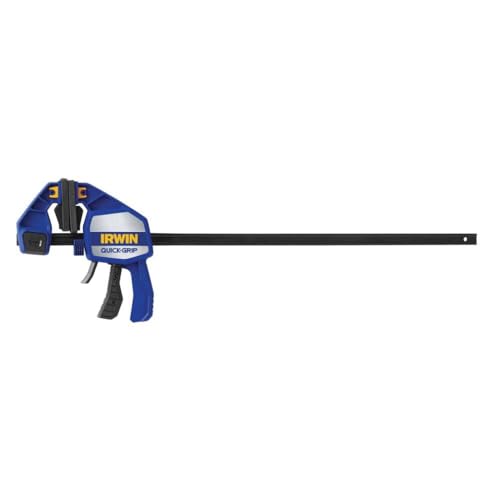
QUICK-GRIP Heavy-Duty 24" One-Handed Bar Clamp
Best Bar ClampThe IRWIN QUICK-GRIP Heavy-Duty one-handed bar clamp redefines what a one-handed bar clamp can do. With 600 lbs of clamping force, significantly more than most trigger clamps, it bridges the gap between convenience and serious clamping power. The heavy-duty jaw mechanism generates more force per squeeze than standard ratcheting designs, and the non-marring pads protect your workpiece surfaces. One-handed operation is genuinely useful: you can hold your workpiece in position with one hand while clamping with the other, making solo assembly work far easier. The tool-free conversion to spreader mode adds versatility for disassembly tasks. The 24-inch bar gives you excellent reach for panel work. These are the clamps you grab when you need fast, reliable holding during assembly, edge-banding, jig work, or light panel glue-ups.
Pros
- True one-handed operation with 600 lbs of force
- Heavy-duty jaw mechanism for extra clamping power
- Tool-free conversion to spreader mode
- Non-marring jaw pads protect workpiece
- 24-inch reach for panel work
- Excellent for assembly and jig work
Cons
- Less pressure than parallel clamps for heavy glue-ups
- Trigger mechanism can wear over time with heavy daily use
- Higher price than basic trigger clamps
Cabinet Master 24" Parallel Clamp Set (2-Pack)
Best ValueThe Jorgensen Cabinet Master is the best value way into true 90-degree parallel clamps, sold here as a 2-pack of 24-inch clamps. At roughly half the per-clamp cost of premium parallel clamps, the Cabinet Master keeps its jaws square to the work and delivers strong, evenly distributed clamping force through a sturdy steel I-beam bar. The non-marring jaw pads protect workpiece surfaces, and the sliding jaw moves smoothly along the bar for quick positioning. The 90-degree jaws sit flat on the bench so your glue-up stays square without extra fixturing. The real advantage is price per clamp: buying in 2-packs you can build a full set affordably and always have enough clamps for any project. Available in multiple lengths from 18 to 50 inches.
Pros
- True parallel jaw action at a value price
- Sold in money-saving 2-packs
- Non-marring jaw pads included
- 90-degree jaws sit flat for square glue-ups
- Available in many lengths (18" to 50")
- Affordable enough to build a full set
Cons
- Heavier than basic F-style bar clamps
- Not quite the refinement of the Bessey REVO
- Sold in pairs, not singles

Tradesman's Bar Clamp (2.5" x 12")
The Bessey Tradesman Bar Clamp occupies the middle ground between budget bar clamps and premium parallel clamps. With dependable clamping force and Bessey's proven build quality, the Tradesman provides reliable performance for woodworkers who want a step up from entry-level clamps without paying parallel clamp prices. The steel bar resists deflection better than thinner economy bars, and the comfortable handle reduces hand fatigue during extended glue-up sessions. The jaw slides smoothly and locks securely, and the non-marring pads protect your work. These clamps carry the Bessey name and quality reputation, which means consistent manufacturing tolerances, reliable components, and a clamp that performs the same way every time you use it. A solid choice for the workshop that demands quality at a reasonable price point.
Pros
- Bessey quality and manufacturing consistency
- Reliable, repeatable clamping action
- Steel bar resists deflection
- Ergonomic handle reduces hand fatigue
- Smooth jaw action
- Reliable long-term durability
Cons
- Not true parallel jaw action
- More expensive than basic bar clamps
- Fewer length options than some competitors

E-Z Hold 36" Bar Clamps (2-Pack)
The JORGENSEN E-Z Hold 36-inch bar clamps are one-handed clamps rated to 800 lbs, sold as a pair. The long bar reaches across cabinets and doors, and the trigger lets you tighten with one hand while the other holds the work.
Pros
- Affordable long-reach trigger clamp
- One-handed trigger operation
- 36-inch bar for wide assemblies
- Quick-release lever for fast removal
- Sold as a 2-pack
Cons
- Lower force than the heavy-duty IRWIN
- Not suitable for heavy panel glue-ups
- Trigger ratchet can feel coarse under load
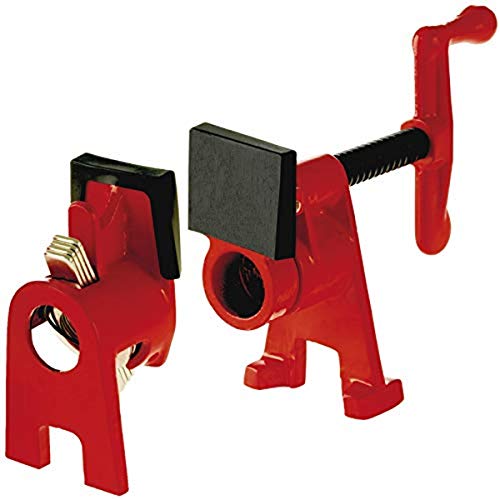
BPC-H34 3/4" H-Style Pipe Clamp
Best Pipe ClampThe Bessey BPC-H34 is our top pick for pipe clamps and the most cost-effective way to get professional clamping capacity for large projects. The cast iron jaws and machined clutch plate grip 3/4-inch black iron pipe securely without slipping, even under maximum pressure. The heavy-duty Acme-threaded screw provides smooth, powerful tightening with excellent feel. To use pipe clamps, you buy the fixture set (head and tail) and supply your own 3/4-inch black iron pipe from any hardware store at about $1 per foot. This means a 60-inch pipe clamp costs roughly $20 total, a fraction of what a parallel clamp of the same length would cost. Buy multiple fixtures and keep pipes in various lengths (24", 36", 48", 60") on hand. You can also connect pipes with couplers for extra-long spans. For tabletops, dining tables, and workbench builds, pipe clamps are hard to beat on value.
Pros
- Best cost-per-inch of clamping capacity
- Machined clutch plate grips pipe securely
- Heavy-duty Acme-threaded screw for smooth tightening
- 1,000+ lbs of clamping force
- Use any length 3/4" pipe for custom reach
- Pipes can be coupled for extra-long spans
Cons
- Bare pipe can leave black marks on wood
- Requires separate pipe purchase
- Heavier and less refined than parallel clamps

3202-HT Spring Clamp 2" (2-Pack)
Best Spring ClampThe Pony Jorgensen 3202-HT is the spring clamp every woodworker should have a dozen of in their shop. Spring clamps are the fastest clamp to apply and remove, simply squeeze and release. While they lack the force for glue-ups, spring clamps are indispensable for holding templates in position during routing, securing edge banding while glue sets, clamping sandpaper to blocks, holding small parts during finishing, keeping drop cloths in place, and hundreds of other quick-hold tasks that arise daily in an active workshop. The Pony Jorgensen version features comfortable cushioned grips that do not dig into your hands, protective vinyl jaw tips that prevent surface marring, and a high-carbon steel spring that maintains tension over years of use. At $3-5 each, buy them by the dozen. You will use every single one.
Pros
- Fastest clamp to apply and remove
- Cushioned grips for comfortable one-handed use
- Vinyl jaw tips prevent workpiece marring
- High-carbon steel spring maintains tension for years
- Extremely affordable, buy in bulk
- Indispensable for hundreds of quick-hold tasks
Cons
- Very low clamping force (not for glue-ups)
- Limited 2-inch jaw opening
- Cannot substitute for bar or parallel clamps
Calculate Your Lumber Requirements
Use our board feet calculator to determine exactly how much lumber you need for your next glue-up project before you start clamping.
Clamp Sizing Guide: What Size Do You Need?
Choosing the right clamp length and quantity depends on the type of projects you build. Here is a quick reference to help you determine what clamps to buy for common woodworking tasks. Remember, you will always need more clamps than you think, so buy in sets of four when possible.
| Project Type | Recommended Clamp Length | Minimum Qty | Clamp Type | Our Pick |
|---|---|---|---|---|
| Cutting boards, small boxes | 12-18 inches | 4 | Bar or parallel | Jorgensen Cabinet Master |
| Shelves, cabinet panels | 24-36 inches | 4-6 | Parallel or bar | Bessey K Body REVO |
| Tabletops, wide panels | 48-60 inches | 6-8 | Pipe or parallel | Bessey BPC-H34 Pipe Clamp |
| Dining tables, workbenches | 60-72 inches | 6-10 | Pipe clamp | Bessey BPC-H34 Pipe Clamp |
| Quick assembly, jig holding | 6-12 inches | 6-8 | Spring or trigger | Pony Jorgensen Spring Clamp |
| Edge banding, trim work | 6-18 inches | 4-6 | One-handed trigger | IRWIN QUICK-GRIP Heavy-Duty 24" |
Pro Tip: When clamping a panel glue-up, alternate clamps above and below the panel to equalize pressure and prevent cupping. Space clamps every 8-12 inches along the length of the joint for even squeeze-out. If you are planning your first big glue-up project, use our Plywood Cut Calculator to optimize your panel layout, and check our Best Table Saws Guide for the right saw to rip your boards straight before gluing.

Photo via Unsplash
Complete Buying Guide: What to Look For
Before purchasing woodworking clamps, understanding these key factors will help you make an informed decision that matches your project needs and budget. Unlike many tools where you buy one and are done, clamps are consumables in a sense: you will accumulate dozens over a woodworking career, so choosing wisely from the start pays dividends.
Clamp Types Explained
Each clamp type serves a specific purpose in the workshop. Understanding the differences will help you build a well-rounded clamp collection:
- Parallel Jaw Clamps: The premium choice for woodworking. Jaws remain perfectly parallel under pressure, distributing force evenly across the full jaw face. This prevents workpiece lifting, bowing, and uneven glue joints. Best for panel glue-ups, cabinet assembly, and precision joinery. Expect to pay under $100 per clamp. The Bessey K Body REVO is the gold standard.
- F-Style Bar Clamps: The workhorse of the workshop. A sliding jaw rides on a flat steel bar with a screw mechanism for tightening. More affordable than parallel clamps ($15-30 each) but jaws can angle slightly under heavy loads. Excellent for general purpose clamping, assembly, and shop tasks.
- Pipe Clamps: The most economical way to get long clamping reach. You buy the pipe clamp fixture ($15-25) and supply your own 3/4-inch black iron pipe at about $1 per foot from any hardware store. Ideal for wide panel glue-ups and tabletops where you need 48-inch or longer capacity without spending $60-80 per parallel clamp.
- One-Handed Trigger Clamps: Squeeze-to-clamp design allows positioning and tightening with one hand, leaving the other free to hold your workpiece. Lower clamping pressure (150-600 lbs) than screw-type clamps, but unbeatable convenience for assembly, jig holding, and light glue-ups. Many can reverse to function as spreaders.
- Spring Clamps: The fastest clamp to apply and remove. Simply squeeze and release. Limited pressure (1-3 lbs) makes them unsuitable for glue-ups, but they are essential for holding templates, securing edge banding, clamping small parts, and dozens of quick-hold tasks around the shop.
- C-Clamps: Traditional screw-type clamps with a deep throat. High clamping pressure in a compact package. Best for metalworking, jig building, and situations requiring very high force in a small area. Less common in modern woodworking due to the convenience of bar clamps.
For a complete overview of setting up your shop with the right tools, see our Woodworking Shop Setup Guide.
Jaw Materials and Pad Protection
The jaw material and pad design directly affect how well a clamp holds your workpiece without causing damage:
- Cast iron jaws: Found on traditional F-clamps and pipe clamps. Very strong and durable, but will mar wood surfaces without protective pads. Always use pads or cauls with bare metal jaws.
- Polymer jaw pads: Most modern parallel and bar clamps include removable polymer pads that protect wood surfaces from denting and marring. The Bessey K Body REVO features high-quality removable pads that resist glue adhesion.
- Hardwood jaw faces: Some premium clamps feature hardwood or cork jaw faces for maximum surface protection. These are excellent for finished or delicate work.
- Swivel jaw pads: Clamps with swivel pads automatically adjust to angled surfaces, providing full contact on tapered or irregular workpieces. This is especially useful for mitered joints and compound angles.
Tip: Regardless of jaw material, always keep a supply of 1/4-inch plywood or MDF cauls in your shop. Placing cauls between the clamp jaw and your workpiece distributes pressure more evenly and prevents denting, even on clamps with built-in pads.
Clamping Pressure: How Much Do You Need?
Understanding clamping pressure helps you choose the right clamp for each task. More pressure is not always better: over-clamping can starve a glue joint by squeezing out too much adhesive.
| Clamp Type | Typical Force | Best For |
|---|---|---|
| Parallel jaw clamps | 1,000-1,500 lbs | Panel glue-ups, cabinet assembly, heavy joinery |
| F-style bar clamps | 300-600 lbs | General clamping, assembly, moderate glue-ups |
| Pipe clamps (3/4") | 800-1,200 lbs | Wide panel glue-ups, tabletops, workbench builds |
| One-handed trigger clamps | 150-600 lbs | Light gluing, assembly holding, jig work |
| Spring clamps | 1-3 lbs | Holding templates, edge banding, quick-hold tasks |
For wood glue joints: Standard PVA glue (like Titebond Original or Titebond III) calls for 100-150 PSI for softwoods, 125-175 PSI for medium woods, and 175-250 PSI for hardwoods per the manufacturer. You want to see a thin, even bead of squeeze-out along the entire joint line. If glue is dripping excessively, you are applying too much pressure. If there is no squeeze-out, increase pressure or check your joint fit.
Bar Material and Rigidity
The bar is the backbone of any clamp. Its material and cross-section determine how much the clamp deflects under load:
- Steel I-beam bar (parallel clamps): The most rigid design. The I-beam cross-section resists bending in all directions, keeping jaws aligned even under maximum pressure. This is why parallel clamps cost more: the bar alone is a precision-engineered component.
- Flat steel bar (F-clamps): Standard on most bar clamps. Adequate rigidity for moderate loads, but can deflect noticeably under heavy pressure, causing jaws to angle. Thicker bars (3/16 inch or more) perform better than thin economy bars.
- Black iron pipe (pipe clamps): Provides excellent rigidity at long lengths. 3/4-inch pipe is standard and handles most woodworking loads. 1/2-inch pipe is lighter and cheaper but deflects more. Always use 3/4-inch pipe for serious glue-ups.
- Aluminum bar: Found on some lightweight clamps. Reduces weight significantly but also reduces maximum clamping force. Best for assembly tasks where weight is a concern.
If you are building a workbench, a good vise paired with quality clamps provides the ultimate workholding system. Check our Best Workbench Vises Guide for recommendations.
Building Your Clamp Collection: A Practical Strategy
You do not need to buy every clamp at once. Here is a practical strategy for building a well-rounded collection over time:
- Phase 1 (Starting out, under $250): Buy 4-6 budget bar clamps in 24-inch length (Jorgensen Cabinet Master) plus 6 spring clamps. This covers most small projects and assembly tasks.
- Phase 2 (Growing, under $500): Add 2-4 parallel clamps in 24-inch or 31-inch length (Bessey K Body REVO) for precision glue-ups. Add a pair of one-handed trigger clamps for convenience.
- Phase 3 (Established, under $250): Add pipe clamp fixtures (Bessey BPC-H34) with 48-inch and 60-inch pipes for tabletops and large panels. Buy 4-6 fixtures and pipes at this stage.
- Phase 4 (Ongoing): Continue adding clamps as projects demand. Buy duplicates of your favorites in different lengths. You will never regret having more clamps.
Use our Workbench Materials Calculator to plan your first big project, then make sure you have enough clamps to glue it up properly.
Frequently Asked Questions
A good starting set includes 4-6 parallel or bar clamps in the 24-inch to 36-inch range, 2-4 longer clamps (48 inches or more) for panel glue-ups, and 6-8 spring clamps for quick holding tasks. As your projects grow, you will inevitably need more. The old woodworking adage is true: you can never have too many clamps. Budget around $200-400 for a solid starter set. Use our Workshop Cost Calculator to budget for your full shop setup.
Parallel clamps keep their jaws perfectly parallel under pressure, which distributes force evenly across the entire jaw face and prevents the workpiece from lifting or bowing. Bar clamps can angle slightly under heavy pressure, concentrating force at one edge. Parallel clamps cost more ($64-80 each vs $15-30 for bar clamps) but produce superior glue joints and are preferred for cabinet work, panel glue-ups, and precision joinery. For most woodworkers, investing in a core set of parallel clamps like the Bessey K Body REVO is worth the premium.
Pipe clamps are the most cost-effective way to get long clamping capacity. A pipe clamp fixture like the Bessey BPC-H34 costs under $50, and you supply your own 3/4-inch black iron pipe at about $1 per foot from any hardware store. This means a 48-inch pipe clamp costs around $20 total, compared to $50-80 for a parallel clamp of the same length. Pipe clamps are excellent for panel glue-ups, tabletops, and any project requiring long reach. The downside is they can leave black marks on wood if the pipe contacts your workpiece directly, so use cauls or wax the pipe to prevent staining.
For standard PVA wood glue (like Titebond), the manufacturer recommends 100-150 PSI of clamping pressure for softwoods, 125-175 PSI for medium woods, and 175-250 PSI for hardwoods. Most quality bar clamps deliver 300-600 lbs of force, while parallel clamps can deliver 1,000-1,500 lbs. For edge-to-edge glue-ups, you want enough pressure to see a thin, even line of squeeze-out along the entire joint. Over-clamping can starve the joint of glue, so more is not always better. If you see excessive dripping, back off the pressure slightly.
Start with 24-inch and 36-inch clamps, as these cover the widest range of common projects including cutting boards, small tabletops, shelves, and cabinet panels. A set of four 24-inch and four 36-inch clamps will handle most beginner and intermediate projects. Add 12-inch clamps for smaller work and 48-inch or longer clamps as you tackle larger panels and tabletops. Check our Plywood Cut Calculator to plan your panel sizes before buying clamps.
One-handed trigger clamps like the IRWIN QUICK-GRIP Heavy-Duty bar clamp or JORGENSEN E-Z Hold 36" bar clamps are convenient for holding pieces in place during assembly, but most models only deliver 150-600 lbs of force. This is sufficient for small glue-ups, jig holding, and assembly work, but not ideal for heavy panel glue-ups that require sustained high pressure. Use them for quick-hold tasks and light gluing, and rely on parallel or pipe clamps for serious edge-gluing and panel work.
Parallel jaw clamps are the best clamps for woodworking glue-ups because they apply even pressure and keep panels flat and square. For long panels, pipe clamps are a lower-cost way to span wide tabletops, and one-handed bar clamps are best for quick holding.
Start with four to six parallel or bar clamps in the 24 to 36 inch range, two longer clamps for panels, and a handful of spring and one-handed clamps for holding work. Add pipe clamps once you start building tabletops and workbenches.
Final Recommendations
After thorough evaluation, here are our recommendations for different scenarios:
Best Overall Clamp (Our #1 Pick)
The Bessey K Body REVO Parallel Clamp is our top recommendation for any woodworker serious about quality glue joints. True parallel jaw action delivers up to 1,500 lbs of perfectly distributed clamping pressure. The REVO single-action trigger mechanism makes jaw adjustment fast and intuitive, and the large jaw faces with removable protective pads accommodate a wide range of workpieces. These are the clamps professional cabinet makers and furniture builders reach for every day. Buy a set of four in 24-inch or 31-inch length and you will understand why experienced woodworkers swear by them.
Best Bar Clamp for Most Woodworkers
The IRWIN QUICK-GRIP Heavy-Duty 24" One-Handed Bar Clamp delivers 600 lbs of clamping force with true one-handed operation. The heavy-duty jaw mechanism provides extra force compared to standard trigger clamps, while the tool-free conversion to spreader mode adds versatility. If you want a clamp you can use with one hand while positioning your workpiece with the other, this is the one to buy. Every shop needs at least a pair of these for assembly work.
Best Value Clamp
The Jorgensen Cabinet Master Bar Clamp hits the sweet spot for woodworkers building their clamp collection on a budget. With 500 lbs of clamping pressure, a sturdy steel bar, and non-marring jaw pads, these clamps perform well above their price point. At roughly half the cost of premium parallel clamps, you can afford to buy them in sets of four or more. These are the clamps to buy when you need quantity without sacrificing quality.
Best Pipe Clamp
The Bessey BPC-H34 3/4" Pipe Clamp is our pick for anyone building tabletops, wide panels, or workbenches. Pair these fixtures with 3/4-inch black iron pipe from your local hardware store and you get professional clamping capacity at a fraction of the cost of long parallel clamps. The machined clutch plate grips the pipe securely without slipping, and the heavy-duty screw delivers smooth, powerful clamping action. Buy 6-8 fixtures and a selection of pipe lengths for maximum versatility.
Plan Your Workshop Setup
Clamps are just one part of a well-equipped workshop. Use our Workshop Cost Calculator to budget for your complete shop, or read our Woodworking Shop Setup Guide for a step-by-step plan. Need help organizing your clamp storage? Our French Cleat Calculator can help you design a wall-mounted clamp rack.
Affiliate Disclosure: WorkshopCalc is reader-supported. When you buy through links on our site, we may earn an affiliate commission at no additional cost to you. This helps us maintain and improve our free calculators and guides. We only recommend products we believe provide genuine value to woodworkers.