Best Miter Saws 2026: Sliding and Compound Picks for Every Budget
The best miter saw in 2026 is the DeWalt DWS780, a 12-inch double-bevel sliding miter saw with a 16-inch crosscut (under $1,000); the best compound mitre saw on a budget is the Metabo HPT C10FCG2 (under $250). Nine sliding and compound miter saws are compared below by blade size, crosscut and bevel capacity, weight and budget, with research-based reviews drawn from manufacturer specs and verified owner reviews, not lab testing. Pairing a miter saw with a rip-capable saw? See the best table saws 2026.Updated 2026
The best miter saw in 2026 for most woodworkers is the DeWalt DWS780 12-inch double-bevel sliding miter saw (under $1,000). The best compound miter saw on a budget is the Metabo HPT C10FCG2 (under $250), and the best 10-inch sliding pick is the Makita LS1019L (under $1,000). Picks are based on manufacturer specifications and verified owner reviews.
🔗 Breaking down plywood too? Read track saw vs table saw for sheet goods.
The machines these numbers are really about
Sizing a duct run or a cut list is planning for a machine you either own or are about to buy. These four are the ones that change what the shop can do, rather than making the current setup slightly tidier.
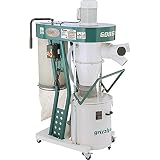 Grizzly G0861 2 HP Portable Cyclone
The step up from a bag collector. Cyclone separation keeps the filter clean, which is the thing that quietly halves a bag unit's airflow after a few months.
Check price on Amazon →
Grizzly G0861 2 HP Portable Cyclone
The step up from a bag collector. Cyclone separation keeps the filter clean, which is the thing that quietly halves a bag unit's airflow after a few months.
Check price on Amazon →
 Powermatic TurboCone Dust Collector
Two-micron canister and enough static pressure to run a long duct main rather than dragging a hose to each machine.
Check price on Amazon →
Powermatic TurboCone Dust Collector
Two-micron canister and enough static pressure to run a long duct main rather than dragging a hose to each machine.
Check price on Amazon →
 JET 14 in Bandsaw, 1.75 HP
Thirteen inches of resaw. The machine that turns expensive boards into two boards, which is where it pays for itself.
Check price on Amazon →
JET 14 in Bandsaw, 1.75 HP
Thirteen inches of resaw. The machine that turns expensive boards into two boards, which is where it pays for itself.
Check price on Amazon →
 Powermatic 8 in Helical Jointer
Helical head, so figured stock comes off flat instead of torn out. The one machine most shops regret buying small.
Check price on Amazon →
Powermatic 8 in Helical Jointer
Helical head, so figured stock comes off flat instead of torn out. The one machine most shops regret buying small.
Check price on Amazon →
As an Amazon Associate we earn from qualifying purchases, at no extra cost to you. Prices change, so check before buying.
Quick Picks: Our Top Recommendations
After extensive research comparing each saw against manufacturer specifications and verified owner reviews, these are our top picks for the best miter saws in 2026 across different categories:
Prices change on Amazon. Amounts shown are planning estimates, not live quotes. Tap any button for current pricing.



Festool Kapex KS 120
Premium Sliding Compound
Product Comparison Table
Compare the key specifications of our top-rated miter saws at a glance:
| Model | Type | Blade | Motor | Crosscut Capacity | Bevel | Weight | Budget |
|---|---|---|---|---|---|---|---|
| DeWalt DWS780 | 12" Double Bevel Sliding | 12" | 15A / 3,800 RPM | 16" at 90 degrees | 49 degrees L/R | 56 lbs | Under $1,000 |
| DeWalt DWS779 | 12" Sliding Compound | 12" | 15A / 3,800 RPM | 16" at 90 degrees | 49 degrees L/R | 56 lbs | Under $500 |
| Bosch CM10GD | 10" Dual-Bevel Glide | 10" | 15A / 4,800 RPM | 12" at 90 degrees | 47 degrees L/R | Under $1,000 | |
| Makita LS1019L | 10" Dual-Bevel Sliding | 10" | 15A / 3,200 RPM | 12" at 90 degrees | 48 degrees L/R | 57.9 lbs | Under $1,000 |
| Metabo HPT C10FCG2 | 10" Compound | 10" | 15A / 5,000 RPM | 5-21/64" at 90 degrees | 45 degrees L | 24.2 lbs | Under $250 |
| Makita LS1219L | 12" Dual-Bevel Sliding | 12" | 15A / 3,200 RPM | 15" at 90 degrees | 48 degrees L/R | 69 lbs | Under $1,000 |
| Festool Kapex KS 120 | Premium Sliding Compound | 10.4" | 1,600W Direct Drive | 12" at 90 degrees | 47 degrees L/R | 47 lbs | Premium (Festool set listing) |
| SKIL MS6305-00 | 10" Dual-Bevel Sliding | 10" | 15A / 4,800 RPM | 12" at 90 degrees | 48 degrees L/R | 34 lbs | Under $250 |
Detailed Miter Saw Reviews
DeWalt DWS780
12" Double Bevel SlidingThe DeWalt DWS780 is the gold standard for 12-inch sliding miter saws. It features the XPS LED shadow cut line indicator that projects a precise shadow of the blade onto your workpiece, eliminating the need for laser calibration. The powerful 15-amp motor and tall sliding fences handle crown molding up to 7-1/2 inches nested.
Pros
- XPS LED shadow line system for precise cut alignment
- Excellent 16-inch crosscut capacity at 90 degrees
- Tall sliding fences for large crown molding
- Super-smooth sliding action
- Durable stainless steel miter detent plate
Cons
- Premium price compared to DWS779
- Heavy at 56 lbs without stand
- Requires rear clearance for sliding
Our Verdict
The DeWalt DWS780 is our top overall pick. The XPS shadow line system is genuinely useful and requires no calibration. If you can afford the premium over the DWS779, the improved cut line visibility is worth every penny for precision work.
DeWalt DWS779
12" Sliding CompoundThe DeWalt DWS779 shares the same robust construction as the DWS780 but without the XPS shadow line system. It offers identical cutting capacity and power at a significant savings. The tall sliding fences, smooth dual horizontal steel rails, and precise miter detents make this the best value in 12-inch sliding saws.
Pros
- Same cutting capacity as DWS780
- Excellent value for professional-grade features
- 16-inch crosscut handles wide boards easily
- Smooth, accurate sliding mechanism
- Widely available parts and accessories
Cons
- No XPS shadow line (though aftermarket LED kits available)
- Dust collection is moderate
- Heavy for frequent transport
Our Verdict
The DWS779 is our pick for best 12-inch sliding miter saw value. You get 95% of the DWS780 performance at a meaningful savings. Many professionals prefer it and simply add an aftermarket LED light kit.
Bosch CM10GD
10" Dual-Bevel GlideThe Bosch CM10GD features the unique Axial-Glide system that replaces traditional sliding rails with articulating arms. This design requires up to 12 inches less rear clearance than rail-based sliders, making it ideal for workspaces against walls. The smooth glide action and precision cuts are exceptional.
Pros
- Axial-Glide requires minimal rear clearance
- Can operate flush against a wall
- Extremely smooth cutting action
- 60-degree miter capacity right, 52-degree left
- Large, easy-to-read bevel and miter scales
Cons
- Heavier than rail-based competitors at 65 lbs
- Slightly less crosscut capacity than DeWalt
- Axial-Glide can feel different to users accustomed to rails
Our Verdict
The Bosch CM10GD is the best choice for shops with limited space behind the saw. The Axial-Glide system delivers smooth, accurate cuts without the rear clearance requirements of traditional sliders. Premium quality throughout.
Makita LS1019L
10" Dual-Bevel SlidingThe Makita LS1019L is the most compact sliding miter saw in its class. The unique 2-steel rail sliding system allows single slide-glide operation and can be used flush against a wall like the Bosch. Direct-drive motor requires no belt maintenance and electronic speed control maintains constant speed under load.
Pros
- Most compact 10-inch slider available
- Can operate flush against a wall
- Direct-drive motor is quiet and maintenance-free
- Electronic speed control for smooth cuts
- Laser guide for cut line visibility
Cons
- Laser requires calibration
- Smaller 10-inch blade limits max cut depth
- Higher price than 12-inch competitors
Our Verdict
The Makita LS1019L is our top pick for 10-inch sliding saws. The compact design and wall-flush capability make it perfect for tight workspaces. The direct-drive motor is notably quieter than belt-driven competitors.
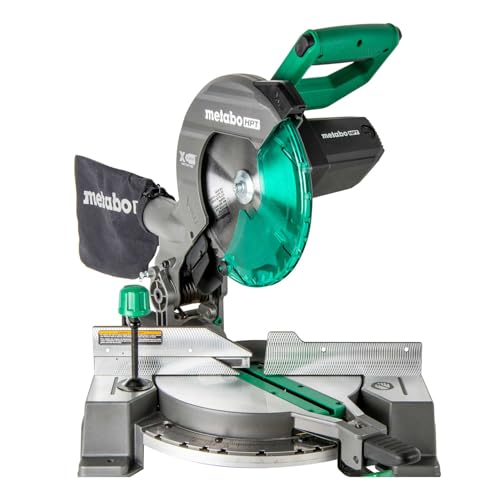
Metabo HPT C10FCG2
10" CompoundThe Metabo HPT C10FCG2 delivers excellent value for DIYers and occasional users. At just 24 pounds, it is remarkably portable. The 15-amp motor spins at 5,000 RPM for clean, fast cuts. Single bevel and non-sliding design limit versatility, but the price-to-performance ratio is outstanding.
Pros
- Exceptional value at under $250
- Lightweight at 24.2 lbs for easy transport
- Powerful 15-amp motor at 5,000 RPM
- 52-degree miter capacity left and right
- 5-year Metabo HPT warranty
Cons
- Single bevel only (tilts left)
- No sliding action limits crosscut capacity
- Basic feature set compared to premium saws
Our Verdict
The Metabo HPT C10FCG2 is our budget pick. It does the basics well at an unbeatable price. Perfect for DIYers, occasional users, or as a secondary saw for rough cuts. You will not find better quality at this price point.
Makita LS1219L
12" Dual-Bevel SlidingThe Makita LS1219L is a full-size 12-inch dual-bevel slider built for trim carpenters who need maximum capacity. The compact 2-rail sliding system lets it sit closer to a wall than most 12-inch saws, while the large 15-inch crosscut capacity at 90 degrees swallows wide baseboard and shelving. A laser guide and electronic speed control round out a precise, smooth-cutting package.
Pros
- Large 15-inch crosscut capacity at 90 degrees
- Compact 2-rail slide needs less rear clearance
- Laser guide for cut line visibility
- Electronic speed control keeps RPM steady under load
- Soft start for controlled cuts
Cons
- Heavy at around 69 lbs
- Laser requires occasional calibration
- Higher price than DeWalt 12-inch sliders
Our Verdict
The Makita LS1219L is the pick for finish carpenters who want the biggest crosscut capacity in a 12-inch slider. The wall-flush design and large capacity make it a workhorse for wide trim, and the build quality is classic Makita.
Festool Kapex KS 120
Premium Sliding CompoundThe Festool Kapex KS 120 is the finest miter saw money can buy. Its dust extraction is legendary, capturing virtually all debris when connected to a Festool extractor. The lightweight design (47 lbs), dual-laser alignment system, and exceptionally smooth operation justify the premium price for professionals who demand the best.
Pros
- Near-complete dust extraction
- Lightest 12-inch class saw at 47 lbs
- Dual-laser system for perfect alignment
- Direct drive motor is quiet and smooth
- Precision-ground aluminum construction
Cons
- Premium price is two to three times competitors
- Best performance requires Festool dust extractor
- Limited availability of replacement parts locally
Our Verdict
The Festool Kapex KS 120 is the ultimate miter saw for professionals who prioritize dust control, precision, and build quality. The dust extraction alone sets it apart from every competitor. Worth the investment for high-end finish carpenters and cabinetmakers.
SKIL MS6305-00
10" Dual-Bevel SlidingThe SKIL MS6305-00 brings dual-bevel sliding capability to budget-conscious buyers. The LED cut line indicator and work light improve visibility without the calibration hassles of lasers. At around 34 pounds with 12-inch crosscut capacity, it punches above its weight class for DIY and homeowner use.
Pros
- Dual-bevel sliding design at a budget price
- 12-inch crosscut capacity
- LED cut line indicator
- Lightweight at around 34 lbs
- Sturdy fence and miter detents for the price
Cons
- Build quality below professional saws
- Basic dust collection
- Smaller motor than premium saws
Our Verdict
The SKIL MS6305-00 is one of the best budget sliding miter saws available. It brings dual-bevel sliding capability to DIYers who cannot justify premium saw prices. Excellent value for home workshops and occasional users.
Best Sliding Miter Saw 2026
Sliding miter saws add rails that let the head travel forward and back, roughly doubling crosscut capacity. Based on our research of current specifications and verified owner reviews, the best sliding miter saw in 2026 is the DeWalt DWS780 (under $1,000): its XPS shadow cut line, 16-inch crosscut capacity, and double-bevel head make it the standard by which other sliders are judged. The DeWalt DWS779 (under $500) is the same saw without the XPS light and a frequent value buy.
- Best 10-inch sliding miter saw: Makita LS1019L (under $1,000), with rail-forward design that sits flush against a wall
- Best glide-style alternative: Bosch CM10GD, whose axial glide arm needs zero rear clearance
- Best budget sliding pick: SKIL MS6305-00, a 10-inch dual-bevel slider at an entry price
- Best premium sliding miter saw: Festool Kapex KS 120 (under $2,500) with class-leading dust extraction
Best Compound Miter Saw 2026
A compound miter saw (spelled mitre saw in the UK and Australia) tilts the blade for bevel cuts but does not slide, which keeps it lighter, cheaper, and more compact. The best compound miter saw in 2026 for budget buyers and DIYers is the Metabo HPT C10FCG2 (under $250). It weighs about 24 pounds, cuts accurate miters out of the box, and covers baseboard, decking, and general crosscut work without the price or bulk of a slider.
If you cut crown molding or picture frames regularly, step up to a dual-bevel sliding compound model like the DeWalt DWS780 or the 12-inch Makita LS1219L so you never flip the workpiece for opposite bevels. Need help with angles? Our miter angle calculator converts corner angles to saw settings.
Miter Saw Types Explained
Understanding the different types of miter saws is crucial for choosing the right tool for your needs. Each type offers specific capabilities and trade-offs:
Compound Miter Saw
The most basic miter saw type. The blade tilts in one direction (typically left) for bevel cuts in addition to standard miter cuts. Best for simple crosscuts and basic angle work.
- Tilts one direction only
- Limited crosscut capacity
- Most affordable option
- Lightweight and portable
- Good for DIY and occasional use
Dual-Bevel Compound
Adds the ability to tilt the blade both left and right, eliminating the need to flip workpieces for opposite bevels. Ideal for crown molding and picture frames.
- Tilts both left and right
- Faster for matching bevel cuts
- Limited crosscut capacity
- Moderate weight increase
- Essential for serious trim work
Sliding Compound
Adds rails that allow the blade to slide forward and back, dramatically increasing crosscut capacity. A 12-inch slider can crosscut boards up to 16 inches wide.
- Maximum crosscut capacity
- Usually includes dual-bevel
- Requires more rear clearance
- Heavier than non-sliding
- Best overall versatility
Which Type Should You Choose?
For most woodworkers and contractors, a dual-bevel sliding compound miter saw offers the best combination of capacity and versatility. The sliding feature is particularly valuable for crosscutting wide boards and sheet goods. Single-bevel or non-sliding saws make sense primarily for budget-conscious buyers or those with space constraints. Still deciding which tool fits your cuts? Compare a circular saw vs a miter saw.
Blade Size Guide: 7-1/4", 10", or 12"
Miter saws come in three common blade sizes, each with distinct advantages:
Crosscut Capacity Comparison
Non-sliding 10" saw: approximately 6" crosscut. Sliding 10" saw: approximately 12" crosscut. Non-sliding 12" saw: approximately 8" crosscut. Sliding 12" saw: approximately 16" crosscut. The sliding feature nearly doubles your crosscut capacity.
Key Features to Consider
Miter Saw Stand Recommendations
A quality miter saw stand improves safety, accuracy, and efficiency. Here are our top picks:
DeWalt DWX726
Rolling stand with foldable wheeled frame and adjustable height. Supports up to 8 feet of material with universal mounting rails. Quick setup and durable steel construction. The wheels make transport easy between jobsites.
Check PriceBosch T1B Folding-Leg Stand
A sturdy folding-leg miter saw stand from Bosch with quick-mount tool brackets. Practically effortless setup and breakdown, with extendable material supports and rugged steel construction. Premium quality that justifies the higher price.
Check PriceBORA Portamate PM-4000
Budget-friendly folding stand with a quick-release universal tool mounting system. Supports most miter saws up to 500 lbs. Outrigger arms extend to roughly 114 inches. Folds flat for storage. Great value for shop or occasional jobsite use.
Check PriceStand Selection Tips
Match your stand to your saw weight and usage pattern. Rolling stands are essential for jobsite work where you move frequently. Gravity-rise designs save time but cost more. For shop use, a dedicated miter saw station with built-in dust collection often works better than a portable stand.
Frequently Asked Questions
What is the best miter saw in 2026?
Based on our research of specifications and verified owner reviews, the best miter saw in 2026 is the DeWalt DWS780, a 12-inch double-bevel sliding compound saw with an XPS shadow cut line and 16-inch crosscut capacity. The best budget pick is the Metabo HPT C10FCG2 compound saw, and the best premium option is the Festool Kapex KS 120.
What is the best sliding miter saw in 2026?
The DeWalt DWS780 is the best sliding miter saw in 2026 for most users. The Makita LS1019L is the best 10-inch slider thanks to its rail-forward design, the Bosch CM10GD glide arm needs zero rear clearance, and the SKIL MS6305-00 is the best budget sliding option.
What is the best compound mitre saw in 2026?
The best compound mitre saw in 2026 on a budget is the Metabo HPT C10FCG2, a lightweight 10-inch saw under $250 that handles baseboard, decking, and general crosscuts. For trim carpenters cutting crown molding, a dual-bevel sliding compound saw like the DeWalt DWS780 or Makita LS1219L is worth the upgrade.
Are these miter saw reviews based on hands-on testing?
Our 2026 miter saw reviews are research-based. We compare manufacturer specifications, crosscut and bevel capacities, recall history, and thousands of verified owner reviews rather than claiming lab testing. Each review lists blade size, motor, capacity, and weight so you can check the numbers yourself.
What is the difference between a compound and sliding miter saw?
A compound miter saw tilts the blade for bevel cuts in addition to miter cuts, but the blade only moves up and down. A sliding miter saw adds rails that allow the blade to slide forward and back, dramatically increasing crosscut capacity. A 12-inch sliding miter saw can typically crosscut boards up to 16 inches wide, while a non-sliding saw maxes out around 8 inches.
Should I buy a 10-inch or 12-inch miter saw?
For most woodworkers, a 10-inch sliding miter saw offers the best balance of capacity and portability. It handles crown molding up to 6 inches and crosscuts up to 12 inches wide. Choose a 12-inch saw if you regularly work with larger crown molding, wide baseboards, or need maximum crosscut capacity. The trade-off is more weight and higher blade replacement costs.
Do I need a dual-bevel miter saw?
A dual-bevel (or double-bevel) miter saw tilts both left and right, eliminating the need to flip your workpiece for opposite bevel cuts. This saves significant time when cutting crown molding, picture frames, or any project requiring matching left and right bevels. Single-bevel saws work fine for occasional use, but dual-bevel is worth the investment for frequent trim work.
What is the best miter saw for beginners?
The Metabo HPT C10FCG2 offers excellent value for beginners at under $250. It has a 15-amp motor, precise miter adjustments, and a lightweight design. For those willing to spend more, the DeWalt DWS779 provides professional-grade features including a sliding design for wider cuts, making it a tool you will not outgrow.
Is a laser guide necessary on a miter saw?
Laser guides can help with cut alignment, but they require regular calibration and battery replacement. Many professionals prefer LED shadow lines or XPS systems (like on the DeWalt DWS780) that use the blade itself to cast a shadow on the cut line. These shadow systems are more accurate and maintenance-free. Budget saws often have unreliable lasers that cause more frustration than help.
How important is dust collection on a miter saw?
Most miter saws have poor dust collection, capturing only 50-75% of debris even with a shop vacuum attached. The Festool Kapex KS 120 is the exception, achieving near-complete dust extraction. For other saws, plan on adding a dust collection hood or using the saw outdoors. Good dust collection improves visibility, reduces cleanup time, and protects your health.
Related Calculators and Resources
Use these tools to help plan your miter saw setup:
As an Amazon Associate, WorkshopCalc earns from qualifying purchases. Our recommendations are based on research into specifications, pricing, and verified owner reviews, not hands-on testing. We only recommend products we believe provide genuine value to woodworkers.